
Managing orchard pests feels like an endless battle. You want to protect your fruit crops without compromising quality or safety.
Chlorantraniliprole changes the game for orchard growers. You get effective, long-lasting pest control with minimal environmental impact. This insecticide targets harmful lepidopteran pests while being gentle on beneficial insects—a rare combination that modern orchardists need.
Codling moths damaging your apples? Leafrollers threatening your citrus harvest? Understanding how to use chlorantraniliprole can mean the difference between a thriving orchard and a poor yield.
This guide covers the strategic timing and specific pest targets. You’ll learn practical application techniques that maximize this product’s efficacy. Plus, your operation stays sustainable and profitable.

Why Choose Chlorantraniliprole for Orchards?
Chlorantraniliprole delivers top-tier performance that impacts your profits. Field trials in apple orchards recorded 90.5-94.4% efficacy at 11 days after treatment. It beat every competing insecticide in the study. This isn’t a small improvement—it’s a real difference in crop protection.
The residual protection sets this product apart. Emamectin benzoate loses effectiveness after just 10 days. Chlorantraniliprole maintains lethal residues for 38 days at field rates. You make fewer applications. You maintain better control. Against Choristoneura rosaceana, a destructive leafroller species, field-rate applications achieved 100% mortality sustained for 38 days. Third-instar larvae exposed to fresh residues showed complete mortality after 10-day exposure.
Broad-Spectrum Control With Targeted Action
Your orchard faces threats from multiple pest families. Chlorantraniliprole controls moths, beetles, and caterpillars. It works across both pome fruit (crop group 11) and stone fruit (crop group 12) operations. The active ingredient targets Lepidoptera, Coleoptera, and Diptera pest groups. These are the primary threats to commercial fruit production.
This selective action protects beneficial insects. You maintain natural pest control systems. You eliminate damaging species at the same time. The balance preserves orchard ecosystem health without sacrificing effectiveness.
Simple, Standard Application Protocols
Application complexity creates room for error. Chlorantraniliprole uses clear rates: 20 ml per decare (200 ml/ha) or 4 g active substance per decare. Water volume ranges from 75-150 liters per decare. It adapts to your existing spray equipment.
The seasonal program requires maximum 2 applications with 14-day intervals. Apply before or during egg-laying—mainly in June for fruit moths. For pome fruit, the seasonal maximum stays at 0.2 lb a.i./acre. This simple schedule reduces labor costs. It cuts spray frequency compared to shorter-residual alternatives.
Strong Safety Profile
Dietary exposure from chlorantraniliprole residues represents less than 1% of chronic Predicted Acceptable Daily Intake (cPAD) across all population subgroups. Regulatory agencies found no dietary exposure concerns that would limit registration. Toxicology studies showed no evidence of nerve toxicity at any tested dose.
The soil persistence data needs context. Half-life reaches up to 1,130 days in bare ground studies. Foliage half-life maxes out at 30 days. The compound breaks down quickly on leaf surfaces where it contacts pests. Even accounting for soil buildup, toddlers would need to consume more than 4 lbs/day of soil to reach cPAD limits. That’s impossible.
Market Confidence and Growth
The global Chlorantraniliprole Insecticide market shows grower confidence. Projections show growth from USD 1.2 billion in 2023 to USD 2.6 billion by 2032. This expansion reflects proven performance in orchards and vineyards worldwide.
One thing needs attention: resistance management. Quick evolution of high-level resistance occurred in Chilo suppressalis populations in China. This caused control failures. Use rotation strategies with different mode-of-action products. This preserves chlorantraniliprole’s long-term effectiveness in your pest management program.

What Are the Target Pests in Orchards?
Chlorantraniliprole handles the worst orchard pests across many fruit types. Know which species threaten your crop. This helps you time treatments right and get better control.
Codling Moth: The Primary Fruit Destroyer
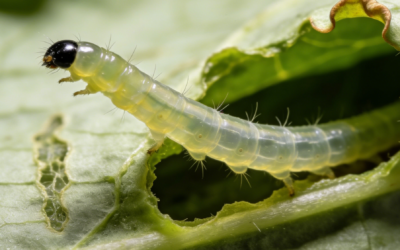
Codling moth (Cydia pomonella) is the top target for chlorantraniliprole in apple and pear orchards. Larvae bore into growing fruit and eat the seeds. This feeding makes fruit drop early. Harvested fruit becomes worthless.
Adult females lay eggs one at a time on leaves and fruit surfaces. Each egg measures 1-1.3 mm across with a flat, round shape. Fresh larvae start at just 2 mm long. They grow fast as they tunnel into fruit. Once they’re inside, you can’t remove them.
The financial hit is severe. One larva ruins an entire fruit. Infestations spread fast without treatment. Chlorantraniliprole breaks this cycle. It targets eggs and young larvae before they enter the fruit.
Brown Marmorated Stink Bug (BMSB)
Commercial apple orchards deal with heavy BMSB pressure. Monitoring data from Western North Carolina shows trap counts from 1.9 to 13.0 adults per 40 traps in managed commercial orchards. Unsprayed research orchards showed bigger swings—0.0 to 14.3 adults per 40 traps. Peak counts hit 14.3 adults.
BMSB feeds on growing fruit. This causes corky tissue and twisted growth. Damage shows up as sunken, discolored spots. Fruit becomes unsellable. BMSB attacks from the outside. But it causes just as much loss as pests that feed inside.
Apple Maggot in Abandoned and Border Areas
Abandoned orchards create pest hotspots. These threaten commercial operations nearby. Apple maggot trap counts in neglected sites ranged from 0.0 to 29.0 flies per 40 traps. Late-season numbers jumped to the 29.0 maximum. This put huge pressure on nearby managed orchards.
Border trees face the biggest risk. Adult flies move from abandoned sites. They lay eggs in fruit along orchard edges. Maggot larvae tunnel through fruit flesh. This creates brown trails and causes rot inside.
Aphid Complexes and Leaf Feeders
Several aphid species hit orchards at the same time. Black cherry aphid, rosy apple aphid, and spirea aphid show up most often in monitoring programs. Population density peaks at 75 feet into the orchard from edges. Edge trees show the highest proportion of leaf damage across all monitoring points.
Aphids weaken trees by feeding on sap. Heavy attacks stunt shoot growth. They also reduce fruit size. Honeydew secretions encourage sooty mold growth. This damages fruit quality even more.
Leafrollers and leafminers cause extra leaf damage. Obliquebanded leafroller, fruittree leafroller, and tentiform leafminer species all react to chlorantraniliprole treatments. Western tentiform leafminer creates clear mines in leaf tissue. This cuts down the leaf’s ability to make food for the tree.
Fruit-Specific Pests by Crop Type
Stone fruit orchards handle extra species. Cherry fruit fly wrecks cherry crops by infesting fruit. Pear orchards battle pear psylla—a sap-feeding pest that spreads disease and makes sticky honeydew. Pear slug (a sawfly larva) strips leaves down to skeletons. This weakens tree health.
Beneficial Insect Preservation
Orchards with cover crops support strong beneficial insect numbers. Pitfall trap studies showed 556 ants (Formicidae) in cover crop orchards versus 261 in disked orchards. Spider counts reached 1,240 individuals in cover systems compared to 361 in clean-cultivated blocks.
Natural predators handle 70% of pest control in well-managed apple orchards. Ants provide 47.7% of insect predation. Birds contribute 27.3%. This natural control drops with distance from habitat and heavy pesticide use.
Chlorantraniliprole’s selective action protects these helpful populations. You keep predator activity strong while killing target pests. This balance cuts down secondary pest outbreaks. It also supports integrated pest management programs.
Best Time to Apply in Orchards
Right timing means chlorantraniliprole controls pests instead of wasting money. The compound works through contact with target pests during weak life stages. Miss this window? Larvae dig into fruit where sprays can’t touch them.
Target Egg Hatch and Young Larval Emergence
Use chlorantraniliprole as pest populations shift from eggs to first-stage larvae. This window gives maximum exposure before insects hide in protected feeding spots. For codling moth, this key period happens in June during the main egg-laying cycle. Female moths lay eggs on fruit and leaf surfaces. Fresh larvae crawl for 24-48 hours before they break through fruit skin.
Spray during this short exposure time. First-stage larvae measure just 2 mm long. Their small size makes them vulnerable to residues. Once they dig inside apples or pears, chlorantraniliprole can’t reach them. Shifting from calendar sprays to targeted biological windows cuts waste. Plus, results improve.
Use Degree-Day Models for Precision
Growing degree-day (GDD) calculations predict pest growth better than calendar dates. Codling moth biofix starts at first steady moth catch in pheromone traps. First-generation egg hatch happens at about 250 GDD (base 50°F) after biofix. Second generation starts around 1,400 GDD.
Track GDD buildup using local weather station data or orchard monitoring tools. Use chlorantraniliprole at 220-240 GDD for first generation. This puts residues on surfaces before eggs hatch. For second generation, treat at 1,350-1,380 GDD. These models factor in seasonal temperature changes that shift pest emergence by 7-14 days between years.
Stone fruit operations see different growth rates. Oriental fruit moth in peaches finishes generations faster than codling moth. Check traps each week during flight periods. Treat once trap counts top 5 moths per trap per week and GDD models show egg hatch is coming soon.
Scout Before Every Application
Field scouting confirms model predictions. It also shows actual pest levels. Check 10 trees per 5-acre block at minimum. Look at 20 terminals per tree for eggs, young larvae, and feeding damage. Record what you find on maps or digital platforms.
Money thresholds guide treatment choices. For codling moth, treat once monitoring shows 2-3% fruit injury or steady trap catches above local limits. Many regions use 5 moths per trap per week as an action trigger. BMSB needs treatment at 0.5-1.0 adults per 10-tree sample based on fruit value and market standards.
Abandoned orchards near your property shift these limits. Apple maggot pressure from unmanaged sites demands more aggressive timing. Check border rows on their own. These spots may need treatment even though interior blocks stay below threshold. Trap counts hitting 29.0 flies per 40 traps in nearby abandoned sites justify edge treatments.
Match Orchard Growth Stages
Fruit growth stages affect pest behavior and spray reach. Use chlorantraniliprole during petal fall to first cover for spring codling moth. Growing fruit size means more surface area needs protection. Spray volume changes from 75 liters per decare at petal fall to 150 liters per decare as canopy gets thicker.
Second-generation timing moves to second or third cover sprays in July. Fruit hangs in bunches at this point. Change nozzle angles and boost spray pressure to get through canopy and hit interior fruit surfaces. Weak coverage leaves gaps where larvae live and enter fruit.
Stone fruit blooms and sets fruit sooner than pome fruit. Cherry fruit fly adults appear during fruit color change from green to yellow. Schedule chlorantraniliprole treatments 7-10 days before first color change. This sets up residues before female flies start laying eggs on ripening cherries.
Skip Application During Bloom
Don’t use chlorantraniliprole during active bloom periods. The compound has low toxicity to honeybees compared to older products. But any spray contact during foraging hurts helpful insect work. Treating at petal fall or later guards pollinators and meets regulations.
Bloom timing changes by variety and local climate. Varieties like Red Delicious finish 5-7 days before late bloomers like Fuji. Scout individual blocks. Treat after 90% petal fall in each section. This saves pollination and puts residues in place for coming pest pressure.
Weather Factors and Reapplication
Rain within 6 hours of application cuts initial deposit and drops results. Look at 48-hour forecasts before mixing spray tanks. Rain before residues dry? Plan a reapplication at lower rates instead of waiting the full 14-day gap.
The 14-day minimum gap between treatments stops resistance and keeps seasonal limits. Maximum 2 applications per season holds total active ingredient at or below 0.2 lb a.i./acre for pome fruit. Stone fruit has similar limits. Track every treatment by date, rate, and treated area to stay within bounds.

You can protect your orchard from harmful pests without giving up safety or results. Chlorantraniliprole changes the game for fruit growers. It gives long-lasting protection against caterpillar larvae, thrips, and other orchard pests. Plus, it stays safe for helpful insects and the environment.
Three keys make this work: Pick chlorantraniliprole for its special way of working and crop safety. Target pests at their weakest stages. Apply it during the first larval stages for best control. Follow the recommended doses and know your pest pressure. You’re not just fixing problems—you’re building healthier trees and better harvests.
Want to improve your orchard management? Check your pest numbers this week. Add chlorantraniliprole to your IPM plan. Your trees will thrive, and your harvest will show the difference with smarter pest control.

0 Comments