
Cotton bollworm doesn’t give you second chances. By the time you spot the damage — chewed bolls, hollowed-out squares, larvae buried deep inside the plant — you’re already losing yield.
That’s why Chlorantraniliprole has become one of the most trusted active ingredients in cotton pest management. It stops feeding within hours of ingestion. The damage doesn’t get a chance to build up.
But buying the right product is just the start. Real results depend on how you use it. Timing, dosage, application method, coverage — every variable matters.
This guide walks you through how to use chlorantraniliprole against cotton bollworm. You’ll get clear, practical steps so you can protect your crop with precision — not guesswork.
Application Methods
Three things decide whether chlorantraniliprole does its job: how you deliver it, how well you cover the plant, and how steadily you keep up the pressure all season. Nail all three, and cotton bollworm doesn’t stand a chance.
Foliar Spray — The Standard Approach
Foliar application is the most common method — and for good reason. It’s fast, flexible, and puts the active ingredient right where larvae are feeding.
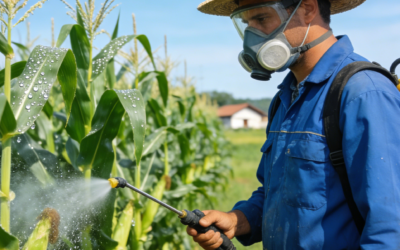
Use a ground sprayer or aerial equipment set up to deliver even droplet coverage across the canopy. The goal isn’t to drench the plant. It’s to coat it. Every leaf surface, every square, every developing boll is a potential entry point for bollworm larvae.
A few non-negotiables for foliar sprays:
-
Spray volume: 20–30 gallons per acre for ground equipment. Aerial applications run 5–10 gallons per acre — enough when droplet size and speed are dialed in.
-
Nozzle selection: Flat-fan nozzles give you the best balance of coverage and drift control. Skip nozzles that produce ultra-fine droplets in windy conditions.
-
Timing in the day: Apply in the early morning or late evening. This cuts evaporation loss and reduces contact with beneficial insects during their peak foraging hours.
-
Wind speed: Keep applications below 10 mph. Drift doesn’t just waste product — it leaves unprotected gaps in your canopy.
Drip Irrigation (Chemigation)
Got a drip system installed? You can inject chlorantraniliprole straight through the irrigation line. The active ingredient goes into the root zone and moves up through the plant’s vascular tissue via systemic uptake.
It takes longer to reach peak tissue concentration compared to foliar sprays. But the tradeoff is efficiency — almost no product is lost to drift or surface runoff.
Key points for chemigation:
-
Inject midway through the irrigation cycle. This pushes the compound into the active root zone instead of leaving it sitting at the surface.
-
Use a backflow prevention valve to protect your water source.
-
Check that your chlorantraniliprole formulation is labeled for chemigation — not all products qualify.
Coverage Is Everything
No matter which method you use, incomplete coverage is the top reason applications fall short. Bollworm eggs hatch fast. Neonate larvae don’t travel far before they bore in. Every gap you leave is an opening.
Dense canopies make coverage harder. Closed rows? Try increasing spray volume or raising boom height to push product deeper into the plant structure.
One missed section of field can trigger reinfestation within a single generation. That’s how fast this pest moves.
Recommended Dosage and Rates
Getting the dose right is not a minor detail. It decides whether you get a clean kill or a surviving larval population that bounces back stronger next generation.
For chlorantraniliprole, the standard field rate sits between 30–50 g a.i./ha. That window is not random. It reflects real differences in pest pressure, crop stage, and infestation level. Treat it as a working range, not a fixed number.
Match the Rate to the Instar
Most applicators leave money on the table by applying a flat rate without checking what is in the field.
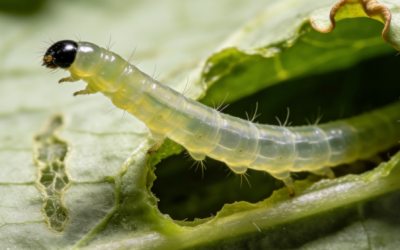
Bollworm larvae are not vulnerable at the same level at every stage. Early instars — L1 and L2 — are small, exposed, and easy to kill. The lower end of the rate range handles them well. There is no need to push the full dose.
Scout before you spray. Knowing what instars are present turns a guessing game into a clear, targeted decision.
Water Volume Matters More Than Most People Realize
Chlorantraniliprole cannot work where it does not reach. For ground applications, target 200–400 liters of water per hectare. That range delivers thorough canopy penetration without pushing the product off leaf surfaces as runoff.
Stay inside that window:
-
Too little water and you lose coverage across the canopy
-
Too much and you wash the active ingredient off the plant before the pest ingests it
Both extremes cost you efficacy.
Always Check the Label
The 30–50 g a.i./ha range is a solid starting point — but your registered label is the legal and agronomic authority. Regional registrations differ. Some markets carry formulations with different rate structures, tank-mix restrictions, or maximum seasonal application limits.
Pull the label before every application. These are not paperwork formalities. They are the rules that keep the product effective season after season.
Optimal Timing and Frequency of Applications
Chlorantraniliprole works only as well as the window you spray it in. Miss that window, and you’re not just wasting product — you’re handing the next generation of bollworm a free pass.
Keep pressure on the pest steady, but don’t overdo it. Two to four applications per season is the standard. Go beyond that, and you speed up resistance development. Drop below that, and pest populations bounce back between rounds.
Hit the Egg Hatch, Not the Bore
Spray before larvae enter the plant. That’s the most important timing call you’ll make all season.
A bollworm larva that bores into a boll or square becomes nearly untouchable. It’s sheltered. Residual product on the leaf surface can’t reach it. Foliar sprays lose most of their effect. You need to catch larvae in the gap between egg hatch and penetration — and that gap is short.
Early instar larvae (L1–L2) are the target. They feed on the surface. They eat treated plant tissue. That’s the exact scenario chlorantraniliprole was built for — it stops feeding within hours of ingestion, before real damage adds up.
Practical rule: monitor egg hatch cycles and spray at peak neonate emergence. Don’t wait for visible damage. By that point, the larvae you needed to stop are already inside the plant.
Spacing Between Applications
Chlorantraniliprole delivers long residual activity — 14 to 21 days under normal field conditions. That’s a clear edge over shorter-acting chemistries.
Residual activity doesn’t last forever, though. UV exposure, rainfall, and plant growth all wear down surface deposits over time. New foliage comes in with no protection. So the gap between applications matters.
Don’t push intervals below 14 days. It won’t boost performance — it raises selection pressure on the pest population and speeds up resistance.
Align Applications With Crop Stage
Bollworm pressure shifts all season. It builds at specific crop stages — and those are the stages where your applications need to land.
Two windows matter most:
-
Squaring stage: Bollworm populations spike here first. Larvae go straight for the squares. An application timed to this stage protects a critical part of your yield.
-
Early boll set: A second pressure wave often hits during boll development. Damage at this stage cuts straight into harvested yield.
Light pest pressure at either window? One well-timed application may be enough. Heavy pressure — backed by scouting data — puts you at the upper end of the application frequency range.
Scout First, Spray Second
Field data drives timing decisions. No recommendation on paper can replace it. Walk the field. Check egg counts. Identify which instars are present. Then decide.
Spraying chlorantraniliprole on a fixed calendar schedule wastes money and builds resistance. Spraying based on what’s in the field protects yield and keeps the chemistry useful longer.
Scouting isn’t optional. It’s the decision engine the whole program runs on.
Key Considerations for Effective Pest Control
Small decisions separate a program that holds through harvest from one that falls apart by mid-season. Chlorantraniliprole gives you a powerful tool — but even the best active ingredient fails when the surrounding decisions are wrong. Here’s what experienced applicators get right that most don’t.
Resistance Management Is Not Optional
Chlorantraniliprole belongs to IRAC Group 28 — the diamide class. It’s one of the most effective modes of action available against cotton bollworm. That’s why you can’t afford to burn it out.
Rotate it. Each season, alternate chlorantraniliprole with chemistries from a different IRAC mode of action. Don’t lean on it as your sole weapon across every application window. Leaning too hard on one mode of action selects for survivors — those individuals in the population with natural tolerance. A few seasons of that, and you’ve got a problem that won’t respond to treatment.
Pair Chemistry With Cultural and Biological Controls
Chlorantraniliprole works best inside a system, not as the whole system. IPM — integrated pest management — cuts down how much you depend on any single chemistry. That’s good for resistance, good for the environment, and good for your input budget.
Here are practical moves that lower insecticide pressure:
-
Beneficial insects: Build up natural predator populations. Ladybugs, parasitic wasps, and lacewings all knock down bollworm egg loads before you ever need to spray.
-
Sanitation: Remove crop debris after harvest without delay. Overwintering populations use residue as shelter and food. Cut off that resource.
-
Trap cropping: Plant attractive border species to pull bollworm populations away from your main crop. It’s a low-cost buffer that takes pressure off your primary application program.
None of these replace a well-timed chemical application under heavy pressure. But they reduce how often you need to reach for the tank.
Know When to Pull Back
More applications don’t mean better control. Spraying beyond what scouting supports pushes resistance development, disrupts beneficial insect populations, and adds cost without a real return.
Set clear thresholds before the season starts. Define what action looks like — egg counts, larval densities, damage percentages. Let the numbers drive decisions, not anxiety.
The field tells you what it needs. Your job is to read it clearly, respond with the right rate of chlorantraniliprole at the right moment, and protect the chemistry’s long-term effectiveness while you still can.
Safety Precautions
Chlorantraniliprole has lower mammalian toxicity than older chemistries. But lower risk still means risk. Treat it like the professional-grade tool it is.
Wear the Right Gear Every Time
PPE isn’t optional paperwork. It’s the difference between a routine application and an exposure incident you could have prevented.
For applicators, the standard kit covers the basics:
-
Long-sleeved shirt and long pants
-
Chemical-resistant gloves — nitrile or neoprene, not fabric
-
Protective eyewear
-
Closed-toe footwear
Mixing or loading? Add a chemical-resistant apron to that list. Most incidents happen at the mixing step. That’s the step people rush. Don’t.
Re-Entry and Harvest Intervals
Two numbers you need before every application:
-
Re-entry interval (REI): How long before workers can enter treated fields without full PPE
-
Pre-harvest interval (PHI): How many days must pass between the final application and harvest
These aren’t suggestions. They’re legal requirements. They also vary by registered label and region. Pull your specific product label and confirm both intervals before you spray. Miss one and you’ve got a compliance problem — plus a residue risk that follows the crop all the way to market.
Protecting your cotton crop from bollworm damage doesn’t have to feel like a guessing game.
Chlorantraniliprole works best with the right timing and precise dosage. Follow the safety protocols covered here. Do that, and you’re not just managing a pest — you’re defending your yield before the damage has a chance to build up.
Your next step is simple. Audit your current spray program. Check your application rates against the recommendations here. Then schedule your first chlorantraniliprole treatment before bollworm populations hit threshold levels.
The bollworm won’t wait. Neither should you.


0 Comments