
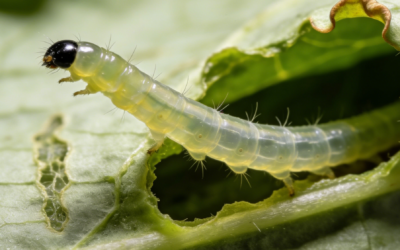
Black cutworm doesn’t give you much warning. One night the larvae are feeding. By morning, your turf or crop stand looks like something took a blade to it.
Growers and turf managers who’ve been through this before know the frustration well.
So what’s the difference between a costly infestation and a controlled one? It comes down to knowing how and when to deploy Chlorantraniliprole. This guide covers the key areas you need.
You get a practical, field-ready framework built around real results. Stay with us — this season, you can get ahead of black cutworm pressure before it gets ahead of you.
Optimal Application Timing
Timing a chlorantraniliprole application isn’t guesswork. It’s the one variable that separates a $12 bag of product from a $1,200 replanting bill.
Two approaches exist here. Both have real merit depending on your situation.
The Preventive Approach
Chlorantraniliprole has something most insecticides can’t match: exceptional residual activity. Once it bonds to soil and plant tissue, it keeps working for weeks. That makes it a strong preventive tool — applied before you ever see a single larva.
In turf management, preventive applications are timed around adult moth activity peaks. Black cutworm moths migrate in spring and lay eggs in susceptible turf. A well-timed chlorantraniliprole treatment creates a chemical barrier that stops freshly hatched larvae before they cause any visible damage.
The logic is simple. You’re not reacting to a problem. You’re cutting it off before it starts.
The Curative Approach
Monitoring is what makes this strategy work.
Run pheromone traps or do regular scouting. You can wait for confirmed larval activity before applying. That’s the curative path — reactive, targeted, and efficient with product use.
At the third instar stage, chlorantraniliprole doesn’t just kill. It also triggers sublethal developmental effects. Larvae that survive initial exposure often fail to molt, feed, or develop as expected. The damage cycle gets interrupted at several points, not just one.
Reading the Window
Your choice between preventive and curative timing comes down to your monitoring setup. Reliable trap data? Curative applications are precise and cost-efficient. No consistent scouting in place? The extended residual profile of chlorantraniliprole makes an early preventive application the safer default.
The worst timing decision isn’t too early or too late. It’s having no plan at all.
Recommended Application Methods
How you apply chlorantraniliprole matters almost as much as timing. Same active ingredient, same field, same pest pressure — two different methods can produce two very different outcomes.
Three primary delivery routes exist for chlorantraniliprole. Each one suits a different situation. Matching the method to your crop type, application window, and equipment is where precision management starts.
Seed Treatment
Seed treatment is the earliest entry point for chlorantraniliprole in the system.
The active ingredient coats the seed before planting. As the seed germinates and the plant builds its root system, chlorantraniliprole moves through the tissue. Young plants carry built-in protection from day one.
For growers managing black cutworm pressure in corn or other row crops, seed treatment delivers something valuable: protection before the pest arrives. There’s no application window to miss, no equipment to schedule. The work is done at the seed stage.
The trade-off is coverage depth. Seed treatments protect during early season, but the concentration in plant tissue drops as the crop grows. In high-pressure fields, a follow-up application may still be needed.
Foliar Applications
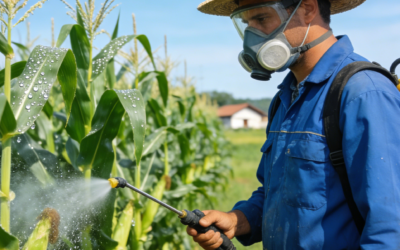
Foliar delivery puts chlorantraniliprole on plant surfaces — leaves, stems, and canopy. It’s the most flexible method and the most used for curative responses.
A few technical factors determine how well a foliar application performs:
-
Spray volume: Adequate volume ensures full canopy coverage. Low volume leads to uneven distribution and patchy control
-
Nozzle selection: Flat-fan nozzles provide the coverage consistency needed for solid contact with plant tissue
-
Application pressure: Too high and you create fine, drift-prone droplets. Too low and you get uneven coverage. Calibrate your equipment before heading to the field
-
Timing relative to larval stage: As covered earlier, third instar is your prime window. Sync foliar applications to this stage for the best results
Granular T-Band Applications
Granular formulations applied as a T-band sit in a narrow band over or alongside the seed row at planting. They put chlorantraniliprole into the root zone.
This method works well in turf and high-value crop systems where soil-dwelling larval activity is the main concern. The granules break down and release the active ingredient into the soil, where early-instar black cutworm larvae feed near the surface.
T-band placement also cuts the product’s exposure to UV degradation. Compared to broadcast surface sprays, more of the active ingredient stays where the pest actually is.
One practical note: irrigation or rainfall after granular application boosts activation. Without enough soil moisture to carry the active ingredient into the target zone, even a well-placed T-band falls short.
Choosing the Right Method
No single application method works best in every scenario. Your choice should follow your crop system, your monitoring data, and the stage of the season.
Seed treatments work hardest in preventive, early-season situations. Foliar applications give you precision once monitoring confirms active larvae. T-band granulars excel where soil-zone protection is the priority.
Use them in combination where pressure calls for it. Chlorantraniliprole moves through the plant system — so multiple delivery routes work together. You get coverage at the leaf, at the root, and in the soil profile all at once.
Dosage and Concentration Guidelines
Get the rate wrong, and chlorantraniliprole underperforms. Not because the chemistry fails — but because precision is built into how this active ingredient works.
Chlorantraniliprole works well at low use rates. That’s lower than most conventional insecticides. That’s a feature, not a limitation. But dosage deviation in either direction creates real problems. Too low, and you get incomplete larval knockdown. Too high, and you’re spending money without any extra control.
Rate Ranges by Application Type
The right chlorantraniliprole concentration depends on your delivery method and target system.
Seed treatments are built for consistent per-seed coverage. Rate calibration happens at the equipment level. The goal is uniform coating — no clumping, no uneven distribution across the seed lot.
Foliar applications for black cutworm management run within a defined label rate window. Stay within that range. Going above the ceiling does not extend residual activity. It speeds up resistance selection pressure without adding any real efficacy gain.
Granular T-band formulations are rate-sensitive in a different way. Placement concentration matters more than broadcast volume. A well-placed, precise T-band outperforms a heavier, sloppy application every time.
Start Low, Confirm, Adjust
The field principle for chlorantraniliprole dosing is simple:Start at the lower end of the label rate when pest pressure is moderate and you’re actively monitoring.Move to higher rates in confirmed high-pressure situations, or where residual coverage needs to last through a full population cycle.Reassess after 7–10 days if curative applications were triggered by active larval counts
Dosage isn’t fixed. It responds to pressure, timing, and what your scouting data says.
One rule applies across every scenario: always follow the registered label rate. It’s both the legal ceiling and the agronomic baseline in one.
Integrated Pest Management (IPM) Considerations
Pest management is no longer a single-tool problem. The global IPM market hit $143.64 billion in 2025 and is projected to reach $217.05 billion by 2030 — growing at 8.5% CAGR. That number shows a real shift in how growers, turf managers, and agronomists approach pest control.
Chlorantraniliprole fits right into that shift.
Why IPM Exists in the First Place
Pests destroy 20–40% of global crop production every year. Plant diseases account for $220 billion in losses. Invasive insects add another $70 billion on top of that. Those aren’t abstract figures — they represent real farms, real seasons, and real income wiped out.
No single intervention fixes this for good. That’s why IPM exists. A multi-layered approach — biological controls, resistant varieties, cultural practices, targeted chemistry — outperforms any standalone method. Integrated programs reach 70–90% biocontrol efficacy. Solo tactics under tough conditions? That number falls to 40–60%.
Where Chlorantraniliprole Earns Its Place in the Stack
Chlorantraniliprole isn’t just another chemical option. It’s a legitimate IPM tool. Three things set it apart:
-
Low nontarget impact: Less than 5% mortality in beneficial predator populations. Bees, parasitoids, and soil organisms stay untouched at label rates. The good bugs keep doing their job.
-
Precision efficacy: It works at just 0.067–0.1 lb AI/acre against lepidopteran pests, including black cutworm. That’s enough to get the job done without throwing off the surrounding ecosystem.
-
Stack compatibility: Chlorantraniliprole pairs well with Bt corn hybrids — Herculex I, Viptera, and Duracade. Together, they suppress corn earworm and corn borer pressure after ingestion. The two mechanisms support each other.
A Working IPM Framework for Black Cutworm
Build your program in layers. Here’s a field-ready sequence:
-
Set thresholds before you reach for any product — 20% defoliation is a common action trigger for corn borer pressure. Set your own benchmark before the season starts.
-
Start with cultural controls — crop rotation and targeted tillage can cut overwintering pest populations by 30–50%. You remove pressure before spring migration even begins.
-
Add biologicals where viable — Bt applications at 1–2 trillion spores/acre build a biological layer without adding chemical load.
-
use chlorantraniliprole only after scouting confirms an economic threshold breach — not on a calendar schedule, not as a precaution.
-
Scout after treatment — cover 10–20% of fields each week. Verify knockdown and catch any resurgence fast.
The Real Cost of Getting IPM Wrong
IPM adoption runs 20–30% higher in upfront cost than conventional programs. That part is true. But look at the return: well-executed IPM programs deliver 2–5x yield protection compared to single-method approaches.
Resistance is the other risk you need to watch. Biopesticide resistance shows up in 10–15% of cases where rotation and threshold discipline slip. Chlorantraniliprole faces that same pressure. It holds up over time inside an IPM system — not as a standalone tool used outside one.
The chemistry works. The framework is what keeps it working long-term.
Monitoring and Scouting for Application Decisions
Chlorantraniliprole is precise chemistry. But precision falls apart without solid intelligence behind the trigger.
That’s the case for building a real scouting routine — not a casual walkthrough, not a quick glance at the field edge. You need a structured, repeatable process. One that tells you when to pull the trigger and when to wait.
Scout on a Schedule, Not a Feeling
Scout every week through the V5 stage. That’s the baseline. Cover multiple areas of the field — not just the corners, not just the headlands. Black cutworm pressure doesn’t spread out evenly. Hot spots exist. Your sampling has to find them.
The action threshold most practitioners use: 3–5% of two-leaf stage plants showing cut damage. Cross that number across your scouting sample and you’ve confirmed a treatment decision.
Soap Flushing: The Fastest Confirmation Tool
Visual surface scouting has limits. Larvae hide. Soil cover masks feeding zones. Suspect activity but can’t confirm it through above-ground signs? Soap flushing cuts through the uncertainty fast.
The method is simple:
-
Mix 2 tablespoons of dish soap per 5 gallons of water
-
Pour the solution over a 1 square foot area of suspect turf or soil
-
Wait 10 to 30 minutes
Larvae surface. You count them. You know what you’re dealing with.
A 1–2% dish soap solution works just as well as a disclosing drench. Plus, it does double duty — count what surfaces after treatment to validate knockdown and check post-application results.
Close the Loop After Application
Scouting doesn’t stop once chlorantraniliprole goes down.
Irrigate with 0.5 to 1 inch of water post-treatment. For both turf systems and crop applications, soil moisture activates the drench and moves the active ingredient into the zone where larvae are feeding.
Then go back and scout. Cover 10–20% of the field each week after treatment. Verify that larval counts are dropping. Pressure resurfaces faster than expected? That data feeds straight into your next dosage or timing adjustment.
Scouting before application gives you the decision. Scouting after application gives you the proof.
Addressing Resistance and Efficacy Challenges
Resistance doesn’t announce itself. It builds application by application — until the chemistry that worked last season starts falling short.
For chlorantraniliprole, this is not a theoretical risk. It’s a practical one. Your program needs a structured response built in from the start.
How Resistance Develops in the Field
The mechanism is simple. Larvae with natural tolerance to chlorantraniliprole survive treatment. They reproduce. Their offspring carry that tolerance forward. Run that cycle across a few seasons without rotation, and you’ve pushed the local population toward reduced susceptibility.
Three behaviors speed up that process:
-
Applying on a calendar schedule rather than based on scouting thresholds
-
Using rates above the label ceiling without any efficacy gain — just more selection pressure
-
Relying on chlorantraniliprole as the sole mode of action across every application window
None of these practices improve control. All of them shorten the timeline to resistance.
Mode of Action Rotation Is Non-Negotiable
Chlorantraniliprole belongs to IRAC Group 28 — the diamide class. Its ryanodine receptor target is separate from organophosphates, pyrethroids, and spinosyns.
That separation is your main tool against resistance. Rotate into a different IRAC group between chlorantraniliprole applications. Alternating modes of action stops any single resistance mechanism from taking over the local population.
In practice, this means:
-
Do not apply chlorantraniliprole back-to-back within the same pest generation
-
Map your IRAC group usage across the full season before the season starts — not after you’ve already made three applications
-
Pair rotation with threshold discipline — trigger chemical intervention only when scouting data confirms economic pressure
Efficacy Drops — What to Check First
Reduced field performance isn’t always resistance. Before concluding the chemistry has failed, work through the more common variables:
-
Timing error: Applications made outside the third-instar window produce weaker results — not because chlorantraniliprole weakened, but because the target window closed
-
Moisture deficit: Without enough soil activation, granular and drench applications don’t reach the larval feeding zone
-
Coverage gaps: Uneven foliar application leaves untreated patches where larvae survive and reinfest
Fix the variables you control before writing off the chemistry. Misdiagnosed efficacy failures push you toward unnecessary rate escalation — and that escalation is what drives real resistance forward.
The chemistry holds. Discipline is what keeps it holding.
Good black cutworm management takes deliberate timing, precise application, and a solid understanding of the chemistry involved. None of that happens by chance.
Chlorantraniliprole delivers results when you use it right. Scout before you spray. Match your dosage to real pest pressure. Fit it into a broader IPM plan — not as a one-size-fixes-all solution, but as one reliable tool among several. That’s not just textbook advice. It’s the difference between a season that drains your budget and one that turns a profit.
Resistance builds fast. Your strategy needs to keep pace.
Start by reviewing your current scouting schedule. Pinpoint your highest-risk application windows. Then check your concentration guidelines against this season’s actual conditions. Small, early adjustments stack up. They lead to far better results by harvest.
The knowledge is now in your hands. The next step is in your field.


0 Comments