
Every season, legume pod borers destroy bean and pulse crops before most growers notice the damage. The larvae tunnel deep into pods. This makes harvests unmarketable and cuts yields hard — and those losses are tough to recover from.
That’s why Chlorantraniliprole has become a go-to solution for farmers who take crop protection seriously. But knowing it works isn’t enough. Timing, application method, and dosage all determine whether you get real pest control or wasted product.
Here’s a practical breakdown of how to use chlorantraniliprole so your beans and pulses make it to harvest.
Effective Chlorantraniliprole Usage For Managing Legume Pod Borer In Beans & Pulses
Getting chlorantraniliprole right comes down to three things: knowing your pest’s lifecycle, hitting the spray window before it closes, and applying at the correct rate. Miss any one of those, and your crop won’t get the protection it needs.
This section covers the practical mechanics — rates, timing windows, pest targets, crop registrations, residue limits, and resistance protocols. Use it to build a treatment plan that holds up through the season.
Know What You’re Targeting Before You Spray
Chlorantraniliprole isn’t a blanket solution. It works best when you know which pests are on your crop and what stage they’re in.
The registered pest targets include:
-
Bean pod borer (Maruca vitrata)
-
Cotton bollworm (Helicoverpa armigera)
-
Native budworm (Helicoverpa punctigera)
-
Soybean looper (Thysanoplusia orichalcea)
-
Bean looper (Mocis alterna)
-
Irrorated tabby (Anticarsia irrorata)
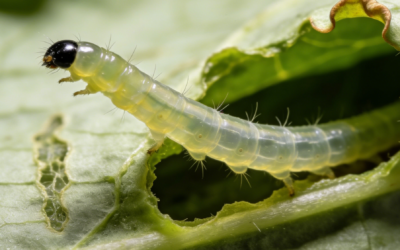
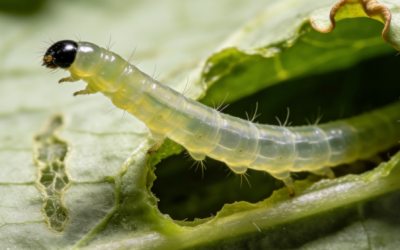
Each species causes a different type of damage. Helicoverpa species attack pods head-on and rank among the most costly to manage. Maruca vitrata is a serious threat in mung bean, cowpea, and pigeon pea. It webs together flowers and bores into developing pods — often before growers spot the infestation.
Knowing which pest you’re dealing with shapes your timing decision. And timing is everything.
The Application Rate That Matters
Precision here isn’t optional. Underdosing gives larvae a chance to survive and build resistance. Overdosing wastes product and raises residue risk.
The registered rate is 40 mL/ha. That delivers 24 g of chlorantraniliprole active ingredient per hectare. For tank mixing, that’s 125 g ai per 100 L of water.
Add a non-ionic surfactant to improve coverage and uptake. This matters given chlorantraniliprole’s translaminar activity — the compound moves through leaf tissue to reach larvae feeding inside flowers and pods.
Water volume matters too:
-
Aerial application (aircraft): Minimum 30 L/ha
-
Ground rig: Minimum 100 L/ha
Use a medium droplet size. Too fine, and you risk drift. Too coarse, and you lose coverage across the dense canopy of legume crops — right where larvae hide.
Which Crops Are Covered
Chlorantraniliprole is registered across a wide range of legume crops. They split into two groups based on withholding period.
Summer pulses (14-day WHP):
– Mung bean
– Navy bean
– Cowpea
– Pigeon pea
– Soybean
– Chickpea
Winter pulses (28-day WHP):
– Faba bean / broad bean
– Field pea
– Lentil
– Lupin
– Vetch
The 14-day withholding period covers the summer pulse group. For winter pulses, the WHP extends to 28 days. Factor this into your spray timing — for crops getting close to harvest maturity, confirm the WHP works with your schedule before you spray.
The Timing Window Is Narrow — Don’t Miss It
This is the single most important variable in getting chlorantraniliprole to perform.
The compound works best against brown eggs, newly hatched larvae (neonates), and first instar caterpillars. It stays effective against second instar small larvae at economic threshold. After that, larvae move into flowers and pods — or build webbed shelters — and control drops off fast.
Why does this matter so much?
Chlorantraniliprole has translaminar activity. It moves through plant tissue and kills larvae feeding inside flowers. But once a larva burrows into a developing pod or builds a web structure, the product has far less contact with the target. Larger, established larvae also show greater tolerance to the compound’s mode of action.
The rule is simple: spray before caterpillars form webbed shelters. Waiting until you see pod damage or established webbing means you’ve already missed the window where this product delivers full value.
Start scouting from budding. Run regular field checks through flowering and early pod-set. This lets you catch infestations at the threshold point — before populations dig in.
Maximum Applications and Rotation Requirements
Chlorantraniliprole falls under IRAC Group 28 (diamide insecticides). Repeated use with any insecticide class builds selection pressure for resistance in pest populations.
The registered limit is 2 applications per crop per season, with a minimum 7-day interval between sprays.
After both applications, rotate to a different mode of action before returning to chlorantraniliprole. This isn’t a soft suggestion — it’s a resistance management requirement under CropLife Australia guidelines.
A practical resistance management sequence for legume pod borer control:
-
First spray: Chlorantraniliprole at economic threshold (early instar larvae)
-
Second spray (if needed): Chlorantraniliprole, minimum 7 days later
-
Subsequent sprays: Switch to a different mode of action (e.g., spinosyns, pyrethroids based on pest species, or other registered options)
Rotating modes of action protects the long-term usefulness of chlorantraniliprole — one of the better tools available for this pest complex. It’s worth protecting.
What the Efficacy Data Shows
The performance numbers on chlorantraniliprole make a strong case on their own.
In pigeonpea trials, chlorantraniliprole 18.5% SC applied at 150 mL/ha produced the lowest pod borer population across all treatments tested. That’s a strong result in a crop where Maruca vitrata and Helicoverpa armigera can devastate yield if populations run unchecked through flowering.
For gram pod borer (Helicoverpa armigera), the data shows a clear reduction pattern across sequential sprays:
|
Application |
Larval Count (treated) |
vs. Untreated Control |
|---|---|---|
|
First spray |
1.13 larvae |
Significant reduction |
|
Second spray |
0.33 larvae |
Near-complete suppression |
That second spray number stands out. By the second application, the population had dropped to a level that removes economic damage risk for most production targets.
For cowpea spotted pod borer (Maruca vitrata), the data points to a combination product delivering superior results. Lambda-cyhalothrin 4.6% + chlorantraniliprole 9.3% ZC at 0.5 mL/L outperformed standalone applications for reducing both flower damage and pod damage. The combination pairs the pyrethroid’s fast knockdown with chlorantraniliprole’s translaminar residual activity — covering both contact-kill and deeper larval feeding gaps.
Residual Protection: How Long Does It Last?
Chlorantraniliprole delivers solid residual control. That’s a key reason it’s become a go-to tool where multiple pest generations overlap through a single flowering window.
In chickpea trials, residual activity against Helicoverpa species extended to up to 3 weeks after application. That’s a solid protection window for a crop at peak susceptibility.
One nuance worth noting: in fast-growing reproductive stages of mung bean, canopy expansion can reduce the effective residual period. New growth outruns the concentration of active ingredient on leaf and flower surfaces. So timing your application to the start of flowering — rather than waiting for a mid-season growth surge — gets you the most value from each spray.
MRLs and Residue Compliance
Maximum Residue Limits (MRLs) exist for good reason. Staying within them keeps your produce marketable — for export supply chains where Codex standards apply, this is non-negotiable.
Current MRLs for chlorantraniliprole in pulse crops:
|
Crop |
MRL |
|---|---|
|
Dry beans (general) |
0.3 mg/kg |
|
Dry peas |
0.3 mg/kg |
|
Cowpea |
0.3 mg/kg |
|
Mung bean |
0.3 mg/kg |
|
Pigeon pea |
0.3 mg/kg |
|
Soybean |
0.3 mg/kg |
|
Chickpea |
1 mg/kg |
|
Lima bean |
1 mg/kg |
|
Pea |
1 mg/kg |
Codex international recommendation: 0.3 mg/kg for dry bean and dry pea.
Chickpea, lima bean, and pea carry the higher 1 mg/kg domestic limit. But export markets that follow Codex standards apply the 0.3 mg/kg benchmark to dry products. Sticking to the withholding periods listed above is the main way to stay within these limits.
Why Low Impact on Natural Enemies Matters
One of chlorantraniliprole’s real strengths in integrated pest management is its low impact on beneficial insects and natural enemies — including predatory wasps, spiders, and other species that keep secondary pest populations in check.
Broad-spectrum insecticides used to control pod borers often knock back natural enemy populations at the same time. That triggers secondary pest flares — mites, aphids, and other species that natural enemies once suppressed now surge without predator pressure. Chlorantraniliprole’s selectivity breaks that cycle. You’re not swapping one problem for another.
This selectivity also makes it a practical fit for programs that include biological control components or that need to maintain beneficial insect populations through the season.
Putting It All Together: A Field-Ready Checklist
Run through these checkpoints before each chlorantraniliprole application:
-
Pest ID confirmed — you’ve identified the species and it’s on the registered pest list
-
Larval stage checked — eggs, neonates, or first/second instar larvae present
-
Economic threshold reached — pest numbers justify treatment
-
Application rate set — 40 mL/ha, with non-ionic surfactant added
-
Water volume confirmed — 30 L/ha minimum (air) or 100 L/ha (ground rig)
-
Droplet size selected — medium
-
Spray history checked — confirm this is application 1 or 2 for the season
-
Withholding period mapped — confirmed spray timing allows WHP compliance before harvest
-
Rotation plan ready — next mode of action identified if a third spray is needed
-
MRL requirements noted — for crops destined for export
Getting chlorantraniliprole to perform at the level the data shows comes down to executing these fundamentals. Legume pod borer biology doesn’t leave much margin. But with the right rate, the right timing, and a resistance management rotation in place, this product can protect your crop through its most vulnerable stages.
Conclusion
Legume pod borer doesn’t negotiate. It moves fast, feeds hard, and leaves your yield in ruins. Hesitate, and you lose.
That’s why chlorantraniliprole holds a frontline spot. It has a precise mode of action, proven residual control, and causes minimal disruption to beneficial insects — as long as you follow the label rate.
Timing is everything. Start at early flowering. Respect your re-entry intervals. Rotate with other mode-of-action classes to keep resistance from building. Stack those practices together, and you’re not just reacting to an infestation. You’re building a system that protects every pod through to harvest.
Ready to act? Here’s what to do:
-
Pull up your spray calendar
-
Confirm the chlorantraniliprole rate for your specific bean or pulse crop
-
Schedule your first application before you see damage
By the time damage shows up, you’re already behind.
Protect the pod. Protect the yield. That’s the whole game.


0 Comments