
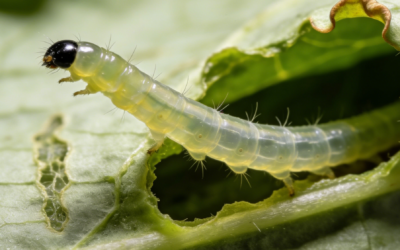
Chlorantraniliprole is a highly effective insecticide belonging to the diamide class, widely used for controlling fruit fly infestations in various fruit crops such as stone fruits (cherries, peaches) and pome fruits (apples, pears). Its unique mode of action targets the ryanodine receptors in insect muscle cells, leading to rapid paralysis and death of fruit fly larvae and adults. To maximize its efficacy, minimize environmental impact, and delay resistance development, proper application timing, accurate dosage calculation, sprayer calibration, and adherence to safety protocols are critical. This article provides a step-by-step guide to applying chlorantraniliprole for effective fruit fly control, integrating growing degree days (GDD), phenological stages, and practical field techniques.
Determine Application Timing Using GDD and Phenological Stages
The key to successful fruit fly control with chlorantraniliprole lies in targeting the pest’s peak vulnerability periods, which can be precisely predicted using GDD accumulation and crop phenological stages. Unlike calendar-based timing, GDD accounts for temperature variations, reducing errors and ensuring applications align with fruit fly life cycles.
GDD Calculation for Fruit Fly Monitoring
Use the modified average method to calculate daily GDD, a reliable metric for tracking fruit fly development: [(Max Temp + Min Temp) ÷ 2] – Lower Threshold. For fruit flies, the lower temperature threshold is typically 50°F (10°C), and the upper threshold is 86°F (30°C); if the daily minimum temperature is below 50°F, cap it at 50°F, and if the maximum exceeds 86°F, cap it at 86°F. Any negative GDD values (when the average temperature is below the lower threshold) are set to 0.
Biofix Selection and GDD Accumulation
Select an appropriate biofix (starting point for GDD accumulation) based on local conditions: common biofixes include the first fruit fly trap catch in spring, crop planting date, or the onset of fruit bud break. Begin accumulating daily GDD from the biofix, as this tracks the progression of fruit fly generations. For most fruit fly species, the first generation emerges at 220–240 GDD from biofix, while the second generation appears at 1,350–1,380 GDD—these are critical windows for chlorantraniliprole application.
Phenological Stage Benchmarks for Targeting
Cross-reference GDD accumulation with crop phenological stages to refine application timing, as fruit fly activity is closely tied to fruit development:
Stone Fruits (Cherries, Peaches): apply chlorantraniliprole 7–10 days before the fruit transitions from green to yellow, a period when adult fruit flies (e.g., cherry fruit fly) begin laying eggs. Pome Fruits (Apples, Pears): Target the petal fall to first cover stage, aligning applications with GDD accumulation (220–240 GDD from biofix for first fruit fly flight). This stage coincides with adult fruit fly activity and egg-laying, providing effective control before infestations establish.
Peak vulnerability for fruit fly larvae occurs in June, when egg-laying and early larval penetration are most active. Use a combination of GDD data and field scouting to confirm this window—field checks are critical to verify fruit fly presence and avoid unnecessary applications, as GDD provides a baseline but local conditions may vary.
Calculate Dosage and Dilution Ratios per Hectare
Accurate dosage and dilution of chlorantraniliprole are essential to ensure efficacy while minimizing waste and environmental risk. Dosage requirements vary by crop type, fruit fly species, and product formulation (e.g., emulsifiable concentrate (EC), microemulsion (ME), suspension concentrate (SC)), so always refer to the product label first. Below are general guidelines and formulas for dosage and dilution calculations.
Standard Dosage Benchmarks
For fruit crops, the standard field rate for chlorantraniliprole is approximately 200 mL of product per hectare (20 mL per decare), equivalent to 4 grams of active substance (a.i.) per decare. For pome fruits, the total seasonal a.i. cap is 0.2 lb per acre, while for stone fruits, adjust based on local extension recommendations.
Dosage Calculation Formulas
-
liquid Formulations (e.g., EC, ME, SC): Use the formula: Amount of product (L/ha) = (lbs AI/acre × 2.47) / (lbs AI/gal product). For example, if the target is 0.5 lb AI/acre and the product contains 4 lb AI/gal, the dosage is (0.5 × 2.47) / 4 = 0.31 L/ha (or 1/8 gal/acre).
-
Wettable Powders: If using a wettable powder formulation, calculate lbs product/acre = lbs AI/acre / (% AI / 100). For example, 2 lbs AI/acre with a 50% AI product requires 2 / 0.5 = 4 lbs/acre.
-
Stock Dilution (C1V1 = C2V2): For precise concentration control, use the stock dilution formula: Stock volume (V1) = (target conc. C2 × total spray vol. V2) / stock conc. C1. For a 1-hectare application with 450 L of spray volume, targeting 0.04% AI from a 20% stock solution, V1 = (0.04 × 450) / 20 = 0.9 L of product per hectare.
Dilution Ratios and Spray Volume
The minimum dilution volume for ground applications on pome fruits is 450 L/ha; adjust based on crop canopy density (denser canopies require higher volumes). For common dilution ratios (per 1 L final volume), refer to the table below:
|
Dilution Ratio |
Water (L) |
|
|---|---|---|
|
1:1 |
0.50 |
0.50 |
|
1:3 |
0.25 |
0.75 |
|
1:5 |
0.17 |
0.83 |
|
1:10 |
0.09 |
0.91 |
|
1:32 |
0.03 |
0.97 |
For example, a pome fruit application with 450 L/ha spray volume using 200 mL/ha of 20% AI chlorantraniliprole results in an AI rate of 0.04 g/L spray, totaling 0.018 kg AI/ha—well within the seasonal cap for pome fruits.
Calibrate Sprayers and Set Water Volume for Canopy Penetration
Even with the correct dosage, poor sprayer calibration and inadequate canopy penetration can reduce chlorantraniliprole efficacy. Proper calibration ensures uniform coverage of fruit and foliage, reaching fruit fly eggs and larvae hidden in the canopy. chlorantraniliprole formulations (EC, ME, SC) have varying理化 properties—EC formulations offer better surface tension, penetration, and wettability, while ME formulations have higher insecticidal activity and excellent rain resistance.
Air Volume and Water Volume Calibration
For airblast sprayers (common in fruit orchards), adjust fan airflow to ensure spray penetrates the canopy without excessive drift. The optimal airflow replaces canopy air but dies down on the opposite side—use ribbons on canopy edges to verify (minimal movement indicates proper airflow). For dense canopies, use k=2.5 in the formula Q (m³/h) = 1000 × speed (km/h) × tree height (m) × spray width (m) / k; for open canopies, use k=3.5.
Water volume benchmarks follow an adaptive baseline of 75–150 L/decare, increasing proportionally for thicker canopies or high-temperature/low-humidity conditions (which accelerate spray evaporation). Vineyards have successfully optimized water volume from ~1,000 L/ha to ~400 L/ha by matching volume to canopy density—apply this principle to fruit orchards for efficiency.
Nozzle and Pressure Adjustments
Proper nozzle alignment and pressure ensure spray reaches all parts of the canopy, including leaf undersides and fruit surfaces where fruit flies lay eggs:
-
Park the sprayer in a tree row, attach flagging tape to nozzles, and run the fan (without spray). Adjust nozzles to direct tape into the canopy (top, middle, bottom), turning off nozzles that do not target the canopy.
-
Run a water-only test to visually confirm spray follows airflow into the canopy and reaches leaf undersides. For dense foliage, increase pump pressure—use the formula SO₂ = SO₁ × (P₂ / P₁), where SO = sprayer output (L/min) and P = pressure (kPa) to adjust output as needed.
Coverage Verification
Use water-sensitive papers (WSP) to verify coverage: place WSP at different canopy depths, heights, and on upper/lower leaf sides. After a water-only spray, allow papers to dry for 10–30 minutes—ideal coverage shows uniform, fine droplet distribution (many small spots). Recheck calibration seasonally as canopy density changes (e.g., post-pruning or fruit development).
For drone applications, calibrate flight height to 20–38 inches above the tallest canopy and adjust nozzles for optimal penetration. For aerial or chemigation applications, verify injector accuracy, disable end guns to avoid drift, and flush the system immediately after application to prevent residue buildup.
Execute the Application During Peak Vulnerability Windows
Chlorantraniliprole is most effective when applied during fruit fly peak vulnerability—specifically, during adult egg-laying and early larval stages (before larvae penetrate fruit). This aligns with the phenological and GDD-based windows identified in Section 1, with June being the peak period for egg-laying and larval entry in most fruit-growing regions.
Application Timing Best Practices
-
Apply chlorantraniliprole in the early morning or late evening when temperatures are cooler (below 86°F) and wind speeds are low (less than 10 mph) to minimize drift and maximize insecticide stability. Avoid applications during midday heat, which can reduce efficacy and increase volatilization.
-
For stone fruits, target the 7–10 day window before fruit color change—this ensures the insecticide is present on fruit surfaces when adult fruit flies lay eggs, killing larvae as they hatch. For pome fruits, apply during petal fall to first cover, targeting adult fruit flies before they establish large populations.
-
Ensure thorough coverage of all fruit and foliage, focusing on the inner canopy where fruit flies often hide. Chlorantraniliprole’s translaminar activity helps it move through leaf tissue, but uniform spray distribution is still critical for reaching hidden pests.
Formulation Considerations
Select the appropriate chlorantraniliprole formulation based on crop type and conditions: ME formulations offer higher insecticidal activity against fruit fly larvae, while EC formulations provide better coverage and penetration^{(2)}. All formulations of chlorantraniliprole have excellent rain resistance—studies show minimal efficacy loss even if heavy rain occurs 2–12 hours post-application.
Schedule Retreatment Intervals and Rainfall Adjustments
Fruit fly generations overlap, so a single application may not provide season-long control. Proper retreatment intervals and rainfall adjustments ensure continuous protection while minimizing resistance risk and environmental impact.
Retreatment Intervals
Follow these guidelines for retreatment:
-
Standard retreatment: A maximum of 2 applications per growing season, spaced 14 days apart. This aligns with fruit fly generation times and ensures consistent control without excessive insecticide use.
-
Resistance management: For high fruit fly pressure, use 2–3 applications with intervals greater than 15 days to minimize resistance buildup. Rotate chlorantraniliprole with insecticides of different modes of action (e.g., spinetoram, cyromazine) to further delay resistance^{(1)}.
-
Crop-specific limits: For most fruit crops, cap applications at 3 uses per season, with intervals greater than 1 day between applications. For stone fruits, avoid applications within 14 days of harvest to ensure compliance with residue limits.
Rainfall Contingency Protocols
Rainfall can reduce chlorantraniliprole efficacy by washing the insecticide off fruit and foliage. Follow these adjustments:
-
Reapply at a reduced dosage (70–80% of the original rate) if more than 0.25 inches of rain falls within 6 hours of application. Chlorantraniliprole’s rain resistance minimizes the need for full retreatment if rainfall occurs after this window^{(2)}.
-
Pause irrigation for 1–2 weeks after 1 inch of total rainfall (rain + irrigation) to avoid over-wetting and washing off the insecticide. Monitor weekly rainfall totals—if natural rain provides 1 inch per week, skip irrigation to reduce environmental impact.
-
During rainy seasons (e.g., May–October in Florida), reduce irrigation to 1–2 times per week, or once per week if heavy rain is forecast. Use deep watering (0.75–1 inch) 2–3 times per week in the morning to combine with natural rain and reach the 1 inch total per week benchmark (1-2-3 Rule).
Install rain sensors to automatically turn off irrigation systems after sufficient rainfall, reducing unnecessary water use and protecting chlorantraniliprole residues.
Implement Safety and Resistance Management Protocols
Safe application practices protect applicators, non-target organisms, and the environment, while resistance management ensures chlorantraniliprole remains effective long-term. Fruit flies are developing resistance to many insecticides, so proactive management is critical^{(1)}.
Safety Protocols
-
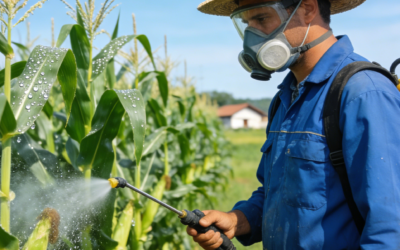
Personal Protective Equipment (PPE): Wear gloves, goggles, a long-sleeved shirt, long pants, and closed-toe shoes when handling and applying chlorantraniliprole. Avoid skin contact and inhalation—if contact occurs, rinse thoroughly with water.
-
Application Safety: Do not apply near water bodies (streams, lakes, ponds) to avoid runoff and harm to aquatic organisms. Keep applicators and bystanders at least 50 feet from the application area during spraying. Follow the product label for pre-harvest intervals (PHI) to ensure fruit residues are within safe limits.
-
Equipment Safety: Flush sprayers thoroughly with water after application to remove residue. Store chlorantraniliprole in a cool, dry place, away from food, feed, and children. Dispose of empty containers according to local regulations—do not reuse or discard in trash or water.
Resistance Management Protocols
Follow this 5-step process to minimize fruit fly resistance to chlorantraniliprole:
-
Identify Resistance Sources: Common sources include over-reliance on chlorantraniliprole, improper application timing, and failure to rotate insecticides. Communicate and Train: Educate applicators and stakeholders on resistance risks and proper application practices. Provide targeted training on GDD monitoring, dosage calculation, and rotation strategies.
-
Involve Stakeholders: Engage farmers, extension agents, and suppliers to develop region-specific resistance management plans. Encourage feedback on efficacy and pest populations to adjust strategies as needed.
-
Provide Support: Offer training on alternative insecticides and integrated pest management (IPM) practices. Recognize and reward adherence to resistance management protocols.
-
Monitor and Evaluate: Track fruit fly populations and efficacy of chlorantraniliprole applications. Use employee feedback loops, issue logs, and risk assessments to identify resistance hotspots. Adjust rotation schedules and application timing based on monitoring data.
Additional resistance management strategies include: rotating chlorantraniliprole with insecticides of different modes of action (e.g., cyromazine, spinetoram), avoiding sub-lethal dosages, and using IPM practices (e.g., trap cropping, fruit bagging) to reduce reliance on insecticides.
Effective fruit fly control with chlorantraniliprole requires a integrated approach that combines precise timing (using GDD and phenological stages), accurate dosage and dilution, proper sprayer calibration, strategic retreatment, and strict adherence to safety and resistance management protocols. By following the steps outlined in this guide, growers can maximize chlorantraniliprole efficacy, protect fruit yields, and ensure the long-term sustainability of this valuable insecticide. Always refer to the product label and local extension recommendations for crop-specific adjustments, as regional conditions and fruit fly species may vary.

0 Comments