
Picking the right insecticide can make or break your pest control plan. Many growers get confused comparing Chlorantraniliprole and chlorbenzuron. These two compounds sound alike but work in very different ways.
Both tackle harmful lepidopteran pests. But their chemical makeup, how they work, and real-world uses are quite different. This affects timing, effectiveness, and how you manage resistance.
These differences matter for your crops. They shape your protection results, what you spend on applications, and how well your pest control works long-term.
This comparison lays out the key differences between these two active ingredients. You’ll see how they work at the molecular level, how they perform in the field, their safety records, and when to use each one. This helps you choose the right option for your farm’s specific pest challenges.

Overview About Chlorantraniliprole and Chlorbenzuron
Chlorantraniliprole and chlorbenzuron come from two different eras of insect control. Chlorantraniliprole is part of the anthranilic diamide class. This is a newer type that targets ryanodine receptors in insect muscle cells. The mechanism triggers uncontrolled calcium release. Muscles become paralyzed, and insects stop feeding within hours. Chlorbenzuron belongs to the benzoylphenyl urea family. This older group of insect growth regulators (IGRs) stops chitin synthesis during molting.
Their chemical structures differ a lot. Chlorantraniliprole has a diamide backbone with specific halogen parts. This design allows plants to absorb and move it through their tissues. Chlorbenzuron uses a simpler urea bridge structure. It works through contact and ingestion. Plants don’t move it through their tissues.
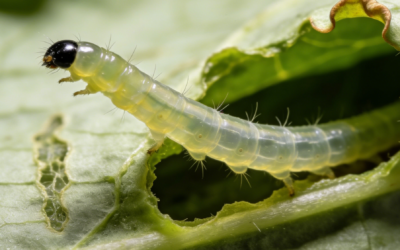
Both target caterpillars of moths and butterflies. But they work on different timelines. Chlorantraniliprole acts fast across all larval stages. It even affects eggs sometimes. You get 14-21 days of pest control. Chlorbenzuron works slower. Larvae must molt for it to work. This limits the best application time to young caterpillars. You need to scout more carefully and decide faster in pest management programs.
Growers can match the right ingredient to their crop protection needs by knowing these key differences. This knowledge also helps with resistance management plans.
Chemical Classes and Modes of Action
Chlorantraniliprole belongs to the diamide class of insecticides. It falls under IRAC Group 28. This group marks a major step forward in targeted pest control. The compound targets ryanodine receptors (RyR) in insect muscle cells. These receptors control calcium storage and release in the muscle tissue. Chlorantraniliprole binds to these receptors. It forces the channels to stay open. Calcium rushes into muscle cells. This breaks down normal muscle movement. Insects become paralyzed quickly. They stop feeding within hours of contact.
Chlorbenzuron works through a different pathway. It belongs to the benzoylurea family, labeled as IRAC Group 15. These compounds act as insect growth regulators. They don’t target nerves or muscles. Chlorbenzuron blocks chitin synthesis. It does this by disrupting chitin synthase enzymes. Chitin forms the hard shell that protects insects. It also gives them structure. Without proper chitin, larvae can’t molt. The shell stays soft or forms incorrectly. Young insects die during molting. This also stops eggs from hatching in some pest types. The compound affects shell formation at all growth stages. Younger larvae are more vulnerable.
The IRAC system groups insecticides by their molecular targets. This lets growers rotate different modes of action. Rotation prevents resistance. Group 28 (muscle action) and Group 15 (growth regulation) work in separate ways. Other major IRAC groups target nerves. Group 1 includes acetylcholinesterase blockers like carbamates and organophosphates. Group 3 covers sodium channel modulators like pyrethroids. Group 4 includes nicotinic receptor modulators like neonicotinoids. Group 22 covers sodium channel blockers such as indoxacarb.
The core differences in chemical class and mode of action shape how these products perform. Kill speed, lasting power, timing windows, and resistance tactics all depend on the mechanism. You’re either disrupting muscle calcium channels or blocking chitin production. Understanding these mechanisms helps you predict field results. You can make better rotation choices in your pest management program.
Target Pests
Chlorantraniliprole controls a wide range of caterpillar pests. This compound handles armyworms, cutworms, leafrollers, diamondback moth, cabbage looper, and tomato fruitworm. It also tackles corn earworm,

European corn borer, codling moth, and Oriental fruit moth. The active ingredient works on thrips and some beetle species like Colorado potato beetle. You can use it on vegetables, fruits, nuts, rice, soybeans, and cotton. It moves through plant tissues to protect new growth. This helps stop pests that feed inside stems or developing fruit.

Chlorbenzuron targets caterpillar larvae. It fights similar caterpillar pests but performs best on young larvae. This compound fights gypsy moth, tent caterpillars, forest leaf-eaters, and larvae feeding on ornamental plants. Performance drops fast as larvae grow older. The product disrupts chitin during molting. Older larvae molt less often. So you get a shorter application window compared to muscle-targeting products.
Field data shows big differences in pest contact. Research shows less than 0.3% of applied pesticides contact target insects. Average effectiveness sits at just 0.089%. Some applications do worse – DDT treatments for Heliothis reached just 0.0000001% target pest contact. These numbers show why action method and plant tissue movement matter. Chlorantraniliprole moves through plant tissue to improve contact rates. Chlorbenzuron needs more direct spray coverage.
Pest control methods vary by crop type. California vegetable farms (2022) used 11 pest control tactics on 75% or more of acreage. Fruit and nut growers (2021) used 7 practices at similar rates. Monitoring systems track pest activity on 36% to 85% of crop acreage based on the crop. Smart monitoring cuts pesticide use by 25-30% through precise targeting. These trends favor products with flexible timing and long-lasting control – key strengths for chlorantraniliprole in pest management programs.
Efficacy Data
Field trials and lab studies show clear performance gaps between these two compounds. Chlorantraniliprole works well against resistant pest populations. Tests on diamondback moth (DBM) found resistance ratios hitting 423.95-fold in the Rc strain versus susceptible S strains. Adding quercetin as a synergist cuts this resistance to 316.42-fold. Growers dealing with resistance pressure need to know these numbers.
Chlorbenzuron performs based on when you apply it and which pest life stage you target. Trials on chive gnats in Zhangqiu tracked larval populations over long periods. Larval numbers dropped during the first 60 days after treatment. Population levels rose again at the 70-day mark compared to biological control using Steinernema feltiae nematodes. Stats confirmed this pattern (F=17.876, p<0.001). Treated plots still produced yields over 3.55 kg/m². Researchers suggest an application rate of 15 mg/kg for best results.
The compound kills eggs. Studies on Clostera sinensis eggs found structural defects in developing embryos. This egg-killing effect helps target pest populations before larvae emerge. Younger life stages respond better to chitin synthesis inhibitors. This matches how benzoylphenyl ureas work.
Agricultural trials use specific stats methods to measure performance. Treatment effects measure the average response gap between test products and control groups. A blood pressure trial example shows how these calculations work – a test drug produces 10 mmHg systolic blood pressure reduction while placebo achieves just 2 mmHg. Researchers set stats significance at p < 0.05. This threshold means less than 5% probability that results happened by chance.
Several stats tests check field trial data. The t-test compares average values between treatment groups. Wilcoxon signed-rank tests handle non-normal data patterns. Mann-Whitney U tests work for independent samples. Kruskal-Wallis H tests check multiple treatment groups at once. Log-rank tests look at time-to-event data like pest death curves. These tools separate real treatment effects from random changes.
Efficacy studies differ from effectiveness research. The Gartlehner criteria tool tells apart controlled trial conditions from real-world performance. This tool shows 72% sensitivity and 83% specificity in spotting true efficacy studies. Chlorantraniliprole keeps consistent performance across both controlled and field conditions because it moves through the plant system and has a broad activity window. Chlorbenzuron needs more exact timing and coverage for field effectiveness to match lab efficacy.
Resistance Mechanisms
Insects adapt to chemicals through specific body processes. Chlorantraniliprole resistance happens mainly through higher enzyme levels in pest groups. Studies on diamondback moth strains show phenoloxidase (PO) activity jumps in resistant lines. The Rc strain has 1.378-2.303 times higher PO activity than susceptible S strains across two PO enzyme types (PO1/PO2). The Rb strain shows 1.159-1.225 times higher activity than S strains. Protein data confirms these resistant strains have higher PO protein levels. This enzyme boost shields insects from the compound’s muscle effects.
Synergist compounds can overcome some of this resistance. Add quercetin to chlorantraniliprole treatments. This cuts the resistance ratio in field use. The combination extends product life as resistance builds. Growers with resistant pests should rotate IRAC groups. Don’t depend on synergists alone.
Chlorbenzuron starts different resistance paths. Treated Musca domestica larvae show more phenoloxidase and chitinase activity. These enzyme jumps happen across many benzoylphenyl urea compounds. Chlorfluazuron, another IGR in IRAC Group 15, creates similar body responses. The insect’s detox system spots the chitin disruption. It responds by making more enzymes to handle the foreign compound and fix damaged chitin.
Cross-resistance patterns matter for rotation plans. Pests resistant to one chitin blocker often resist related compounds in the same IRAC group. So rotating between chlorantraniliprole (Group 28) and chlorbenzuron (Group 15) works well for managing resistance. The different targets stop shared resistance paths. Track how well treatments work in your fields. Performance drops over 20-30% mean resistance is building. Switch to products with different actions before you lose control.
Residue and Safety Data
Before chlorantraniliprole or chlorbenzuron hit the market, regulators need detailed residue chemistry data. 40 CFR § 158.2290 sets strict rules for pesticides with number-based limits or exemptions. manufacturers provide analytical reference standards for all food and feed uses. Residue studies determine how to develop analytical methods for all residues of concern. These methods help calculate dietary risk and set tolerance levels.
Storage stability data is required for samples stored over 30 days. You also need this data for volatile or unstable residues found during testing. EPA requires enforcement methods for number-based tolerances. Independent labs validate these methods before approval. FDA and USDA test multiresidue methods to confirm detection and ID capabilities in the real food chain.
Field monitoring data shows different residue patterns between compounds. Chlorantraniliprole appears in 9.09% of tested samples at 0.012 mg/kg. No samples went over Maximum Residue Limits (MRLs). Chlorfluazuron, another chitin synthesis blocker, shows up more often. Detection rates hit 36.36% to 42.86% across different crop types. Levels range from 0.005-0.180 mg/kg with average values at 0.016-0.031 mg/kg. Zero MRL violations happened despite higher detection rates.
Processed food needs extra data. Separate limits kick in if residues build up beyond raw product levels during processing. You need washing, cooking, processing, and breakdown studies. These become required if dietary exposure at set limits hits risk thresholds. Market basket surveys give real-world eating data. This matters for high-end exposure scenarios that raise agency concerns.
OSHA requires Safety Data Sheets (SDS) with 16 core sections under 29 CFR 1910.1200 Appendix D. Sections 1-11 and 16 cover ID info, physical and health hazards, environmental hazards, composition data, first-aid steps, firefighting measures, spill protocols, handling and storage rules, exposure controls, and PPE needs. They also include physical and chemical properties, stability and reactivity profiles, plus toxicology info. Manufacturers state “no applicable information” for missing data instead of leaving sections blank.
Field Uses and Combinations
Chlorantraniliprole gives you flexible ways to apply it across different crops. Growers use foliar sprays, soil drenches, drip systems, and seed treatments. This product moves through plant tissues. So you can target roots or leaves based on pest problems. Rates run 35-175 g AI/ha based on your crop and pest type. Rice growers use lower rates through irrigation. Vegetable growers need higher foliar rates for bad armyworm attacks.
Chlorbenzuron works best through irrigation at 15 mg/kg for pests living in soil. This one doesn’t move through plants like diamides do. You need it to touch the larvae directly. You’ll need multiple applications if pest generations overlap. The tight timing window around young larvae limits flexibility. Muscle-targeting compounds give you more options.
Combination Strategies
Mix these two compounds in your tank. You get better results on pest eggs and young larvae. Chlorbenzuron + chlorantraniliprole hits both chitin building and muscle control. This double approach works great in tough situations. Use it with mixed pest stages.
Other good chlorbenzuron mixes include abamectin for better control of leaf-eating caterpillars. Add λ-cyhalothrin to kill more eggs. Plus it knocks down adult moths fast. Some formulas combine chlorbenzuron with “young urea” compounds. This extends control and cuts down on how often you spray.
Rotate between IRAC Group 28 and Group 15 products. This stops cross-resistance. Switch chlorantraniliprole applications with chlorbenzuron treatments across seasons. Both chemical classes stay effective over time. Monitor your fields. This tells you the right time to switch based on how well they’re working.
Chlorantraniliprole versus chlorbenzuron – this isn’t about finding one clear winner. It’s about matching the right product to your pest problem. Chlorantraniliprole gives you fast knockdown and wide-range control. It targets ryanodine receptors in a unique way. This makes it perfect for high-pressure situations with chewing pests. Chlorbenzuron works slower. But it shines in IGR programs where you need long-term population control, not just quick results.
What gives you the real edge? Know how each active ingredient fits your pest management strategy. Look at tank-mix compatibility, resistance management plans, and residue profiles. These should guide your choice – not just cost per hectare.
Your next step: Check your current pest pressure. Look at resistance patterns in your area. Review your rotation needs. Managing multiple pest types or building a resistance plan? Talk to your agronomist about adding chlorantraniliprole to a rotation with other modes of action. The best pest control program doesn’t rely on one product. It relies on smart sequencing.



0 Comments