
Sugarcane growers in tropical regions have long fought stem borers and other destructive pests. These pests damage yields before you can even see the problem.
Chlorantraniliprole is one of the most reliable tools in this fight. But its effectiveness depends on how you use it. Get the timing wrong, miscalculate the dosage, or pick the wrong application method — and you’re leaving money in the field.
This guide removes the guesswork. You’ll learn how to identify the right target pests, choose the correct dosage, and understand why the formulation matters more than most growers think.

Target Pests
Chlorantraniliprole doesn’t work on every pest — but for the ones that cause the most damage in sugarcane, it performs very well.
Know which pests you’re fighting. This shapes how you use the insecticide. Get the pest wrong, and even the best product wastes your money.
The Primary Targets
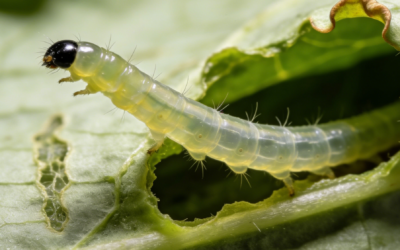
Stem borers are the number one concern. In sugarcane fields across tropical Asia, Africa, and the Americas, species like Diatraea saccharalis (the sugarcane borer) tunnel into the stalk. By the time you spot the “dead heart” in young shoots or the “dead top” in mature canes, the larva has already done its damage from the inside.
Chlorantraniliprole targets these lepidopteran larvae with strong precision. It activates ryanodine receptors in muscle cells. This causes paralysis and death. Plus, it causes far less disruption to beneficial insects than older organophosphates did.
Secondary Pests Worth Monitoring
Beyond borers, sugarcane fields face pressure from other destructive insects:
-
Termites and white grubs — attack the root zone, weakening plant establishment in ratoon crops
-
Cutworms and armyworms (Mythimna separata and related species) — cut young plants at the base during the early growth stages
-
Aphids, leafhoppers, and planthoppers — pierce plant tissue and spread viral diseases that stack up yield losses
-
Thrips — cause heavy damage during dry spells, especially when sugarcane is already under stress
-
Mole crickets — break apart root systems in sandy or loose soils
Why Pest Identification Comes First
Each pest behaves in its own way. Borers need systemic protection applied at planting or early tillering. Soil pests need granular formulations that reach the root zone. Foliar feeders need surface coverage at the right growth stage.
Most applications fail at this step — not because chlorantraniliprole doesn’t work, but because the wrong method gets used for the wrong pest.
Application Methods

Three delivery routes cover chlorantraniliprole use in sugarcane — soil application, foliar spray, and the furrow-plus-foliar combination. Each one serves a different purpose. Picking the right method isn’t hard, but the wrong choice means the active ingredient never reaches the pest at the right time.
Soil Application (Granular Formulation)
granular products like Ferterra 0.4G are built for soil incorporation. You drop them into the planting furrow before or at sowing time. The granules break down with soil moisture and release chlorantraniliprole into the root zone — right where stem borers and soil pests like white grubs and termites hit first.
Why this matters: Young sugarcane takes the most damage in the first 60 days. A granular application at planting gives the crop full systemic protection across that window. You’re not reacting to an infestation — you’re stopping it before it begins.
Standard dosage for granular soil application runs between 4–5 kg of product per hectare. This shifts based on soil type and pest pressure. Sandy soils with heavy termite activity usually need the higher end of that range.
Foliar Spray Application
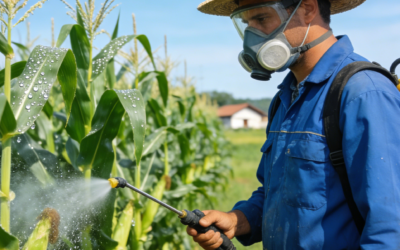
As the crop moves into the tillering and grand growth stages, foliar sprays become your main tool for above-ground pests — armyworms, thrips, and leafhoppers chief among them.
Chlorantraniliprole as a foliar treatment runs at 30–60 ml of product per 100 liters of water. Adjust that figure to canopy size and spray volume per hectare. The real priority is thorough coverage. Partial coverage leaves feeding zones exposed. Surviving larvae regroup fast, and you lose ground quickly.
A few practices that lift foliar spray results:
-
Spray timing: Go out in the early morning or late evening. Wind speeds are lower. Temperatures are cooler. Evaporation drops and the product sticks to the leaf surface better.
-
Water volume: Use at least 200–400 liters per hectare as carrier volume. This pushes the product through a thickening canopy and keeps coverage even.
-
Nozzle selection: Flat-fan nozzles give more uniform coverage across wide sugarcane rows. Hollow-cone types don’t spread as well on this crop.
The Furrow + Foliar Combination
Fields under heavy pressure with mixed pest populations — soil borers and foliar feeders — get the best results from a staged two-step plan. Granular chlorantraniliprole at planting deals with soil pest pressure in the early weeks. A targeted foliar application at 45–60 days then hits the second flush of above-ground insects.
This combination does more than improve control. It cuts the total number of spray runs needed across the season. That’s a real advantage on large blocks where labor costs add up fast.
Aerial application is a solid option on large-scale operations where ground equipment can’t get in mid-season. Ultra-low volume (ULV) formulations suit this approach best. Pair them with GPS-guided coverage tracking to close any gaps and prevent overlaps.
Dosage Rates

Getting the dose right isn’t a minor detail — it’s the difference between a protected crop and a wasted application. Chlorantraniliprole is built for precision. The rates reflect that.
Granular Soil Application Rates
Two active ingredient rates apply to granular soil applications. Each one produces a clear soil deposit level,The higher rate almost doubles your soil concentration. That’s a big difference in fields with heavy white grub or termite pressure. Dense pest populations need stronger, longer-lasting root zone protection — the 200 g rate gives you that staying power.
Furrow and Foliar Rates
Each delivery method has its own set rate:
|
Application Method |
Active Ingredient Rate |
|---|---|
|
Furrow application |
105 g ha⁻¹ |
|
Foliar application |
21 g ha⁻¹ |
|
Combined furrow + foliar |
105 g ha⁻¹ + 21 g ha⁻¹ |
The foliar rate runs lower by design. You need surface coverage and leaf uptake — not saturation. Overloading a foliar spray won’t improve control. It just drives up cost and residue load with no added benefit.
The combined program runs both rates in sequence — but separately. Furrow chlorantraniliprole handles soil-level control at planting. The foliar application targets above-ground pressure later in the season. These two rates serve different jobs. Don’t blend them or use one to make up for the other.
Calculating Your Exact Dose
Large fields rarely use round numbers. Use this formula to find your precise application volume from any active ingredient rate:
D ÷ H × V = X
-
D = dose required (active ingredient you want to deliver)
-
H = concentration you have (per mL or per tablet)
-
V = volume of the stock solution
-
X = the actual amount to measure and use
Example: You need 25 mg of active ingredient. Your product contains 50 mg per mL. Working volume is 1 mL.
→ 25 ÷ 50 × 1 = 0.5 mL
Run this calculation before every batch mix. It cuts out guesswork. Under-dosing lets pests bounce back. Over-application drains your input budget fast — faster than any pest pressure would. A quick calculation protects both your crop and your costs.
Timing
Miss the window by a week, and chlorantraniliprole becomes an expensive lesson rather than a solution.
Sugarcane pests don’t wait for a convenient schedule. Stem borers do their worst damage during two narrow windows — the establishment phase and the tillering flush. Apply outside those windows, and you’re treating damage that’s already done.
The Critical Application Windows
At planting (0–7 days before or after sowing) is the single most important timing for granular soil applications. Your chlorantraniliprole granules need to be in the ground at this point. Soil moisture activates the product. It then starts a slow, steady release that shields the root zone for the first 60 days of crop growth.
That 60-day stretch is non-negotiable. Young canes have no chemical defense of their own. A borer drilling into the base of a shoot at day 20 faces zero resistance from an untreated plant. A well-timed granular application puts the active ingredient in place before that borer ever arrives.
45 to 60 days after planting marks the second critical window. This is where foliar application earns its place in the program. Above-ground pest pressure peaks at this stage. Armyworms move in. Thrips build populations under the leaf canopy. Leafhoppers ramp up feeding on expanding shoot tissue.
A foliar chlorantraniliprole application timed to this window cuts off that second pest flush before it turns into a yield loss you’ll see at harvest.
Why Spraying Early Beats Spraying Late
Experienced growers see this pattern again and again — reactive spraying costs more and recovers less than preventive timing. Once a stem borer larva is inside the stalk, no foliar spray reaches it. The damage is locked in. You’re spending inputs to stop the next generation, not the one already feeding.
Apply chlorantraniliprole during the pre-infestation window and you hit the pest cycle at its weakest point. The larva runs into the active ingredient before it can settle in, feed, and tunnel deeper into the stalk.
Matching Timing to Weather Conditions
Rain right after a granular application is no problem — it speeds up soil incorporation. But heavy rainfall before a foliar spray means you need to reschedule. Runoff strips the product off leaf surfaces before it dries, and uptake drops fast.
Target foliar applications during dry stretches of at least 4–6 hours after spraying. Slots before 9 AM work best:
-
Wind speed is lower
-
Temperatures are moderate
-
Rain risk is minimal in most tropical growing regions during the dry season
That combination gives the product the best chance to absorb and do its job.
Efficacy and Results
Experienced growers already know this from watching their fields. The numbers back it up — chlorantraniliprole works, but the delivery method has to be right.
What the Field Data Shows
Foliar spray applications cut Diatraea saccharalis damage by 52%. That’s a real drop in borer pressure. It shows up as stronger stalk integrity at harvest. But there’s a finding growers need to understand before planning their program: furrow application alone produced no reduction in sugarcane borer damage.
Worth reading twice. Furrow chlorantraniliprole at planting guards the root zone against soil pests and early-season grub pressure. It does not stop stem borers from damaging cane on its own. That’s the foliar spray’s job — applied at the right growth stage, not as an afterthought.
There’s a second finding that matters. One foliar spray is not enough to prevent D. saccharalis damage. A single application cuts the pressure, but it doesn’t shut the door. Fields under heavy infestation, or those with a long borer flight period, need a coordinated program.
Where Granular Formulations Prove Their Value
Granular chlorantraniliprole embedded in fertilizer carriers does something a spray-only approach can’t match. Studies confirm these products keep sugarcane less affected by pest pressure. Yield improves. Quality holds up across the full growing season.
Pairing granular chlorantraniliprole with clothianidin brings a combined benefit. The combination lowers the required dose of each product. It also cuts the risk of resistance building over back-to-back seasons. On farms where the same fields get planted year after year, that’s a real practical gain.
Persistence is another quality that doesn’t get enough attention. Chlorantraniliprole residues in sugarcane field soil stay active well past the initial application window. Data from rice systems backs this up — 40–80% D. saccharalis mortality at the two-month mark. The active ingredient holds its ground once it’s in the soil.
None of this hurts the crop. Research confirms chlorantraniliprole has no measurable effect on initial sugarcane development or production. The plant grows clean. The pest load drops. That’s exactly what growers are paying for.
Formulation Benefits
The formulation you choose doesn’t just change how you apply chlorantraniliprole — it changes what the product can actually accomplish inside your field.
This distinction matters more than most growers realize. Two products can carry the same active ingredient at the same rate and produce very different outcomes based on one variable: how that ingredient is packaged and delivered.
Granular vs. Liquid — A Functional Split
Granular formulations like Ferterra 0.4G are engineered for the soil environment. The carrier matrix releases chlorantraniliprole gradually as soil moisture increases. That slow-release mechanism extends the protection window significantly — residues remain biologically active for up to two months after application. A liquid spray simply cannot replicate that persistence in the root zone.
Liquid formulations work by a different logic. They’re built for speed and surface contact. Diluted in water and sprayed across the canopy, they deliver fast knockdown on above-ground feeders. The trade-off is durability — rain and UV exposure degrade the product more quickly than a granule sitting beneath the soil surface.
The Carrier Matters Too
Granular chlorantraniliprole embedded in fertilizer carriers does something a standalone granule can’t — it lets you combine nutrition and pest protection in a single pass. That operational efficiency translates directly into lower labor runs and fewer trips through the field during the critical early weeks.
When paired with clothianidin in the same formulation program, the combination lowers the required dose of each active ingredient while simultaneously reducing resistance pressure. Two mechanisms. One coordinated application. That’s the practical value of formulation strategy working in your favor.

Chlorantraniliprole isn’t just another pesticide on the shelf. It’s a precision tool that changes how you manage pest pressure in sugarcane — and it works best when you use it right.
The numbers back this up. Timing, dosage, and application method all matter. Get all three right, and you protect your crop. Miss even one, and you lose yield — and money.Reactive pest management in sugarcane costs you. Proactive use of chlorantraniliprole pays you back.
One last thought — the farmers getting the best results aren’t using more product. They’re using it smarter.
/

0 Comments