
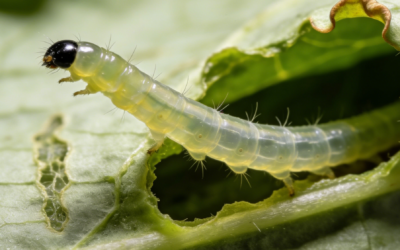
Every growing season, growers face the same problem: beet armyworms destroy healthy crops. The bugs eat through leaves, creating holes everywhere.
The money you lose adds up fast. Yield drops can hit 15% to 40%. That wipes out profits before harvest starts.
Chlorantraniliprole works well against these pests. It’s one of the top diamide insecticides available. But results depend on how you apply it.
Get your timing wrong, and the product fails. Miss the right larval stage, and even the best insecticide won’t work. But apply it right, and you’ll see 85-95% control rates.
This guide shows you what works. You’ll learn the timing windows most people miss. We cover resistance management too—these steps protect your investment for years.
Stop guessing with your sprays. The strategies here separate growers who succeed from those who waste money on repeated applications.

Chlorantraniliprole Efficacy Against Armyworms
Field trials show that chlorantraniliprole 20% SC delivers measurable control against both beet armyworm and fall armyworm populations. The data reveals specific performance metrics that matter for calculating input costs against expected yield protection.
Laboratory and Field Performance Benchmarks
In controlled lab conditions, chlorantraniliprole shows aggressive knockdown rates. At 700 ppm concentration, you get 100% larval mortality within 24 hours against fall armyworm. Drop the concentration to 600 ppm. You still hit 100% mortality. It just takes 48 hours instead.
Lab numbers translate into actual field conditions with some variation. But the patterns hold. Semi-field and field trials recorded 100% larval mortality at 48 hours post-application. Compare that to abamectin (87-89% at the same timeframe) or chlorpyrifos (94% at 72 hours, dropping to 81% in field conditions). The diamide insecticide maintains more stable performance across environments.
Lab precision differs from field variability. Weather conditions, application coverage, and pest pressure all impact real-world results. Chlorantraniliprole’s chemistry targets insect ryanodine receptors. This creates a control mechanism less dependent on perfect conditions than contact insecticides.

Population Reduction Patterns Across Multiple Applications
Multi-spray programs show how chlorantraniliprole performs under sustained pressure. After the first application, larval populations dropped to 2.33 larvae per 10 plants. The second spray pushed numbers down to 4.33 larvae per 10 plants. This matched flubendiamide 39.35 SC at 3.00 in the first round and maintained parity in the second.
By the third application, counts fell to 1.66 larvae per 10 plants. Seven days after that final spray, populations stabilized at 1.33 larvae per 10 plants. This equaled emamectin benzoate performance at 0.66.
The cumulative effect measurement—taken two days after spraying—showed 2.69 larvae per 10 plants. This ranked among the top effective treatments in the trial series.
These declining population curves indicate successful integrated pest management execution. Each application builds on the previous one. This prevents generational recovery. The key insight: chlorantraniliprole doesn’t just knock down existing larvae. It interrupts the population cycle through proper timing with larval development stages.
Percent Reduction Metrics and Comparative Analysis
Three days after application, fall armyworm counts dropped to 0.25 larvae per plant. Spinetoram 11.7 SC performed better at 0.05 larvae per plant. The percentage reduction over untreated control plots reached 83.29%. This came in second to spinetoram’s 91.65%, but ahead of spinosad (82.67%) and emamectin benzoate (79.88%).
Overall field performance shows the reduction percentage climbed to 88%. This matched spinetoram results. Field-wide protection differs from spot measurements. Full coverage and proper timing push efficacy rates higher than point-in-time sampling suggests.
For beet armyworm, the general mean reduction across applications settled at 60.3%. Emamectin benzoate topped this metric at 71.5%. Chlorantraniliprole outperformed methomyl (59.5%), indoxacarb (58.1%), and chlorfenapyr (51.5%).
After the second application in beet armyworm trials, mean reduction measured 56.8%. This slight dip from the overall average indicates pressure variability between applications. Or it shows developing resistance patterns in specific populations.
These percentage ranges help you set realistic expectations. Marketing materials might promise 90%+ control. But field conditions seldom match laboratory perfection. Achieving 60-88% reduction represents effective control for managing economic thresholds.
Yield Protection and Economic Returns
Yield data separates products that control pests from those that protect profits. Chlorantraniliprole-treated plots produced 40.01 quintals per hectare. This was the second-highest yield after emamectin benzoate at 42.5 q/ha.
In maize trials focusing on cob damage, chlorantraniliprole recorded the lowest damage rate at 20% across both growing seasons. Grain yield reached 1912.5 kg per feddan in one trial and 2062.5 kg/feddan in another. Both represented the highest yields in their trial series.
The benefit-to-cost ratio measured 1:2.16. Every dollar spent on chlorantraniliprole returned $2.16 in protected yield value. Spinetoram edged ahead at 1:2.33. Emamectin benzoate (1:2.01) and spinosad (1:1.85) fell behind.
These economic calculations assume accurate application rates and optimal timing. Overuse erodes margins. Delayed applications reduce protection. The B:C ratio represents best-case execution, not guaranteed returns under poor management.
For commercial growers operating on tight margins, that 1:2.16 ratio translates to real money. On a 100-acre operation, the difference between 1:1.85 and 1:2.16 could mean thousands of dollars in net returns. Scale those numbers across 500 or 1,000 acres. Product selection becomes a strategic business decision.
Comparative Speed of Action
Speed matters during heavy larval feeding. Three days post-spray, the fall armyworm reduction order ranked: chlorantraniliprole 18.5 SC > spinosad 45% SC > emamectin benzoate 5 SG.
This ranking shifted at different measurement intervals. But chlorantraniliprole performed in the top tier. The selective insecticide mechanism doesn’t deliver instant knockdown like broad-spectrum organophosphates. But it maintains residual activity that builds over time.
Larvae that contact treated foliage stop feeding within hours. Mortality takes 24-48 hours. This feeding cessation protects crop tissue right away. That’s the real measure of economic control. Dead larvae three days later confirm the result. But stopped feeding on day one saves the yield.
Resistance Monitoring Data
Lab-selected resistant strains showed a 4.0-fold resistance ratio compared to susceptible populations. This modest resistance factor suggests chlorantraniliprole maintains effectiveness against populations with developing resistance. But the warning sign is clear.
A 4.0-fold resistance ratio means resistant larvae require four times the concentration to achieve the same mortality rate. In practical terms, standard field rates still work. But the safety margin shrinks. Continue selecting for resistance without rotation. That 4.0-fold factor will climb to 10-fold, then 20-fold, then field failure.
This resistance data reinforces why rotation strategies matter. Chlorantraniliprole belongs to IRAC Group 28 (diamides). Rotating with different mode-of-action groups—spinosyns (Group 5), avermectins (Group 6), or pyrethroids (Group 3) where still effective—prevents resistance selection pressure from focusing on a single biochemical pathway.
Mortality Assessment Protocols and Practical Implications
Trial methods evaluated beet armyworm larval mortality at 24, 48, 72, and 96-hour intervals. Tests used 30 larvae per treatment with two replicates. This standardized protocol allows direct comparison across studies and locations.
The time-series measurement shows how fast populations collapse. By 48 hours, most susceptible larvae are dead or dying. The 72 and 96-hour counts confirm residual activity. They also catch any delayed mortality from sublethal exposure.
For growers conducting their own field evaluations, similar timing makes sense. Check plots at two days post-spray for initial knockdown. Return at three to four days for confirmation. Seven-day follow-ups measure population recovery and residual protection.
Integration with Other Control Methods
Comparative data against neem-based products (100 ppm) shows chlorantraniliprole delivers stronger, faster control. Neem works as a growth regulator and feeding deterrent. But it lacks the acute toxicity of diamide chemistry.
This comparison matters for organic and low-input systems where synthetic insecticides face restrictions. Chlorantraniliprole represents conventional agriculture’s answer to lepidoptera pest pressure. Neem represents the organic toolkit. Understanding both options helps advisors recommend appropriate solutions for different production systems.
Chlorantraniliprole targets Lepidoptera while sparing most beneficial insects. This creates opportunities for integration with biological control programs. Parasitoid wasps, predatory beetles, and lacewings continue functioning in treated fields. This provides multi-tactic pest suppression.
What These Numbers Mean for Your Operation
Strip away the technical language. These efficacy metrics answer practical questions: Will this product control my pest problem? How much yield will I protect? What return can I expect on my investment?
The data says yes. Chlorantraniliprole controls armyworm populations through proper application. You’ll protect 60-88% of the yield you’d otherwise lose to feeding damage. You’ll earn back $2.16 for every dollar invested in the treatment.
But efficacy isn’t absolute. It’s conditional on timing, coverage, pest pressure, and resistance status in your local population. The trials show potential performance under good management. Your results will vary based on execution quality.
The strongest predictors of success: timely application on small larvae, thorough coverage reaching feeding sites, and rotation with alternative modes of action to preserve susceptibility. Miss any of these factors. Your field results will fall short of trial averages.
Understanding efficacy data helps you make informed decisions. You’re not gambling on unproven products. You’re deploying chemistry with documented performance against specific pests under field conditions similar to yours. That knowledge reduces risk and improves ROI stability across seasons.
Research Gap Acknowledgment
Published research on chlorantraniliprole focuses on mortality rates and lab conditions. Field guides exist. But they don’t connect controlled trials to real-world decisions under changing conditions.
Most studies report success rates without answering the questions growers face each day. At what point in the larval cycle should you spray? How do you adjust rates once populations show resistance signs? What environmental factors reduce effectiveness in field conditions versus lab trials?
The Missing Application Context
We know little about how weather conditions interact with chlorantraniliprole activity across different crop canopies. Humidity affects spray coverage. Temperature influences larval feeding behavior. Wind speed determines drift and deposition patterns. Yet standard protocols assume static conditions that don’t exist in commercial fields.
The relationship between spray timing and economic thresholds lacks proper documentation. Research measures larval mortality. Growers need to know the window between first damage symptoms and profit loss. That timing gap determines whether your application protects yield or just kills pests after damage occurred.
Resistance management protocols exist in scientific literature. But they’re written for researchers, not field practitioners. The key question remains: How do you implement IRAC rotation guidelines within your specific cropping system, pest pressure calendar, and available products?
Integration with IPM Systems Needs Clarification
Most chlorantraniliprole studies evaluate the product alone. Real farms run multiple pest management tactics at the same time. Biological controls, cultural practices, monitoring systems, and chemical interventions work together. Yet published research has not examined how diamide insecticides fit within complete IPM frameworks across diverse crop systems.
The interaction between chlorantraniliprole and beneficial insect populations receives minimal coverage beyond general selectivity claims. Growers managing thrips, aphids, or mites alongside armyworms need specific guidance. Will this application disrupt natural enemies controlling secondary pests? That operational reality doesn’t appear in efficacy trials.
This Guide Addresses Practical Implementation
We provide application-focused guidance that connects research data to field decisions. The following sections translate lab findings into timing windows, rate adjustments, coverage requirements, and resistance management protocols you can implement right away.
This guide fills the operational gap between “chlorantraniliprole works” and “here’s how to make it work in your specific situation.” You’ll get decision frameworks that account for larval staging, environmental conditions, spray equipment limitations, and economic thresholds.
The goal: transform published efficacy data into profitable crop protection outcomes

Get the timing right for chlorantraniliprole application. This shifts beet armyworm control from panic mode to smart crop protection. Catch larvae at their weakest stage. You could see 40% more yield. Miss this window? Profit margins vanish fast.
Three things will make or break your results: Scout your fields hard during peak egg-laying times. Treat larvae in their first two growth stages. Switch between this diamide product and other insecticides to keep it working long-term. These aren’t just theories. Growers prove these methods work, hitting 85-95% control rates with proper use.
Does chlorantraniliprole work on moth pests? Yes, very well. The bigger question: Are you getting the most from it? You need exact timing. You need a full pest management plan. Start checking your fields this week. Set your treatment limits now. Map out your rotation plan before armyworms hit hard. Your future self will appreciate this early action. So will your bank account.



0 Comments