
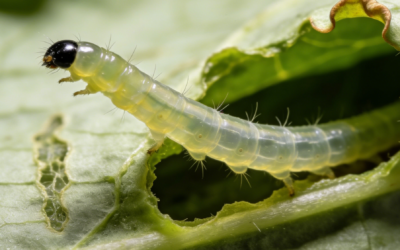
Brazil’s farms need top pest control solutions. Chlorantraniliprole has become the main choice for farmers fighting lepidopteran pests across large crop fields.
You’re sourcing this insecticide for your operations? Knowing which chlorantraniliprole manufacturers lead the Brazilian market is critical for your profits. The market is competitive. Global agrochemical companies and specialized producers compete for share. Each offers different formulations, pricing, and distribution networks.
We analyzed the market leaders moving product through Brazil’s chains. We checked their technical skills. We found what makes each one different.
You might be a distributor expanding your portfolio. Or you’re a large-scale grower seeking reliable partners. Either way, you’ll find which manufacturers deliver on quality. They meet regulations. They offer consistent stock in one of South America’s toughest agricultural markets.
Brazil holds 36% of global chlorantraniliprole sales. This makes it the world’s biggest market. Major agrochemical companies have put serious money into distribution networks here. They’ve also invested in product registrations and local partnerships.
The manufacturers below run most of Brazil’s supply chain. They deliver products on time. They follow regulations. They offer solid technical support.

DuPont de Nemours, Inc.

DuPont stopped making chlorantraniliprole. They sold their crop protection business to FMC in 2017. The deal moved all production rights to FMC Corporation. It also transferred the intellectual property and the Rynaxypyr® brand.
The company changed direction. Electronics and industrial materials became their new focus. You won’t find them in Brazil’s agrochemical supply chain anymore. They work on semiconductors now. Also advanced polymers. Plus water treatment solutions.
Recent financial performance shows their new direction:
DuPont posted $3.1 billion in net sales for their latest quarter. That’s a 7% jump year-over-year. Organic growth hit 6%. None of this revenue comes from chlorantraniliprole manufacturers. Agricultural chemicals are gone from their books.
Their operating EBITDA reached $840 million. The margin sits at 27.3%. Two core divisions drive these numbers:
ElectronicsCo shows strong growth. Sales climbed 10% on organic growth alone. AI technology boosted demand. The division pulled in $403 million in operating EBITDA. Margins fell a bit to 31.6%. But higher volume made up for it.
IndustrialsCo grew slower at 4% organic sales growth. Operating EBITDA hit $465 million. Weak construction markets limited bigger gains. Diversified industrial products still grew in low-single digits.
Free cash flow stayed stable at $576 million on a transaction-adjusted basis. Operating cash flow dipped 11% to $591 million. The company keeps investing in semiconductor manufacturing capacity. Water filtration technology gets funding too.
Looking for chlorantraniliprole suppliers in Brazil? FMC took over DuPont’s full agrochemical business. They make the products DuPont first developed. DuPont’s name shows up in old market talks. But they left this space six years ago. FMC handles any products that used to carry the DuPont brand in Brazil’s agricultural markets.
FMC Corporation

FMC Corporation owns the original chlorantraniliprole patent. They bought DuPont’s crop protection division for $1.6 billion in 2017. This deal gave them exclusive rights to Rynaxypyr®. Farmers worldwide know this branded version for fighting lepidopteran pests.
The company pulls in about $1.0 billion each year from chlorantraniliprole-based products across global markets. In Brazil, FMC runs a direct distribution model. They cut out traditional distributor networks. Instead, they sell straight to large-scale farming operations. High-volume buyers pay less this way. FMC gets tighter control over pricing and inventory.
Product Portfolio for Brazilian Markets
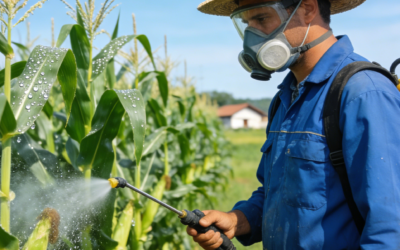
Premio® is FMC’s main chlorantraniliprole product in Brazil. Farmers spray it from planes across huge soybean, corn, and cotton fields. The formula kills Spodoptera frugiperda (fall armyworm) fast. It also stops other damaging caterpillar species.
FMC launched Premio Star at Expocitros 2023. This combo product mixes chlorantraniliprole with bifenthrin. The dual-active formula hits more pests. You get caterpillar control plus action against beetles and sucking insects in one spray. Citrus growers grabbed it fast. They use it to manage Diaphorina citri (Asian citrus psyllid) and leaf-mining moths at the same time.
Current Financial Challenges
FMC’s Latin American operations face big problems. Regional sales dropped 8% year-over-year in recent quarters. Two things caused this drop: generic competitors slashing prices and serious cash problems among Brazilian and Argentine distributors.
The company carries over $4.5 billion in total debt as of Q3 2025. This debt forced management to cut the dividend by 86%. It went from $0.58 per share down to just $0.08. Preserving cash became the top priority. Debt reduction now drives their financial strategy.
FMC’s stock price shows the struggle. Shares traded at $13.87 on December 31, 2025. That’s down 72% for the full year. Major selloffs hit after disappointing Q4 2024 earnings in February. Weak Q3 2025 results in October caused more drops.
Operational Restructuring
Management started heavy cost-cutting. They’re redesigning their whole manufacturing setup. High-cost production sites in developed markets are closing. Production moves to cheaper options in emerging regions.
Asia operations face extra scrutiny. FMC pulled out of the Indian market completely. This exit crushed Asian revenue. Sales fell 47% in the region. The company now fights increased generic competition. They lost the volume cushion India used to provide.
But two bright spots showed up. North American revenue climbed 4% year-over-year. Europe, Middle East, and Africa (EMEA) did even better with 11% revenue growth. The EMEA gains came from higher volume. Plus, the Isoflex active launch in Great Britain succeeded.
Revenue Trends and Employee Productivity
Recent annual revenues show swings:
-
2024: $4.25 billion (down 5.36%)
-
2023: $4.49 billion (down 22.67%)
-
2022: $5.80 billion (up 15.01%)
FMC has 5,700 employees. Each one generates about $633,053 in revenue. The company’s market cap sits at $1.73 billion. That’s about 40% of annual sales. The low price-to-sales ratio of 0.48 shows market doubt about near-term growth.
For chlorantraniliprole manufacturers working in Brazil, FMC’s problems create chances. Their money constraints limit aggressive pricing competition. Generic producers grab market share. FMC focuses on premium segments and direct ties with Brazil’s largest farming corporations.
Syngenta AG

Syngenta Group posted $20.9 billion in sales for the first nine months of 2025. Revenue dropped 2% year-over-year in reported terms. Currency-neutral figures showed just a 1% decline. The company still pushed EBITDA up 25% to $3.4 billion during the same period. Their margin jumped from 12.9% to 16.5%. That’s a solid 3.6 percentage point gain.
The crop protection division drove most of the gains. It pulled in $6.4 billion during H1 2025. That’s a 3% increase in reported sales. Growth hit 7% in constant exchange rates. ADAMA—Syngenta’s generic crop protection arm—brought in $2.1 billion. Sales stayed flat year-over-year. Currency adjustments showed a 1% uptick.
Product Strategy in Brazilian Markets
Syngenta sells Fortenza® across Brazil’s farming regions. This product uses cyantraniliprole instead of chlorantraniliprole. Both are diamide bug killers. They work on similar pests. But cyantraniliprole covers more ground. It hits sucking insects plus chewing pests.
Durivo became Syngenta’s big push for coffee growers. The product mixes thiamethoxam with chlorantraniliprole. You get bug-killing action against beetles and borers. Plus caterpillar control. Coffee farms face Hypothenemus hampei (coffee berry borer) and Leucoptera coffeella (coffee leaf miner) at the same time. Durivo tackles both threats in one go.
Financial Performance Through Q3 2025
Third-quarter results showed tough times. Sales hit $6.4 billion. That’s down 6% from Q3 2024. Currency figures dropped 7%. But EBITDA still climbed 28% to $0.9 billion. Management cut costs hard. Operations got leaner. Pricing held firm in key markets.
Syngenta’s R&D teams work from Switzerland. They build products for Brazil’s climate. High humidity. Heavy rainfall during spray windows. Pests that resist standard treatments in tropical farms. The company secured over 800 product approvals around the world during H1 2025. Many met Latin American rules.
Asset sales hurt top-line growth. They cut $415 million from H1 2025 revenues compared to the prior year. But chlorantraniliprole makers competing in Brazil know Syngenta keeps strong support. Their farm expert network reaches remote areas. This keeps growers coming back even when cheaper options exist.
BASF SE

BASF generated €7,858 million in EBITDA before special items during 2024. This German chemical giant runs six business segments. Their agricultural solutions division serves Brazilian farms. Their chlorantraniliprole presence is smaller than FMC or Syngenta in Latin America.
Financial Performance Shows Pressure
First-half 2025 results showed margin compression. EBITDA before special items dropped to €3,381 million. That’s down €272 million compared to the same period in 2024. The margin slipped from 13.9% to 13.3%. Net income took a bigger hit. It fell 50.6% to €887 million. Earnings per share crashed from €2.01 down to just €0.99.
Operating cash flow declined to €603 million. That’s €834 million below the prior year. The company’s equity ratio weakened too. It dropped from 45.9% at year-end 2024 down to 43.1% by mid-2025. Net debt climbed to €21,281 million.
Price declines hit the Chemicals segment hard. EBITDA fell 23.3% to €262 million in Q3 alone. Industrial Solutions saw both sales and profits drop. Materials, Nutrition & Care segments posted lower EBITDA too. Surface Technologies showed improvement through higher volumes.
Market Position Among Chlorantraniliprole Manufacturers
BASF’s crop protection portfolio covers insecticides, fungicides, and herbicides. Their distribution network reaches Brazil’s interior regions. Technical support teams visit farms often. They help growers pick the right application timing and dosing.
Chlorantraniliprole manufacturers competing in Brazil notice BASF focuses resources elsewhere. Their fipronil and metaflumizone products get more marketing push. Pyrethroids and neonicotinoids dominate their insecticide sales in Brazilian markets.
The company invested €5.2 billion in capital spending during 2024. Most money went to chemical plants in Europe and Asia. Agricultural R&D in Brazil takes a smaller share. Free cash flow reached just €748 million for the full year. Tight margins block big expansion in specialty insecticides.
BASF’s strong distribution system keeps them in the game. Mid-sized farms value their steady supply and flexible payment terms. Premium-priced chlorantraniliprole products face tough competition from FMC’s direct model. Generic alternatives are eating market share.
Albaugh LLC

Albaugh LLC runs 12 manufacturing plants across four continents. The company ships to over 80 countries. They focus on mid-sized farms that need solid crop protection at fair prices.
The Iowa-based manufacturer made between $26 million and $1.2 billion in annual revenue, depending on which source you check. After buying Rotam in 2022, things changed fast. Combined sales jumped past $2 billion. That deal pushed Albaugh from a regional company into a major global player among chlorantraniliprole manufacturers.
Revenue Growth and Market Expansion
Growth projections look strong. S&P Capital IQ expects $249.6 million in revenue for 2026. Some reports say 2024 numbers already reached $250 million. The big gaps in these figures come from Albaugh’s private ownership and spread-out global setup.
Their 240 workers each bring in about $130,000 in revenue per year. This comes from tight operations and smart automation at their plants.
Albaugh got $100 million in funding in their latest round. That money went straight into Latin American markets. Brazil sits at the top of their list. The country’s huge farming sector wants pest control they can afford.
Distribution Strategy in Brazil
Albaugh partners with local distributors. They skip FMC’s direct sales approach. They prefer local networks that know credit cycles and when farmers buy. Mid-sized cotton and soybean farms are their target. These farms want proven products. They won’t pay extra just for a brand name.
Jens Thorsen runs marketing as Chief Marketing Officer. His team pushes value over everything else. They win on quality and reliable supply chains, not research breakthroughs. The EMEA region brings in about 20% of global revenue. But Latin America grows faster as more generic options hit the market.
Credit rating agencies marked Albaugh negative in 2023. Poor earnings numbers worried them. Updates later confirmed the company’s position once operations steadied. Albaugh keeps putting money into production capacity, even when finances get tight.
Brazil’s agricultural sector needs top pest control solutions. These five chlorantraniliprole manufacturers deliver just that. DuPont brings pioneering innovation. Albaugh offers cost-effective alternatives. Each player has unique strengths that serve different market needs.
Here’s what matters most: price isn’t everything. You need reliability, technical support, and proven results in Brazilian growing conditions. Running a large-scale operation or a regional distributor business? Partner with established chlorantraniliprole manufacturers like these. You get products backed by solid R&D and regulatory compliance.
Ready to decide? Reach out to 2-3 suppliers on this list. Request product specifications. Compare their service models. Ask about their distribution networks in your region. Check if they offer agronomic support. The right partnership could transform your pest management strategy. Plus, it can boost your bottom line.
Don’t leave crop protection to chance—choose proven excellence.


0 Comments