
Pests destroy crops around the world. Farmers lose billions each year because of them. Chlorantraniliprole has become one of the best solutions for pest control today.
This insecticide works differently. It doesn’t kill everything in sight. Instead, it targets specific moth and beetle pests with sharp accuracy. Beneficial insects stay safe.
You’re dealing with stubborn pest problems? You need to know which pests chlorantraniliprole handles best. This knowledge saves you money and stress.
Cutworms cut down young seedlings overnight. Armyworms can destroy entire fields in just days. We’ve found five major pest types where this ingredient performs best. You’ll get field-tested results and practical tips. These details help you make smart choices for your pest management plan.
Agrotis ipsilon
Agrotis ipsilon is one of the most damaging cutworm species farmers deal with. This nighttime pest got its name “black cutworm” from how it feeds. The larvae cut through young plant stems right at ground level during the night.
Geographic Spread and Seasonal Migration
Black cutworms live across the globe. You’ll find them in 48 U.S. states plus Hawaii, southern Canada, Mexico, Central America, and South America. They also thrive in Australia, New Zealand, the Pacific Rim, North Africa, Europe, and Asia.
What makes them hard to manage? They migrate with the seasons. Adults fly north in spring. They head back south in fall. This means new infestations pop up in areas that looked clear just weeks before.
Physical Characteristics Across Life Stages
Adult moths have 35-50 mm wingspans. Their forewings reach 18-24 mm long. But larvae cause the real damage. Fresh caterpillars start small at 3 mm long. By their final growth stage, they reach 35-50 mm. Some grow to 45 mm.
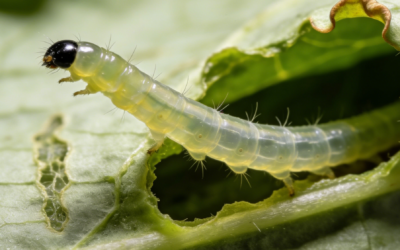
You need to identify these larvae for good control. Look for their brown to grey or black color. Their bodies have rounded bumps and large raised spots on the back end. These spots measure 2-3 times larger than the ones up front. Black breathing holes line their sides. They don’t have any stripe pattern on top.
Why Chlorantraniliprole Works
Chlorantraniliprole controls black cutworms well. It targets moths and butterflies. The chemical stops muscle function in feeding larvae. Crop damage stops within hours after you apply it. It keeps helpful bugs alive too. Ground beetles and ants help control cutworm numbers on their own.
Female moths lay huge egg batches—up to 1,200-1,900 eggs at once. Apply chlorantraniliprole before eggs hatch. This stops whole generations from taking over your fields.

Spodoptera litura
Spodoptera litura goes by two names: tobacco cutworm and cluster caterpillar. This pest destroys crops across Asia and beyond. Between 2019 and 2023, monitoring stations captured 70,835 moths. Numbers peaked at 20,029 in 2023 alone. Farmers need effective control solutions now.
Migration Patterns and Reproductive Capacity
Spring and autumn bring heavy migration waves. April through May sees moths moving into new territories for the growing season. October through December marks their return journey. These massive movements bring fresh infestations to fields. Crops can seem pest-free one week, then infested the next.
The reproductive data shows why populations explode fast. Female moths maintain a 94.7% mating rate during peak months like March. Even in the slowest period (November), the rate stays above 80%. Laboratory studies show females produce an average of 3,548 eggs each. Field observations confirm the same high numbers—3,452 to 3,072 eggs per female under outdoor conditions.
March is the most critical breeding period. Ovarian development reaches 4.2 on a 5-point scale. Average mating frequency hits 2.2 times per female. Statistical analysis confirms these annual variations matter (F=3.298, p=0.020 for ovarian development; F=4.420, p=0.005 for mating frequency).
Migration Source Analysis
Tracking data shows where these pests come from. Backward migration comes 48.1% from China and 51.9% from Myanmar. Forward migration shows even stronger patterns—95.3% from China and Myanmar combined. Just 4.7% comes from southern Asian regions.
Host Plant Preferences and Feeding Damage
Citrus growers face tough challenges. Third-instar larvae show clear feeding preferences across varieties. On grapefruit, larvae consume 2.70 cm² of leaf area. They show minimal weight gain of just 7.02 mg—the lowest among tested varieties. The relative growth rate drops to 0.20 mg/mg/day. The relative consumption rate spikes to 11.83 mg/mg/day. Larvae eat more but gain less weight on grapefruit.
Feutrell’s citrus tells a different story. Larvae gain 97.93 mg in weight. Conversion efficiency reaches 99.26%. Seedless Kinnow produces the highest relative growth rate at 2.26 mg/mg/day. These variations (p<0.05) help farmers predict which crops face the greatest risk.
Chlorantraniliprole disrupts this pest’s lifecycle at the most vulnerable stage. Apply it before eggs hatch or during the first larval stages. It prevents the massive feeding damage these statistics represent. The compound’s selective action preserves natural predators. It stops S. litura populations before they reach their destructive potential.

Helicoverpa armigera
Cotton bollworm (Helicoverpa armigera) is one of agriculture’s most expensive pests. This species costs over $5 billion worldwide each year. That includes both control costs and crop losses. Asia, Europe, Africa, and Australasia lose more than $2 billion every year. Brazil’s 2012/2013 season alone lost $800 million to this pest.
Wide Adaptability and Host Range
H. armigera eats plants from more than 67 plant families. It targets Asteraceae and Fabaceae crops most. Your soybean, cotton, cowpea, corn, small grains, tomatoes, citrus, and pasture fields are all at risk. This wide diet means crop rotation alone won’t stop it.
The pest breeds fast. Tropical regions see 11 generations per year. Subtropical areas get 5 complete generations. Brazilian research shows H. armigera finishes its life cycle 28% faster than its close relative H. zea. High breeding rates mean small outbreaks grow huge within weeks.
Field Monitoring Data
Puerto Rico’s pheromone trap network (2018-2021) caught large numbers. Juana Díaz stations recorded 1,835 moths using H. armigera-specific lures. Salinas stations caught 734 moths. The H. zea lure showed similar patterns. Both species share the same areas and need coordinated control.
Economic Thresholds and Treatment Timing
Soybean growers in the Mid-Southern U.S. should treat at 2-3.5 larvae per row-meter. This matches the standard 3.5 larvae per row-meter or 9 larvae per 25 sweeps used for H. zea. Track at these levels to stop economic damage. You’ll avoid needless treatments too.
The Resistance Challenge
H. armigera resists 48 different active ingredients. That puts it in the top 10 most resistant pests worldwide. It shows strong resistance to pyrethroids, organophosphates, and carbamates. In India and China, about 50% of all insecticides target this one species. Resistance keeps building.
Chlorantraniliprole Performance
Bioassay tests in Puerto Rico checked how well it works at label rates. After 48 hours, chlorantraniliprole hit 90.62% mortality (81.36–99.99% confidence interval). Emamectin benzoate did better at 100% mortality. Spinetoram topped 70% control. Esfenvalerate worked least well. Statistical tests confirmed strong insecticide effects (F=87.20, p<0.0001).
Chlorantraniliprole works where older chemicals don’t. Rotate modes of action using IPM and IRM guidelines. It pairs well with Bt crops. Cry1Ac traits cut leaf loss and pod damage in Brazilian fields. Cry1Ac + Cry1F stacks give high control through both growth stages—vegetative and reproductive. This mixed approach guards your investment from resistance.

Spodoptera frugiperda
Fall armyworm (Spodoptera frugiperda) invaded Africa in 2016. It spread across the continent faster than any other farm pest in modern history. By 2018, this moth had built populations in 44 African countries. The economic damage keeps climbing. Africa faces up to $9.4 billion in annual yield losses at worst-case projections. Maize—the continent’s staple food—suffers the most.
Geographic Invasion and Host Preferences
S. frugiperda came from tropical and subtropical regions of the Americas. It lived there for centuries before jumping continents. Today it threatens farms across Africa, Asia, and Australia. The pest feeds on maize as its main target. It also attacks soybean plants. It damages stems and leaves of many crops. Brazil’s vast soybean and corn zones remain at constant risk.
Documented Yield Losses Across Africa
Field data shows devastating impacts. Southern Ethiopia recorded 11.5% yield loss. This happened even after farmers used pest management methods. Ghana and Zambia farmers reported 22–67% losses at the farm level. Kenya’s national surveys found 47% yield reduction in early outbreak studies.
Zimbabwe’s data showed 9.4% losses. Kenya’s longer-term tracking found 37% losses during the long rains of 2017. Short rains that year and long rains in 2018 still showed 33% losses. The percentage of affected farmers dropped from 54% in 2017 to 42% in 2018. Numbers got better, but damage stayed severe.
Regional patterns differed by farming potential. Kenya’s low and medium-potential areas lost more than 50% of maize crops in 2017. That dropped to around 20% by 2018. High-potential zones lost 30% in the first outbreak year. Without any control, models predict 21–53% continental losses. That equals 8.3–20.6 million tonnes of maize each year.
Economic Ripple Effects Beyond the Field
Fall armyworm doesn’t just cut yields. It changes farm economics and market dynamics. Maize sales volume dropped sharply. Household consumption stayed stable short-term. Farmers sold less to markets. Supply fell. This disrupts food prices and availability for millions.
Insecticide use jumped after the pest arrived. The data shows a clear crowding-in effect. Farmers who faced fall armyworm bought more chemicals. But current control methods deliver poor results. Chemical sprays, handpicking, and traditional methods like ash application show no major loss reduction in field studies. Farmers spend more on insecticides. Damage continues.
Fall armyworm exposure and insecticide use are linked. But results remain limited with standard products. Trust in extension services matters more than chemical inputs for cutting actual losses. Many regions lack the ability to deliver proper guidance.
Why Chlorantraniliprole Offers Real Solutions
Chlorantraniliprole breaks this cycle of expensive, failed treatments. It targets Lepidoptera larvae with precision during their most vulnerable feeding stages. The compound stops muscle contraction in fall armyworm larvae within hours. Crop damage stops before economic thresholds hit. Broad-spectrum insecticides kill helpful predators. Chlorantraniliprole preserves natural enemies that help control fall armyworm populations.
For smallholder farmers across Africa and Asia facing billion-dollar losses, this targeted action means better protection with fewer applications. It solves the core problem: controlling fall armyworm without triggering pest resurgence from wiping out helpful insects.

Diabrotica spp. (Corn rootworm)
The corn rootworm complex ranks as North America’s most expensive corn pest. Five species exist across the continent. Western Corn Rootworm (WCR, Diabrotica virgifera virgifera) causes the worst economic damage throughout the U.S. Corn Belt.
Economic Impact That Reshapes Farm Budgets
U.S. farmers face about $1 billion in annual costs from corn rootworm. This includes control expenses and yield losses. Some estimates push total damage and management costs beyond $2 billion per year.
The 2021 season showed the scale of this threat. Corn rootworms cut yields by 600 million bushels across 25 states. This made them the biggest pest problem in American farming. They caused more than three times the damage of any other insect pest that year.
Total pest losses reached 1.3 billion bushels in 2021. That’s an 8.9% yield reduction across the country. Corn rootworms alone caused half this damage.
Root Injury Means Lost Revenue
Larval feeding on roots decides your final yield. Research shows 15% grain yield reduction per node of larval root injury. The exact loss depends on rootworm numbers, hybrid type, weather, and how you manage your fields. But the pattern stays the same: more root damage means fewer bushels at harvest.
Bt corn gives protection, but resistance cuts its performance. Cry3Bb corn showed clear losses from 2011-2013 across three major states. Per million acres planted, losses hit $670,000 (2011), $1.6 million (2012), and $1.3 million (2013). These crops were built to resist corn rootworm. They failed anyway.
Refuge compliance keeps traits working. Models show what happens as single-trait CRW corn phases out. Expected yield drops reach 7.1 bushels per acre (0.45 × 15.78 bu/acre baseline). At $7.80 per bushel, that’s $55.39 per acre in lost revenue.
Density Limits for Treatment Calls
Sweet corn handles higher pest numbers. Fields show no economic damage with up to 8 adults per ear. Field corn needs tighter watching. The standard economic limit sits at 2 Diabrotica spp. per trap per day during adult flight times.
The Resistance Crisis Across Control Methods
Western Corn Rootworm adapts faster than farmers can build new tools. This pest now resists four entire insecticide classes. It has broken through all commercial Bt toxins. Standard crop rotation stopped working in many areas after variant populations showed up. Even new tech like dsRNA and plant traits face resistance problems.
East-central Illinois and northern Indiana saw serious issues starting in 1995. First-year corn after rotation showed surprise root damage and yield losses. Today, Bt seed treatments or soil insecticides stay needed even in rotated cornfields across these areas.
Population Growth and Geographic Spread
Corn fields planted year after year see rootworm numbers climb every season. Eggs survive winter in soil. This guarantees pest pressure next season. Each year without good control raises the baseline population for future years.
Utah found corn rootworm in at least 13 counties. The pest probably exists statewide wherever farmers grow corn. Crop rotation gave strong results in problem areas. Fields with big rootworm issues dropped 92% between 2011-2013 and 2014-2016 as rotation practices grew.
Chlorantraniliprole’s Role in Resistance Control
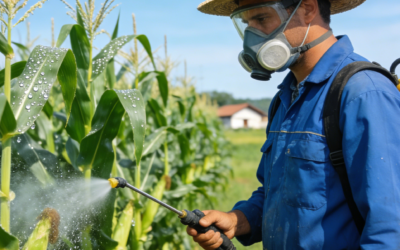
Chlorantraniliprole works differently from failed chemicals. It hits ryanodine receptors—a target corn rootworm hasn’t beaten yet. You can apply it as a soil treatment at planting or through seed treatments. The compound guards developing roots during key larval feeding times.
Rotating non-Bt tools like chlorantraniliprole extends Bt hybrid usefulness. Pest management that combines different chemicals, crop rotation where variant populations don’t exist, and smart treatment timing gives you the best defense against this billion-dollar pest.

Chlorantraniliprole changes the game in pest control. It tackles five major crop pests with strong results. Cutworms and corn rootworms damage crops underground. Armyworms and bollworms attack leaves aggressively. This selective insecticide stops them all. Plus, it keeps beneficial insects safe.
Chlorantraniliprole works across different pest life stages. It performs well in various crops and growing conditions. That’s what makes it valuable. Fighting fall armyworm in your corn? Managing tobacco caterpillars in vegetables? You get proven control that respects the environment.
Want better pest control results? Talk to your local agricultural extension service. A certified agronomist can help too. They’ll build an application program that fits your pest problems. Integrated pest management gives the best outcomes. Combine chlorantraniliprole with regular scouting. Add crop rotation. Use threshold-based decisions. Your crops will thrive. So will your profits.


0 Comments