
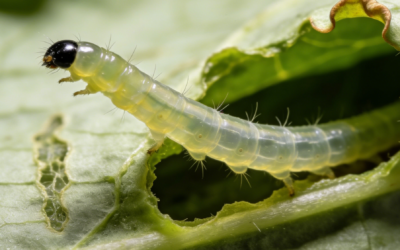
Cotton farmers know this frustration well — you walk your fields at dawn and find your bolls damaged, your stands thinning, your season slipping away. The culprits? Bollworms, budworms, and a handful of other chewing pests that don’t negotiate.
That’s where Chlorantraniliprole steps in. This diamide insecticide has become one of the most reliable tools in a cotton grower’s arsenal — not because of hype, but because it works. Getting the most out of chlorantraniliprole in cotton comes down to the details. The right application method, the right rates, the right timing. That’s what we’re covering here.
Product Overview: Chlorantraniliprole for Cotton

Chlorantraniliprole is a diamide insecticide. In cotton, it has built a strong reputation — backed by trial data that’s hard to dispute.
The standard formulation is a 600 g/l suspension concentrate (SC), applied at 40 g a.i./ha. This dose delivers the strongest results against cotton’s most damaging pests:
-
American bollworm (Helicoverpa armigera)
-
Spotted bollworm (Earias vitella)
-
Pink bollworm (Pectinophora gossypiella)
-
Spodoptera litura
What the Numbers Show
After two sprays, larval populations of H. armigera dropped to 0.09 larvae per plant at 3 days after treatment. By day 10, larval counts fell by 92.59% over the untreated control. Most alternatives don’t come close to that margin.
The yield data tells the same story. Treated plots at 40 g a.i./ha produced 17.73–22.66 q/ha in seed cotton. Untreated controls? Just 8.21 q/ha. That’s more than double the harvest.
Residual activity stays detectable in cotton leaves for up to 28 days after application. It concentrates highest in the upper canopy and tapers downward from there. Spray windows in cotton are tight. Pests don’t wait — and 28 days of residual protection gives you real coverage between applications.
One more figure worth noting: the cost-to-benefit ratio is 1:6.80. For every rupee spent, you get close to seven back. That’s not a marketing claim — that’s field economics, straight from trial data.
Target Pests in Cotton
Cotton doesn’t have one enemy. It has a roster.
Lepidopteran pests alone infest 55% of global cotton area at high infestation levels. That’s more than half the world’s cotton battling the same chewing, boring, and reproducing insects — season after season. To use chlorantraniliprole well, you need to know which pests it targets. The full threat picture matters, not just the big names.
The Primary Targets
Chlorantraniliprole’s diamide mode of action targets these larvae directly. It disrupts muscle control at the cellular level — and these species have no natural defense against it.
Pink bollworm drove over 20% cotton losses in the worst-hit regions before eradication programs kicked in. Even now, monitoring programs hold trap densities at 1 trap per 160 acres to catch any comeback. Pest pressure can return fast. Drop your guard, and it will.
Fall armyworm is another pest worth tracking — especially on non-Bt cotton. The action threshold is straightforward: 15 larvae per 100 plants. Hit that number and you treat. Wait past it, and the damage math turns against you quickly.
The Scale of the Problem
Global infestation data lays out the challenge clearly:
-
55% of cotton area faces high lepidopteran infestation (>70% infected plants)
-
13% faces medium-high pressure
-
20% sits in the medium range (31–70% infection)
-
Just 12% sees low pest pressure (<30%)
So 88% of global cotton acreage runs under meaningful to severe lepidopteran stress at any given time. That’s not an edge case — that’s the standard condition for most cotton growers worldwide.
Bt cotton has helped close the gap. Over 60% of U.S. cotton used insecticide-treated seed since 2012. But resistance management requires rotation. That’s where chlorantraniliprole earns its place in a modern IPM program — not as a standalone fix, but as the sharpest tool available for the pests that do the most damage.
Application Methods for Cotton

Chlorantraniliprole doesn’t do the work alone — you have to deliver it right. A sloppy, rushed, or badly timed application will underperform, no matter how good the product is. Here’s how to get it right.
Ground vs. Aerial Application
Both ground and aerial methods work for cotton. Each fits a different situation, depending on your operation size, canopy density, and equipment access.
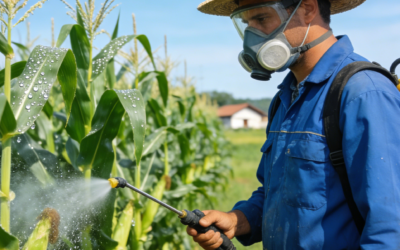
Ground application gives you the most control. Choose either a banded or blanket approach based on pest distribution and coverage goals. Blanket application is the standard choice for widespread pressure. It covers the full canopy, not just isolated strips.
Aerial application suits large acreage well. But it comes with a hard requirement: minimum 2 gallons per acre (GPA) water volume. Drop below that and you lose uniform distribution. Dense cotton canopies don’t forgive thin coverage. The droplets need enough volume to push down through the foliage and reach larvae where they’re feeding.
Regardless of method:
– Keep a 20-meter downwind no-spray buffer zone
– Cap seasonal applications at 3 per season — no exceptions
Timing Is Everything
The critical window is before populations establish. Apply chlorantraniliprole ahead of peak egg lay, at hatch, or the moment fresh larvae appear. Get it on before they reach damaging instars and burrow deeper into the plant, where contact becomes much harder.
Early instar larvae are exposed targets. They move around, feed on leaf surfaces, and take far more insecticide contact damage than later stages hiding inside bolls and stems. Wait too long and you’re spraying at a problem that’s already buried inside your crop.
Water Volume Under Stress Conditions
Hot, dry conditions shift your coverage math. High temperatures and low humidity speed up evaporation. That shrinks droplet size and cuts contact time on leaf surfaces. Dense foliage makes it worse.
So push your water volume up. More water means:
– Better penetration through the canopy
– More consistent residue spread across leaf surfaces
– Stronger overall results
Don’t guess at this. Look at the day’s conditions and the canopy density, then adjust your volume to match what the situation demands.
Dosage and Rates for Cotton
Rate selection is where most applications succeed or fail. With chlorantraniliprole, the margin for error is tight. Go too light and larvae survive. Hit the right rate and the results show up in your counts.
The Standard Rate Framework
The core recommendation for chlorantraniliprole (Prevathon 0.43SC) in cotton is 14 to 27 oz/acre — equal to 0.047 to 0.09 lb a.i./acre. That range is not random. It ties to actual pest pressure in the field.
Two thresholds drive the rate decision:
-
14 oz/acre — Use this at threshold conditions, around 2 larvae per meter of row. Pressure is present but manageable. This rate handles the job without overtreating.
-
27 oz/acre — Move to this rate when populations rise above 3 to 5 larvae per meter. High pressure needs the full rate. Low doses at peak infestation produce weak results.
Check your trap counts and larval surveys before you mix. The rate follows the data — not the other way around.
Where Chlorantraniliprole Sits in the Broader Picture
insecticides reach 56% of US cotton planted acres. That’s a large share, but still well behind herbicides at 93%. Most growers treat for weed pressure first, then layer in insecticide programs once pest thresholds call for it.
Chlorantraniliprole holds up to that decision. In California alone, growers applied it across 2,140,108 acres in 2022 — the highest treated acreage of any insecticide active ingredient tracked that year. That level of adoption is not a fluke. It comes from consistent field performance at the rates above.
One Rate Miscalculation Worth Knowing
The Herbicide data gives a clear example. At just 0.05 lb/acre, 2,4-D caused 76% yield loss in cotton from off-target injury. The same logic applies to chlorantraniliprole: rate precision matters across every input you use. A few ounces in either direction changes your outcome. Get the rate right, get the timing right, and the crop responds.
Timing of Application in Cotton
Chlorantraniliprole timing in cotton isn’t guesswork. Every application decision ties back to what the crop is doing right now and what the pest is about to do next.
Align Applications with Crop Development Stages
Cotton follows predictable growth windows. Each window signals when pest pressure rises, when the plant is most exposed, and when a spray delivers the best return.
Planting date sets the foundation. Plant around April 15 and seed cotton yields climb by 15% compared to later-planted fields. That head start gives you an earlier canopy closure and a cleaner boll development window. Pest pressure arrives during a more predictable growth phase, so spray timing is easier to pin down. Fields planted in June run out of time fast — compressed schedules and lower yield ceilings cut into your options before you ever pull the trigger on a spray.
Denser stands close the canopy faster. A thick canopy means you need higher water volumes to get chlorantraniliprole down to where larvae are feeding. Don’t underestimate that. Underapplying in a dense canopy leaves pest pressure uncontrolled right where it counts.
Boll Development and Application Windows
Track boll progression as the season moves forward. Use defoliation timing benchmarks — 40%, 60%, 80%, and 100% open bolls — as a parallel guide for where your crop stands against pest risk. Early-planted cotton reaches its economic yield potential at later defoliation stages, between 80–100% open bolls. That extends the period where protecting bolls from chewing pests still pays off.
Miss that window and the numbers hurt. Late-planted date-2 fields recorded 33% lower lint yields compared to dates 1 and 3. Uncontrolled pest pressure makes that gap wider, not smaller.
Cutout as a Timing Anchor
Cutout (NAWF = 5) is your go-to reference point for late-season decisions. Once the crop hits cutout, it stops setting new fruiting sites. Pest protection still matters for bolls already on the plant, but your spray ROI calculation shifts at this point.
Apply chlorantraniliprole ahead of peak pest pressure. Not after. The crop shows you the window. Use it.
Efficacy and Residual Control in Cotton

Chlorantraniliprole stands out in the crowded cotton insecticide market — and residual control is the main reason. But the numbers paint a more complex picture than the label lets on.
Field trials showed residual protection against corn earworm lasting up to 28 days after treatment (DAT). That’s a solid window. Consistency is another story, though. Results against corn earworm in cotton were less predictable than what the same trials found in soybeans. Factor that into your spray interval planning — it matters a lot under heavy pest pressure.
Reading the Residual Window Clearly
Here’s the straight read: 28-day residual figures are a ceiling, not a guarantee. Real-world protection against specific pests can fall hard within the first week. Temperature, rainfall, UV exposure, and canopy interception all speed up that decline.
For TPB and stink bug pressure, cage bioassay data showed strong adult mortality in treated cotton terminals at 0-, 1-, 3-, 5-, and 7-DPT. But the protection curve dropped off fast after that early window. Waiting until day 14 or later to re-check field counts puts your bolls at real risk.
The bottom line: build your spray intervals around what you actually see in the field — pest pressure, threshold counts, scouting reports. The 28-day figure gives you a starting point. Your field data tells you whether that protection is still holding.
Safety and Resistance Management in Cotton

Resistance doesn’t announce itself. It builds generation after generation — until the chemistry you’ve relied on stops working and the damage is done.
That’s the core risk with any high-performing insecticide. Chlorantraniliprole is no different. Its diamide mode of action works hard against bollworms. That same strength is exactly why resistance pressure needs serious attention. Use it too hard, too long, without rotation, and you start selecting for the survivors.
Keep It in Rotation
Chlorantraniliprole falls under IRAC Group 28. That classification matters for resistance management. Rotating with insecticides from different mode-of-action groups — pyrethroids, organophosphates, or spinosyns — breaks the selection pressure that builds resistance in larval populations.
A few hard rules for every season:
-
Cap applications at 3 per season. That limit is there for a reason. Push past it and you speed up resistance development — no matter how well it performs in the short term.
-
Never cut rates below label minimums to stretch product or save money. Sublethal doses are the fastest path to a resistant population.
-
Scout before every application. Threshold-based decisions cut down on unnecessary sprays and slow resistance buildup.
Crop Safety Boundaries
Chlorantraniliprole has a strong crop safety record on cotton at labeled rates. But environmental conditions change that picture fast. Under heat stress or low soil moisture, application timing and water volume become even more critical. Keep the 20-meter downwind buffer on every application. That’s a firm requirement — no exceptions.
Resistance management isn’t a side note. It’s what keeps chlorantraniliprole effective — this season and the next ten after it.

Chlorantraniliprole isn’t just another tool in your pest management arsenal — it’s a real strategic advantage.
Get the timing right. Respect the dosage. Rotate it within your IPM program. Do all three, and you’ll have a chemistry that delivers genuine residual control without pushing resistance. Skip those fundamentals, and you’re leaving yield on the table.
Cotton doesn’t forgive hesitation. Bollworms, budworms, and armyworms move fast — your response needs to move faster.
So here’s your next step: pull up your field scouting records. Find where pest pressure peaks in your season. Build your chlorantraniliprole applications around those windows before populations get established. Talk to your agronomist. Cross-reference your local extension thresholds. Lock in your program ahead of time.
The growers who win at season’s end aren’t the ones who reacted — they’re the ones who planned.


0 Comments