
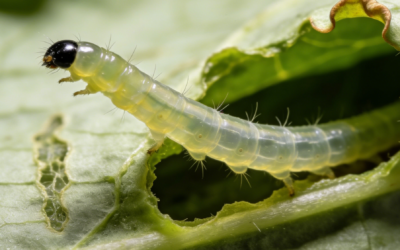
Diamondback moths can destroy your cabbage and broccoli crops fast. Healthy fields turn into a farmer’s nightmare in just days.
Your current insecticides losing power? Chlorantraniliprole gives you a strong solution. But the right application method matters.
This chemical targets insect muscles in a new way. It works unlike older bug sprays like pyrethroids. Diamondback moths haven’t built up much resistance to it yet.
Proper application does more than kill pests. The right timing and amount protect your investment. You avoid the resistance problems that made older chemicals stop working.
Small farm or large operation – getting chlorantraniliprole right the first time saves your harvest. Mess it up and you watch your profits vanish.

Dosage Rates
The label shows everything. 0.045 to 0.065 lb active ingredient per acre for standard foliar applications. This is your baseline for diamondback moth control.
Most growers use the middle ground – around 0.055 lb ai/A. This rate knocks down active infestations. It won’t burn through your seasonal budget too fast. Light pressure? Start at 0.045. Heavy infestations chewing through your plants? Push it to 0.065.
Here’s the math in real terms:
Using Coragen (the 1.67 lb ai/gallon formulation)? You’ll need:
– 2.7 to 3.9 fluid ounces per acre for the standard rate range
– Mix this in enough water for thorough coverage – 20 to 100 gallons per acre based on your spray equipment
The concentrated version (5.0 lb ai/gallon formulation) cuts your volume down:
– 0.9 to 1.3 fluid ounces per acre for the same active ingredient delivery
– Same water volume needed
Shake the container hard before you pour. This suspension concentrate settles fast. Uneven mixing gives uneven results.
Seasonal Caps You Can’t Ignore
EPA sets a hard limit: 0.2 lb ai chlorantraniliprole per acre per growing season. That’s your ceiling. Doesn’t matter how many applications you make.
Do the division. At maximum single-application rate (0.065 lb ai/A), you get three applications before hitting the cap. At minimum rate (0.045 lb ai/A), you stretch to four applications. Only a tiny margin left.
Most farmers space applications 7 to 14 days apart. This depends on pest pressure and field monitoring. This timing keeps you well under the 0.2 lb limit. Control stays strong.
Combination Products Change the Game
Durivo for soil applications delivers 0.195 to 0.257 lb ai/A. You’re getting both chlorantraniliprole and thiamethoxam in one shot. Watch two separate limits:
– Thiamethoxam caps at 0.172 lb ai/A/season
– Chlorantraniliprole still caps at 0.2 lb ai/A/season
Voliam Flexi runs 0.1 to 0.175 lb ai/A for foliar work. Same dual-limit rule here. You can’t max out both actives. One will always limit your total applications first.
Track every application in writing. Mixing foliar and soil products in one season? Your math gets complicated fast. The seasonal limits don’t care which form you used.
Geographic and Regulatory Notes
Nassau, Suffolk, Kings, and Queens counties in New York can’t buy or use this product. Period. The restriction comes from groundwater protection rules in those areas.
EPA registration numbers matter for recordkeeping. Coragen runs EPA Reg. No. 279-9606. The concentrated 47.85SC version uses EPA Reg. No. 279-9661. Your state pesticide inspector will ask for these numbers during farm audits.
Federal Register published tolerance data on November 17, 2025. This chemical passed emergency use exemption rules before full commercial release. What does this mean? Extensive testing backed these dosage rates. They were proven safe before reaching your catalog.
Restrictions and Limits
The EPA sets three non-negotiable numbers for every Coragen application you make.
Maximum seasonal cap: 0.2 lb active ingredient per acre. This limit covers your entire growing season. Stack up four applications at minimum rate? You hit the ceiling. Three treatments at maximum rate? Same result. The math leaves zero room for error.
Four treatments per crop cycle – that’s your absolute limit. Count every spray. Soil drench at planting counts as one. Three foliar applications later? You’re done for that crop. Start a new planting cycle and the counter resets to zero.

The Timing Rules That Protect Your Harvest
Pre-harvest interval sits at 3 days. Your last spray goes down on Monday morning? Thursday is the earliest harvest date. Cut those heads of cabbage on Wednesday and you’ve got illegal residue levels. The produce gets rejected. Your buyer walks away.
Most growers build in extra margin. They spray 5 to 7 days before harvest instead of risking the 3-day minimum. Weather delays happen. Equipment breaks. The safety buffer keeps your crop legal.
Restricted entry interval: 4 hours. Workers can’t enter treated fields until four hours pass after application. This protects your crew from direct exposure to wet spray residue.
Hot weather changes the game. Spray dries faster in 95-degree heat than in cool morning air. The 4-hour rule still applies no matter the temperature. Your watch determines re-entry time, not how the field looks.
What These Numbers Mean in Practice
Track applications in a physical log. Write down dates, rates, and field numbers. Inspectors ask for this paperwork during farm audits.
The seasonal limit forces strategy choices. Hit diamondback moths with two applications at 0.065 lb ai/A? You’ve used 65% of your allowance before mid-season. Save room for late-season pressure. Otherwise, you’ll watch larvae destroy maturing plants with no legal options left.
Small operations farming 5 to 10 acres can lose everything by miscounting treatments. The regulations don’t scale down for farm size.
Resistance Management
Diamondback moths break down chemicals faster than most pests you’ll fight. Over 60% of agricultural pests now ignore products that worked five years ago. These moths lead that pack.
Chlorantraniliprole still works. It attacks muscle through a unique path. The ryanodine receptor pathway it targets remains fresh territory. Most diamondback populations haven’t cracked this code yet. But “yet” is the word that should scare you.
The Economics of Losing Control
Your pest management bill climbs 20% or more in 2026. Industry projections show this across the board. Resistance drives that spike. Farmers spray more often. They mix more products. They watch crops fail anyway.
New chemistry takes 12 to 15 years to reach market. Development costs push past $300 million per active ingredient. Chemical companies won’t invest that money without guaranteed returns. Fewer new products enter the pipeline. The tools you lose don’t get replaced.
Look at what happened with weeds. Waterhemp laughs at six different Herbicide modes of action now. glyphosate built 90% market penetration on farms before resistance exploded. Midwest grasses – barnyard grass, goosegrass, Italian ryegrass – don’t care about Roundup anymore. Palmer amaranth and waterhemp turned into superweeds. They cost fortunes to control.
Liberty worked after glyphosate failed. Now you need 32 ounces per acre at full rate just to knock down resistant weeds. That’s double what you used three years ago. Your input costs doubled with it.
Protecting Chlorantraniliprole’s Effectiveness
Rotate modes of action between generations. Diamondback moths breed fast – you can see four generations in one season. Hit the first wave with chlorantraniliprole. Switch to spinosad or Bacillus thuringiensis for generation two. Rotate back for generation three if pressure stays high.
Never use this product alone all season. The seasonal cap of 0.2 lb ai per acre forces some rotation anyway. Make that restriction work for you. Plan your rotation before planting. Write it down. Stick to the plan even during moth swarms in your fields.
Monitor escape survivors after every spray. Five larvae still feeding three days post-application? That’s your warning system. Those survivors carry resistant genes. They breed and pass resistance forward. Scout fields 72 hours after treatment. Document what you find.
Mix tank partners with care. Products with different modes clear out the survivors that one chemical misses. But mixing everything together every time breeds multi-resistant populations faster. Save combinations for peak pressure periods.
The Bigger Picture
Pest-resistant crop genetics hit $23.5 billion globally in 2021. That market jumps to $29.9 billion by 2025. Corn leads the growth. Why? Chemical resistance forced farmers into biotech solutions they avoided for years.
Manage resistance now or pay triple later. The choice shapes your farm’s future.

Using chlorantraniliprole against diamondback moths isn’t complex. You need precision and consistency. Here are the basics: rotate how you apply it to get better coverage. Use 60-90 ml per acre as recommended. Treat again every 7-10 days during heavy pest periods. These steps protect against resistance.
The real difference? Add chlorantraniliprole to a full IPM program. Don’t use it alone. Check your fields often. Track your results. Adjust based on what you see—not guesses.
Here’s what to do next: walk your fields before you spray. Check how bad the pest problem is. This helps you time your chlorantraniliprole treatment right. You get maximum results. Plus, it stays effective longer. Your crops will do better. So will your profits.
Stop reacting to pest problems. Treat pest management as real science. Plan ahead.



0 Comments