
Tobacco growers dealing with pest pressure can’t afford to guess. One wrong move with application rates or timing can mean lower yields, failed residue tests, or a crop rejected at the buyer’s door.
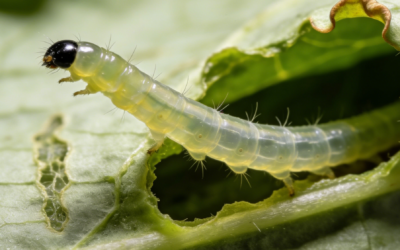
Chlorantraniliprole is a proven tool against budworms, hornworms, and other damaging larvae. But getting results takes more than pointing a sprayer at the right plant. You need to understand how and when to apply it.
There are several key decisions that separate a clean harvest from a serious loss — drench applications at transplant, foliar timing windows, PHI compliance, and more. We’re breaking all of it down here.

Application Rate Limitation
There’s a hard ceiling on chlorantraniliprole use in tobacco — and it doesn’t care how bad your pest pressure is.
The limit is 0.2 lb of active ingredient per acre, per crop cycle. That’s the total. Not per application, not per month — per crop. That ceiling covers all chlorantraniliprole-containing products combined, including:
-
Coragen (chlorantraniliprole alone)
-
Besiege (chlorantraniliprole + lambda-cyhalothrin)
-
Durivo (chlorantraniliprole + thiamethoxam)
Mix and match those products through a season, and the clock keeps running toward the same 0.2 lb cap. Say a grower drench-applies Durivo at transplant, then follows up with Coragen to hit a hornworm outbreak later in the season. That math needs to be done right. Push past the limit without tracking it, and you’ve got a real problem.
Why does it matter beyond yield? Tobacco purchasers test cured leaf for chlorantraniliprole residues. Buyers check what’s in the leaf they’re purchasing. Go over your application ceiling, and you’re not just breaking a label rule — you’re giving a buyer a solid reason to reject your entire lot.
Track every application. Keep records. Know your running total before you make another pass.

Preharvest Interval (PHI) Adherence
The label doesn’t suggest a waiting period. It mandates one.
PHI — preharvest interval — is the minimum number of days between your last application and the moment you cut that leaf. It exists for one reason: to give residues time to break down below the maximum residue limit (MRL). Weather, microbes, and plant growth all do that work. But they need enough time to do it.
That spread — 1 day to 40 days — has a big impact on your final application window. Miss it, and you’re not just breaking a rule. You’re sending leaf to the buyer that may fail a residue test on arrival.
Tank mixing adds another layer. Mix products together, and you follow the longest PHI in that mix. No exceptions. Rain doesn’t shorten it. A lower application rate doesn’t shorten it. Banding doesn’t shorten it — unless your specific label says otherwise.
One more point to lock in: PHI applies at harvest — the moment leaf is cut from the plant. Storage time after cutting doesn’t count. Processing time doesn’t count either. The clock stops at harvest, full stop.
Record every application date and product. Know your PHI before you ever touch that stalk.
Spray Volume for Coverage

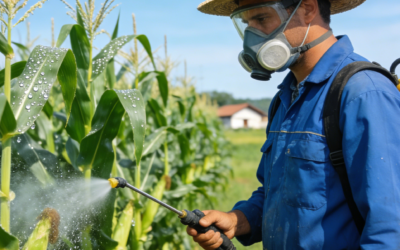
Volume isn’t a minor detail — it’s the variable that determines whether chlorantraniliprole actually reaches the pest or just drifts past it.
The relationship between carrier volume and coverage is direct and measurable. Research shows that every 23 L ha⁻¹ increase in spray volume produces roughly 20–22% more coverage. That’s not marginal. Scale from 94 L ha⁻¹ up to 140 L ha⁻¹, and you’re looking at 46% greater coverage on the same crop. That gap is the difference between a treatment that works and one that looked good on paper.
Where Coverage Falls Short — and Why It Matters
Outer canopy zones absorb spray well. Inner canopy zones don’t. Outer coverage ranges from 29–70%. Inner zones often drop below 8%. Larvae don’t stay on the outside of a plant. They work their way in. If your spray can’t reach the inner canopy, neither can your active ingredient.
The threshold to hit for insecticide applications: 30 droplets cm⁻² minimum. Fall below that, and you’re not applying chlorantraniliprole — you’re wasting it.
Nozzle Type and Speed: The Variables Growers Control
Two factors consistently drive coverage outcomes more than anything else:
-
Nozzle flow rate — higher rates increase coverage, droplet density, and spray deposit (statistically significant at p < 0.01)
-
Forward speed — slower passes produce measurably better results across all three metrics
The optimal combination is straightforward: highest nozzle flow rate paired with lowest forward speed. That’s the setup that gets active ingredient where it needs to go.
On nozzle selection, TTI nozzles consistently underperformed. XRC nozzles delivered 23–36% higher coverage than TTI across tested conditions. AIXR nozzles matched or exceeded XRC performance in multiple trials. If TTI nozzles are your default, that’s a calibration decision worth revisiting before your next application window.
Transplant Water/Soil Drench Application
Drench applications don’t get enough credit. Too many growers default to foliar sprays from day one. That’s a missed advantage — one that can start working before a single plant reaches field soil.
The timing is straightforward. Treat the tray substrate one week before seedling transplanting. Use six milliliters of solution per plant. The substrate should be damp at application — not saturated. That difference is important. Oversaturated media won’t absorb the treatment evenly. You lose distribution, you lose uniformity, and you lose the whole point of doing it this way.
What Goes Into the Drench — and at What Rate
Three active ingredients see regular use in transplant drench programs for tobacco seedlings. Each has a specific dilution and field-equivalent rate:
|
Active Ingredient |
Field Rate (g a.i./hm²) |
Tray Rate (g a.i./hm²) |
Dilution |
|---|---|---|---|
|
Thiamethoxam |
21 |
~4,453 |
1,600× |
|
Sulfoxaflor |
18 |
~3,817 |
1,600× |
|
Cyantraniliprole |
18 |
~3,817 |
750× |
Cyantraniliprole runs at 750× versus 1,600× for the others. That means it goes in more concentrated at the same volume. This is not an error. The compound absorbs through root tissue differently, so the tighter ratio fits its uptake profile.
Efficacy: What the Numbers Show
Cyantraniliprole drench trials against Bemisia tabaci — whitefly — showed adult control from 45.7% to 77.7%. Egg suppression landed between 36.6% and 92.6%. That’s a wide spread. Researchers traced the gap to reduced application rates — about 50% below standard foliar rates. Push the rate closer to standard, and results tighten with it.
For neonicotinoid context: thiamethoxam delivered 83% mortality against Diaphorina citri on sweet orange. Imidacloprid hit only 56% by comparison. Phloem sap ingestion — the E2 feeding event — dropped 95% at 15 days after application with thiamethoxam. It held at 86% at 35 days and 90% at 90 days. That’s real, sustained systemic activity. Not a short burst that fades fast.
Why Drench Over Foliar at This Stage
Three solid reasons growers choose drench at transplant:
-
Reduced bee exposure — roots take up the active ingredient, so no surface residue lands on flowers or foliage at the time of application
-
Lower required rates — you still get solid pest suppression, but at a fraction of the foliar dose
-
Labor efficiency — one pass at the tray stage cuts out an entire early-season foliar application
Get the drench done right before transplant. Your seedlings get time to establish without pest pressure hitting them from the start.
Foliar Application Rates and Timing

Foliar chlorantraniliprole works — but the label rate range gives you room to think. How you use that room determines whether you’re managing pests or just spending money.
Splitting the range down the middle without a reason is how growers burn through their seasonal cap. You won’t get full value from either application that way.
Besiege runs 5 to 9 oz per acre for foliar — but one detail matters here. The chlorantraniliprole in Besiege delivers suppression, not control, on certain pests. That’s a label distinction with real field consequences. Count on Besiege alone for a heavy infestation and you’ll likely be disappointed. Use it where the second active ingredient — lambda-cyhalothrin — adds value against a mixed pest complex. Know what you’re buying before you load the tank.
Timing Windows That Move the Needle
Timing foliar applications isn’t only about scouting thresholds. The environmental conditions at application change what you get out of the product.
Temperature matters more than most growers realize.
Early morning is the better spray window — not because it’s easier on equipment, but because efficacy goes up.
Growth stage is the second variable.
apply chlorantraniliprole earlier and it has time to work before larvae reach damaging instars. Wait until you see feeding damage and the pest has already spent time in the plant. Applications ahead of pressure — not in response to it — produce cleaner results.
One practical checkpoint before any foliar pass: run your running total against the 0.2 lb a.i. per acre seasonal cap.
At 7.5 oz of Coragen per acre, you have limited headroom for follow-up applications. That ceiling doesn’t move. Factor it into your timing decisions from the first application forward — not after you’ve already used up your room.
Integrated Pest Management (IPM) Integration
Chlorantraniliprole is a powerful piece of the puzzle — but it was never built to carry the whole load alone.
IPM exists because single-tool pest management breaks down over time. Resistance builds. Costs rise. Buyers get harder to satisfy. The growers who deliver clean, quality tobacco leaf year after year aren’t spraying more — they’re spraying smarter. They work inside a framework that makes every application count.
That framework is growing fast. The global IPM market sits at USD 26.80 billion in 2025. It’s tracking toward USD 37.30 billion by 2030 at a 6.85% CAGR. Agriculture holds 52% of that market share. Chemical control commands 40.2% of methods used — but biological options are gaining ground at an 8.8% CAGR. The shift is real and it’s picking up speed.
Where Chlorantraniliprole Fits Inside an IPM Program
In a tobacco IPM program, chlorantraniliprole sits in the chemical control tier. It targets lepidopteran larvae — the ones biological methods can’t knock down fast enough before they cross the economic threshold.
The structure looks like this:
-
Monitoring first — Scout your fields on a set schedule. Apply only after pest pressure crosses the economic threshold. Don’t spray by the calendar.
-
Cultural controls — Crop rotation, transplant timing, and field sanitation cut baseline pest pressure before any chemistry enters the picture.
-
Biological agents — Bacillus thuringiensis (Bt) and predatory insects handle low-to-moderate pressure. They also protect your seasonal cap.
-
Chlorantraniliprole as targeted intervention — Use it after scouting confirms larvae are present and damage risk is real. It’s not a default first move.
This order matters. The 0.2 lb a.i. per acre seasonal cap doesn’t bend. Each spray you skip early keeps room open for a late-season outbreak. Use it up too soon, and you’re left exposed right when pressure peaks.
The Cost Reality
IPM adoption has real friction. 44% of small US farms point to cost as the main barrier. Monitoring equipment, training, biological inputs, and juggling multiple methods at once — it all adds up fast.
Government programs take some of that pressure off. USDA-NIFA allocated USD 19.6 million through its crop protection and Pest Management program in 2023. USDA-APHIS funds up to USD 63 million per year for pest prevention. Maryland’s cover crop program puts USD 105 per acre toward IPM-bundled soil-health practices.
The case for investment is clear. A structured IPM approach protects your chlorantraniliprole applications, stretches their value across the full season, and cuts the residue risk that kills contracts.
Residue and Purchaser Concerns

Residue testing isn’t a formality. Buyers use it to protect their supply chains. In tobacco, failing that test doesn’t start a conversation — it ends with a rejected lot.
The broader food and agricultural supply picture makes the stakes clear. The USDA’s pesticide Data Program tested 9,165 food samples in 2024. Over 99% met EPA maximum residue limits. But 76 samples — 0.77% of the total — crossed the MRL threshold. Sixty-three of those violations came from imported product. That gap between domestic and imported sends a signal to purchasers. They’ve noticed. They’re acting on it.
What Purchasers Are Watching
Tobacco buyers work inside the same residue-awareness environment as every other agricultural commodity purchaser. The global residue testing market sits at USD 6.39 billion in 2026 and is tracking toward USD 11.58 billion by 2034 at a 7.71% CAGR. Pesticide residue testing leads that market — pushed by staple crop risk exposure. Testing infrastructure keeps expanding. The scrutiny has no exit.
Buyers are growing more sensitive to residue findings. That sensitivity shapes purchasing decisions in a direct way. Research confirms it: high residue concern raises the chance that buyers shift purchases to alternative suppliers. Lose that trust once, and rebuilding it takes years — not one clean harvest.
How Chlorantraniliprole Fits Into This
Chlorantraniliprole residue risk in cured tobacco leaf is manageable — but the application discipline has to be real.
Two failure points show up repeatedly:
-
Exceeding the 0.2 lb a.i. per acre seasonal cap pushes residue levels into territory that buyers flag
-
Missing the PHI — the 14-day window for Durivo or the 40-day window for Besiege — sends leaf to market before breakdown is complete
Neither is a gray area. Document both in your records before the first application goes down. Skip that step and you’re already operating on borrowed time.
Clean leaf isn’t just a quality standard. Residue testing capacity is doubling inside a decade. At that pace, clean leaf becomes the minimum cost of keeping a buyer — not a competitive edge, just the floor.

Chlorantraniliprole works — but the rules matter.
Follow the labeled application rates. Respect the preharvest interval, no exceptions. Build this chemistry into a broader IPM strategy — don’t treat it as a standalone fix. These three habits separate growers who get clean, consistent results from those who run into residue flags, resistance buildup, and buyer complaints.
Tobacco buyers aren’t just counting leaves. They’re counting on you to deliver leaf that meets compliance standards. Chlorantraniliprole gives you a powerful tool for protecting that crop. How you use it decides whether it’s an asset or a problem.
So pull your current spray program. Compare it against these best practices. Close the gaps before your next application window opens.
Pest pressure won’t wait. Neither should you.


0 Comments