
Every citrus grower knows that sinking feeling — you walk the orchard, and the damage is already done. Larvae burrowing through fruit. Populations spiraling before you even grabbed a sprayer. That’s the problem Chlorantraniliprole solves — used right, it stops pests before they get that far.
This diamide insecticide has earned serious respect in commercial citrus production. Not just for what it kills, but for how it kills — and how long that protection lasts. Timing, rate, and application method make all the difference. Get those right, and you see results. Get them wrong, and you’re wasting money.
Everything you need to put chlorantraniliprole to work with confidence in your orchard.

Application Methods
Chlorantraniliprole doesn’t care how you apply it — but your results do.
The method you choose determines everything downstream. How fast the active ingredient reaches the target pest. How evenly protection spreads across the canopy. And whether you’re getting full value from every dollar spent on product. There are three primary delivery methods for citrus applications. Each plays a specific role based on your pest pressure, tree size, and growth stage.
Foliar Spray
This is the workhorse method — the one most commercial citrus growers reach for first.
Use a conventional airblast sprayer or boom setup to coat leaf surfaces with foliar chlorantraniliprole. The product penetrates plant tissue through translaminar movement. That translaminar action matters. Larvae feeding on the underside of a leaf still contact the active ingredient even if your spray coverage isn’t perfect. In dense canopies where full penetration is difficult, that built-in margin of error counts for a lot.
Key points for foliar application:
-
Coverage is everything. Aim for thorough, even coverage across the full canopy — top, bottom, and interior. Thin coverage leaves refuge zones where pest populations survive and bounce back.
-
Water volume matters. High-canopy citrus trees need higher water volumes per hectare to get adequate coverage. Don’t cut corners here to save time.
-
Nozzle selection affects deposit quality. Flat-fan and hollow-cone nozzles behave in different ways under wind and temperature conditions. Match your nozzle to your conditions, not to habit.
-
Add a quality adjuvant where label conditions permit. Spreader-stickers improve adhesion and slow UV breakdown of the active ingredient on leaf surfaces.
Soil Drench and Trunk Application
For younger trees — or situations where foliar access is limited — soil drench applications let chlorantraniliprole absorb through root uptake. This method takes longer to reach peak performance. But it delivers residual protection that outlasts most foliar applications by a wide margin.
Trunk banding works on a similar principle. You apply a diluted solution in a band around the lower trunk. It’s a strong option against borers and other pests that breach the bark layer before foliar contact is even possible.
Timing the Application Window
Regardless of method, timing governs everything. Apply at egg hatch or at early larval emergence. First and second instar larvae are far more vulnerable to chlorantraniliprole than later instars. Wait too long, and you’re fighting a harder battle with the same tool.
Early morning is the best window to spray. Wind speeds are lower. Temperatures haven’t climbed yet. That combination improves spray deposit on the canopy and cuts drift loss. Make it a standard part of your routine, not something you think about after the fact.
Target Pests

Chlorantraniliprole works against a specific set of pests. Knowing that list shapes every spray decision you make.
The pest spectrum in citrus orchards breaks down across three insect orders. Each one calls for a different mindset. Different timing logic. Different thresholds that tell you when to act and when to hold back.
Lepidoptera: The Larvae Problem
Moths and caterpillars put the heaviest pressure on most commercial citrus blocks. Citrus leafminer (Phyllocnistis citrella) sits at the top of that list.
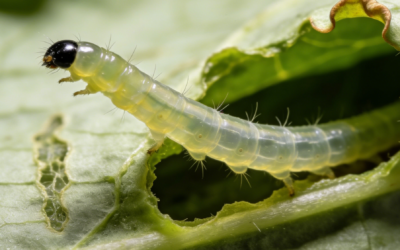
The lifecycle is precise and predictable. Tiny moths deposit eggs one at a time onto young, expanding leaf flushes. Larvae hatch and start mining tissue along the midvein right away. They work toward the leaf margin and pupate there. The window to break that cycle is narrow. Time your foliar applications at first visible leaf mines — about 13 days after budbreak, at the feather leaf stage. That’s your best shot at catching the maximum number of larvae before damage stacks up.
One number worth knowing: natural enemies alone can drive up to 90% larval and pupal mortality in unsprayed populations. The introduced parasitoid Ageniaspis citricola accounts for up to 30% of that mortality on its own. It’s now established across most of Florida. That’s not a reason to skip treatment. It’s a reason to time your foliar applications with care. Disrupting that parasitoid activity costs you a biological control asset that’s already working for free.
Orange dog (Papilio cresphontes) is a different case. The larvae mimic bird droppings and feed hard on new foliage. The treatment window is early — past that point, you’ve wasted the application. Late instars build strong resistance to most insecticide classes. By the time they’re large, the feeding damage is already done. Hit them early or accept the loss.
Hemiptera: The Fruit Threat
Plant bugs don’t destroy canopy. They destroy marketable fruit. That’s a different kind of damage.
Citron bug (Leptoglossus gonagra), leaf-footed plant bugs (L. phyllopus, L. zonatus), and southern green stink bug (Nezara viridula) all follow a similar migration pattern. Harvest of neighboring field crops pushes these insects — in large numbers — straight into citrus blocks. They gather during the fruit ripening period and puncture the peel to feed. Every puncture opens a pathogen entry point. The result: sunken, necrotic tissue, accelerated fruit drop, and losses that hit fresh-market growers the hardest. Thin-skinned varieties like Hamlin carry the highest risk.
Here’s a counterintuitive point: mowing or applying Herbicide to weed patches near infested blocks can trigger population surges. Bugs scatter from disrupted ground cover and move into trees. So plan ahead — any cultural disruption during peak migration needs an insecticidal follow-up plan ready to go.
Spot treatments are the better choice here. Full-block sprays knock back natural enemy populations. Those populations bounce back faster when unsprayed refuges stay intact.
Orthoptera: Monitor, Don’t Overreact
Eastern lubber grasshopper (Romalea microptera) and American locust (Schistocerca sp.) show up from time to time, but a dedicated chemical response is rarely justified. Damage tends to be sporadic and situation-specific. Monitoring handles it better than scheduled applications.
Managing the Pest List — The Smart Way
One principle applies across all these pests: prioritize products that also control Asian Citrus Psyllid (ACP). Cutting total spray events — without losing coverage — builds real efficiency over a full season. Fewer passes through the orchard. Less pressure on beneficial arthropod populations. Better economics per acre.
That’s the pest map. Everything else in this guide — timing, rates, application method — starts with knowing which pest you’re targeting and what stage it’s in at spray time.
Optimal Timing
Chlorantraniliprole is a precise tool. Use it at the wrong moment, and you’ve bought yourself nothing but a receipt.
The active ingredient works best against young, vulnerable larvae — first and second instars, before they burrow deep or bulk up. That biological reality drives your spray calendar more than anything else. Miss the window by four or five days, and you’re applying pressure to a population that’s already past its most vulnerable stage.
Spray Before the Damage Starts
The core principle is simple: act before egg hatch peaks, not after.
For fruit moths, that window opens in June. Get chlorantraniliprole into the system — on leaf tissue, in the waxy cuticle — before eggs drop and larvae hatch. Waiting to see feeding damage before you spray means the timing battle is already lost.
For spring pest pressure, target the petal fall to first cover period. That covers the early-season surge before populations take hold in young tissue. A second or third application in July handles the mid-season flush cycle. New growth gives leafminers and other Lepidoptera another chance to establish — so you need to be ready before that growth appears.
For flies affecting ripening fruit, move even earlier. Apply 7–10 days before fruit color change begins. That’s the critical point. Color change signals ripeness to feeding adults. Get the product established before that signal goes out. That’s what separates protected fruit from punctured fruit.
Weather Is Part of the Decision
Timing isn’t just about the pest calendar. It’s about the forecast.
Avoid spraying if rain is expected within 6 hours. Runoff before the active ingredient binds to leaf tissue means you’re spending product to water your cover crop. Check a 48-hour forecast before any application. A weather system moving through? Wait. One lost day costs far less than a wasted tank.
Early morning is the best spray window. Wind speeds are lower, temperatures are cooler, and canopy penetration is better. That edge adds up across a full season of applications.
The Timing Discipline That Separates Good Programs from Expensive Ones
Growers who get the most from chlorantraniliprole aren’t using more product. They’re using it at the right moment, every time. Seasonal pest pressure follows predictable patterns. Build your spray schedule around those patterns — egg hatch, flush cycles, pre-ripening windows — and the chemistry handles the rest.
Wait for visible damage, and you’re always one step behind.
Dosage Recommendations

The label is a legal document. Read it that way.
For citrus in the United States, chlorantraniliprole is registered at 75–110 grams of active ingredient per hectare. The maximum is two applications per season. That range gives you room to calibrate — lighter pressure on isolated, early-season populations; full rate against heavy pest loads at peak flush.
Those numbers aren’t suggestions. They’re the ceiling. Going above them doesn’t improve control. It speeds up resistance and puts your registration at risk.
Working Within the Rate Window
The 75–110 g ai/ha range covers most real-world citrus scenarios. Here’s how to think about it:
-
Lower end of the range (75 g ai/ha): Use this for preventive applications timed ahead of egg hatch. You’re managing population pressure before it builds — not chasing an established infestation. Leafminer pressure during spring flush is a strong candidate.
-
Upper end of the range (110 g ai/ha): Save this for confirmed high-pressure situations. Dense canopy. Mixed pest populations. Late-timing corrections where you need maximum residual performance to compensate.
The pull toward the high rate every time is real — pressure is visible, and the instinct is to hit hard. Resist it. Running the full rate on every application burns through your seasonal limit and your resistance management buffer faster than the pest actually demands.
Two Applications. That’s the Budget.
Two applications per season sounds like plenty. In a heavy-pressure year, it’s tight.
That’s why timing and rate work as a system — not as separate decisions. Burn your first application at the wrong moment or the wrong rate, and you’re left with one shot to cover the rest of the season. Plan both applications at the start of the season. Map them to your two highest-risk windows: the spring flush and the mid-season flush in July. Don’t improvise your way through the budget.
One More Number Worth Marking
Water volume is not a dosage decision — but it shapes dosage performance. In high-canopy citrus blocks, low water volume creates uneven deposit. That means effective local rates land below what your calculation shows. You can dial in the right rate and still under-deliver if the carrier volume doesn’t reach the interior canopy. Check your volume-per-hectare benchmarks against your tree size before setting the nozzles.
Get the rate right. Get the timing right. Two applications is enough — as long as both of them count.
Safety Precautions

Chlorantraniliprole is low-toxicity by insecticide standards — but low toxicity is not zero toxicity. That difference matters every time you mix a tank.
The label tells you what the chemistry does to pests. The safety data sheet tells you what it can do to you. Both documents deserve equal attention.
Personal Protective Equipment
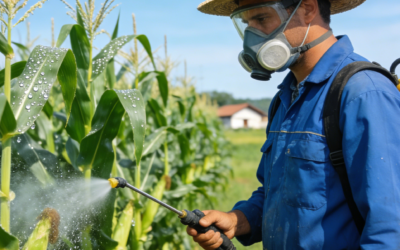
Before you crack the container, gear up fully:
-
Chemical-resistant gloves — nitrile or neoprene, not latex
-
Long-sleeved shirt and long pants — full skin coverage during mixing and loading
-
Chemical-resistant apron — wear it when handling concentrate
-
Eye protection — safety glasses at minimum; goggles if splash is a risk
-
Closed-toe footwear — no exceptions
The mixing stage carries the highest exposure risk. Concentrate is more hazardous than diluted spray. Don’t rush the setup just because the sun’s rising and the wind is calm.
During and After Application
Keep people and animals out of treated areas until the spray has dried. This matters most for workers going back into the block for pruning, irrigation checks, or picking.
Wash your hands before eating, drinking, or using the bathroom. After a long day of application work, shower and change clothes. Don’t carry chemical residue into the truck cab or back home.
Store unused product in the original sealed container. Keep it away from food, feed, and water sources. Lock it up and out of reach of children.
Environmental Responsibility
Chlorantraniliprole is toxic to invertebrates — aquatic ones in particular. Don’t use it near open water, drainage channels, or irrigation ditches. Buffer zones aren’t paperwork rules — they protect the orchard ecosystem. Skip them, and you risk destroying it.
Triple-rinse empty containers before disposal. Follow your local agricultural disposal rules. Don’t burn containers, don’t stockpile them near water, and don’t cut corners.
Apply the same care to safety that you give to timing and rate. The product performs best when the person using it stays healthy.

Chlorantraniliprole isn’t magic. But get the timing right, respect the dosage, and apply it with purpose — and the results speak for themselves.
The citrus growers who see the best outcomes aren’t spraying more. They’re spraying smarter. They hit target pests at the most vulnerable window. They follow the right safety practices. And they treat every application like it counts. Because it does.
So don’t just read this and move on. Walk your orchard this week. Look at what’s actually threatening your trees right now. Then build your chlorantraniliprole plan around that — not around what worked in someone else’s grove.
Your trees are worth five extra minutes of thinking before you spray.

0 Comments