
Glyphosate is a common organophosphorus compound. People know it as a phosphonate herbicide. It stops the enzyme called 5-enolpyruvylshikimate-3-phosphate synthase (EPSP). This enzyme is vital for plants to grow.
Chemical Structure and Properties
Chemical formula: C3H8NO5P
Chemical name: N-(phosphonomethyl) glycine
Molecular weight: 169.1 g/mol (acid form), 228.2 g/mol (isopropylamine salt)
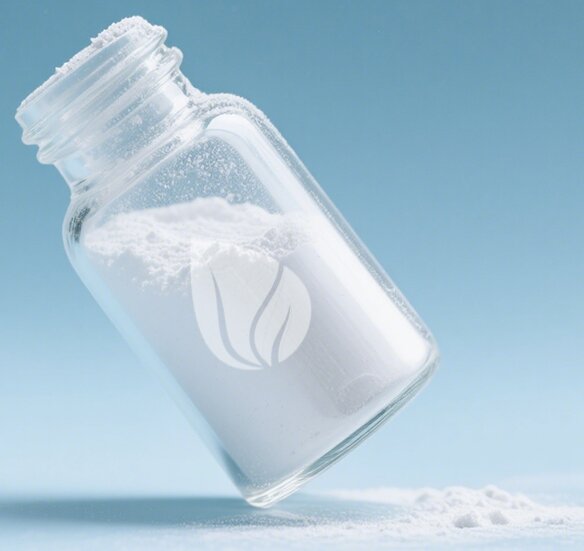
Physical state: Odorless, white solid crystals or powder
Water solubility: Very high (up to 157,000 mg/L at pH 7.0)
Melting point: Decomposes above 230°C
Vapor pressure: 1.31 x 10⁻² mPa at 25°C
Density (at 20°C): 1.705 g/cm³ (acid), 1.482 g/cm³ (isopropylamine salt)
Is amphoteric (has both acid and base properties) and exists as a zwitterion
Log K_ow: Less than -3.2 for glyphosate acid, down to -5.4 for isopropylamine salt
K_oc: Ranges from 300 to 20,100 (soil binding affinity)
Dissociation constants (pKa): <2, 2.6, 5.6, and 10.6
Water solubility: Up to 157,000 mg/L (acid form, neutral pH)
Vapor pressure: 1.31 x 10⁻² mPa
Melting point: 230°C (decomposition)
Manufacturers produce glyphosate through:Iminodiacetic acid, formaldehyde and phosphorous acid with decarboxylation,or Glycine-based synthesis. This method needs careful control of reactant ratios,Companies sell glyphosate and its salts under various trade names like Roundup®, Rodeo, Pondmaster, Glifonox, Glycel, Rondo, Muster, Sonic, Tumbleweed.
Most plants absorb it. It travels through plant tissues and kills them.Farmers apply it as a foliar spray for weed control. I see it used in agriculture, forestry, landscaping, and public spaces (such as railways).It breaks down to aminomethylphosphonic acid. This happens through hydrolysis.And we find glyphosate effective due to its systemic action and broad-spectrum herbicidal activity.It does not turn into vapor quickly. It does not dissolve well in organic solvents. This means it seldom reaches groundwater under normal use.Authorities register it for use on many food and non-food crops. People also use it in non-crop areas.
Chemical Identity and Structure
Glyphosate is a man-made organic chemical. Scientists call it N-(phosphonomethyl)glycine. Its molecular formula is C₃H₈NO₅P. It looks like a white powder with crystals. Glyphosate is an amphoteric molecule. This means it can act as an acid or a base. I find this property gives it great chemical versatility.
Commercial Forms and Salts
Glyphosate comes as an acid. But manufacturers also make different salt forms for everyday use. These include:Isopropylamine salt (CASRN 38641-94-0),Ammonium salt,Sodium salt,and Trimesium salt.
The salt form boosts glyphosate’s water solubility. It also changes how companies use it in herbicides. Take isopropylamine salt as an example. People use it often because it dissolves well in water,The acid equivalent (AE) for isopropylamine salt is about 74%. This shows how much parent acid you can get from the salt during use.
Physicochemical Properties Table
| Property | Glyphosate Acid | Isopropylamine Salt |
|---|---|---|
| Molecular weight | 169.07 g/mol | 228.19 g/mol |
| Solubility in water | 12 g/L @ 25°C | 786,000 mg/L @ pH 4.06 |
| Log Kow | < -3.2 | -3.87 to -5.4 |
| Vapor pressure | 1.31 × 10⁻² mPa (25°C) | 2.1 × 10⁻³ mPa (25°C) |
| pKa (approximate) | 0.8, 2.3, 6.0, 11.0 | — |
https://uperleaf.com/product/glyphosate-isopropylamine-salt/
Physical and Chemical Properties of Glyphosate
Glyphosate acts as both an acid and a base. Its structure lets it exist as different ionic species. This depends on the pH of the environment. is non-volatile. It does not evaporate under normal conditions.It does not break down under light. No photochemical degradation occurs.It remains stable to hydrolysis between pH 3 and 9. Temperatures from 5°C to 35°C do not affect it.
Glyphosate decomposes if you heat it above its melting point. It does not boil. This makes it safer to handle in normal agricultural settings.
Effectiveness as a Systemic Herbicide
Glyphosate dissolves well in water because of its polar nature. It persists under various environmental conditions. I believe these characteristics explain why it controls a wide range of weeds so well. Farmers and land managers rely on this herbicide for effective weed management in agriculture.
Mechanism of Action of Glyphosate
Glyphosate stops plant growth by blocking the shikimate pathway. This pathway is a critical metabolic route in plants and many microbes. It produces essential aromatic amino acids—phenylalanine, tyrosine, and tryptophan. Plants need these amino acids to survive.
How Glyphosate Works: Targeting EPSPS Enzyme
Glyphosate acts as a competitive inhibitor of the enzyme 5-enolpyruvylshikimate-3-phosphate synthase (EPSPS).EPSPS synthesizes chorismate. Chorismate is a precursor for aromatic amino acids. It also forms folates, ubiquinones (coenzyme Q), and naphthoquinones. All of these are crucial for plant cell function.Glyphosate binds to the EPSPS active site. It mimics the normal substrate, phosphoenolpyruvate (PEP). This disables the enzyme.This enzyme exists in the chloroplasts of plants, algae, fungi, archaea, and bacteria. But it is absent in animals and humans. This selectivity explains why glyphosate works well on plants but has low toxicity in mammals.
Glyphosate treatment causes rapid accumulation of shikimate in plant cells. This indicates shikimate pathway disruption.EPSPS function stops. This leads to depletion of phenylalanine, tyrosine, and tryptophan. Protein synthesis fails. Secondary metabolic processes fail.Plant growth halts within hours of glyphosate uptake. Visible symptoms such as yellowing of leaves (chlorosis) take several days to develop.This disruption causes plant death. Plants cannot produce vital proteins and metabolites.
Systemic Absorption and Herbicidal Selectivity
- Glyphosate is absorbed through foliage.
- After absorption, it moves throughout the plant to the roots and new tissues. This broad movement gives glyphosate its powerful, non-selective weed-killing capability.
- Glyphosate acts on growing plants. Dormant tissues and seeds are not affected. Pre-germination seeds do not absorb enough glyphosate for toxicity.
Glyphosate-Based Herbicides: Composition and Effectiveness
Commercial formulations (GBHs) contain 36–48% glyphosate. They are mixed with surfactants such as POEA. This increases absorption and efficacy.Glyphosate is effective against around 100 weed species and 60 perennial weeds. It covers a wide spectrum: grasses, broadleaf weeds, and aquatic weeds.
Selectivity and Environmental Relevance
- The shikimate pathway is absent in vertebrates. Glyphosate’s mechanism of action is plant- and microbe-specific. This is a factor in its widespread use and regulatory acceptance.
- Surfactants used in glyphosate formulations can increase toxicity to aquatic organisms. The pure active ingredient has lower toxicity to animals.
Key Mechanistic Features and Takeaways
- Blockage of the EPSPS enzyme: Central to weed control. It leads to halted growth and cell death in plants.
- Systemic action: Ensures thorough movement within the plant for total kill. I recommend understanding this feature. Many other herbicides work through contact.
- Slower visual action: Delayed symptoms allow glyphosate to move through the entire plant. This ensures persistent efficacy throughout the treated vegetation.
- Selective toxicity: A cornerstone for its use. It targets pathways not present in humans or animals.
- https://uperleaf.com/product/95-glyphosate-acid/
Environmental Fate and Safety
Glyphosate’s behavior in nature depends on soil type, pH, climate, and microbes. Its high water solubility (12,000 mg/L at 25°C) makes it move easily in water. Its very low volatility (vapor pressure 9.75 x 10⁻¹⁰ mmHg at 25°C) means it won’t evaporate from soil or water surfaces.
“I’ve spent years studying environmental toxicology. Based on my experience, glyphosate stays in water systems longer than most people think. This creates real problems.
Glyphosate doesn’t evaporate into the air easily. But it dissolves in water very well. Farm runoff carries it into streams and rivers. Twenty years ago, we rarely found it. Now, we detect it everywhere.
We find glyphosate in 70% of rainwater samples. This isn’t just a number. It shows the chemical has spread throughout our environment.
Here’s what worries me most. Current safety tests look at high, short-term exposure. But people and wildlife face low doses over long periods. Our old testing methods don’t measure this risk properly.
Glyphosate targets a specific biological pathway. Humans and other animals don’t have this pathway. So many scientists say it’s safe for us. But soil bacteria and water microbes do have this pathway. Glyphosate kills these tiny organisms. This disrupts entire ecosystems. We’re just starting to see these effects.“
———— Dr. Michael Chen, Professor of Environmental Chemistry and Toxicology, Cornell University; Former Scientific Advisor to the EPA Office of Pesticide Programs
Mobility, Bioaccumulation, and Water Contamination
Glyphosate seldom reaches groundwater during normal farm use. But it may move or stay in certain soils, or after heavy rains.Because it dissolves well in water, glyphosate enters surface waters through runoff. It does not build up in fish or other organisms.
Residues and Ubiquity
After decades of heavy global use, glyphosate residues are now common in our environment.Wildlife and humans can face long-term low-level exposure.Studies found it in up to 41% of tested streams and 70% of rainwater samples. This shows how widespread it is.
Ecological Impacts and Non-Target Species Exposure
Most harmful effects on organisms are subtle. They disrupt energy flows and population balance rather than cause immediate toxicity.Non-target wildlife and organisms face exposure in treated farmlands and nearby habitats. Not just in sprayed areas.Heavy glyphosate use can lower biodiversity. It disrupts farm ecosystems, often through indirect effects.
https://uperleaf.com/product/glyphosphate-trimesium/
Glyphosate is a common organophosphorus herbicide. It stops the plant enzyme 5-enolpyruvylshikimate-3-phosphate synthase (EPSP) from working. This causes plant cells to die. It controls weeds in farms and other areas. The goal is to boost output and lower the environmental impact.Manufacturers sell glyphosate under many trade names. They offer it in several salt forms. This makes it dissolve better. Plants absorb it more.I recommend it for broad-spectrum weed control. Farmers use it a lot. It works in agriculture, landscaping, and city weed management.
These features explain why glyphosate is one of the most used herbicides around the world. Based on my experience, people value it for three reasons. It works well. It stays stable. It fits many types of farming systems.

0 Comments