


Lufenuron 95% TC Technical Pesticides
| CAS Number | 103055-07-8 |
| Chemical Name | Lufenuron |
| Molecular Weight | 551.16 g/mol |
| Molecular Formula | C₁₇H₈Cl₂F₈N₂O₃ |
| Synonyms | N-[[[2,5-Dichloro-4-(1,1,2,3,3,3-hexafluoropropoxy)phenyl]amino]carbonyl]-2,6-difluorobenzamide; CGA 184699 |
| EINECS | 247-208-3 |
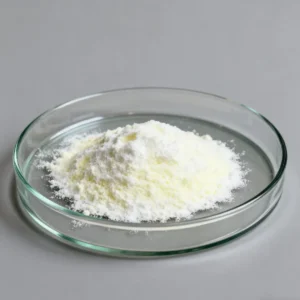
| Appearance | White to pale yellow crystalline powder |
| Solubility | Soluble in acetone, dichloromethane; slightly soluble in hexane; very slightly soluble in water |
| Storage Conditions | Store in a sealed container, in a cool and dry place, away from light and heat |
Parameters of Lufenuron
| CAS Number | 103055-07-8 |
| Chemical Name | Lufenuron |
| Molecular Weight | 551.16 g/mol |
| Molecular Formula | C₁₇H₈Cl₂F₈N₂O₃ |
| Synonyms | N-[[[2,5-Dichloro-4-(1,1,2,3,3,3-hexafluoropropoxy)phenyl]amino]carbonyl]-2,6-difluorobenzamide; CGA 184699 |
| EINECS | 247-208-3 |
| Appearance | White to pale yellow crystalline powder |
| Solubility | Soluble in acetone, dichloromethane; slightly soluble in hexane; very slightly soluble in water |
| Storage Conditions | Store in a sealed container, in a cool and dry place, away from light and heat |
| Melting Point | 164-166 °C |
| Boiling Point | Decomposes before boiling |
| Density | Approximately 1.68 g/cm³ (at 20 °C) |
| Vapor Pressure | 1.3 × 10⁻⁹ Pa (at 25 °C) |
| Water Solubility | Approximately 0.006 mg/L (at 20 °C) |
| LogP (octanol-water) | Approximately 4.2 |
Core Features and Mechanism of Action
1. Principle of Action
The agent inhibits chitin synthase activity, preventing insect cuticle formation, preventing normal molting and leading to death. Exposure to the agent significantly reduces egg production and egg hatching rates in adult insects, with a duration of effect exceeding 14 days. Damage ceases within 2 hours of feeding, with peak mortality reaching 3-5 days.
2. Broad Insecticide Spectrum
It primarily controls Lepidoptera pests (such as beet armyworm, armyworm, cotton bollworm, diamondback moth, rice leaf roller, and striped stem borer), as well as piercing-sucking pests (thrips, rust mites, and citrus leafminer). It is also effective against pests resistant to pyrethroids and organophosphate pesticides.
3. High Selectivity
It has low toxicity to bees and natural predators (such as predatory spiders), but is toxic to silkworms and birds. Avoid mulberry orchards and areas where birds frequent.
Applicable Crops and Usage
1. Applicable Crops
Widely used in cotton, rice, vegetables (cabbage, tomatoes, beans), fruit trees (citrus, apples), corn, potatoes, grapes, etc.
2. Usage Techniques
Spraying:
For vegetable and field lepidopteran pests: Apply a 750-1500 times dilution (e.g., 30-50 ml of a 5% suspension concentrate per mu), focusing on the undersides of leaves and areas where insect eggs are concentrated.
For fruit tree pests (citrus leafminer, rust louse): Apply a 1500-2500 times dilution, spray evenly.
For rice leaf roller: Apply 40-50 g of a 5% suspension concentrate per mu during the tillering and breakout stages. The effect lasts 15-25 days.
Root irrigation: For controlling leek maggots, apply 300-500 ml of the suspension concentrate per mu. 3. Combination Enhancement
Carbapenem/Lufenuron: Effective against resistant pests such as beet armyworm and rice leaf roller, with a duration of over 20 days.
Chlorfenapyr/Lufenuron (10% SC): For control of cabbage diamondback moth, 15-20 ml per mu (approximately 200 ml/acre), with a safe interval of 7 days.
Chlorfenapyr/Lufenuron: Combining fast-acting and ovicidal properties, suitable for use during outbreaks of advanced larvae.
Precautions and Safe Use
1. Application Timing
The optimal control period is from peak egg hatching to the early larval stage. Avoid application during high temperatures.
2. Safe Interval
Cruciferous vegetables: 14 days, maximum of two applications per season.
Cotton: 28 days, maximum of two applications per season.
Rice: 7 days, maximum of three applications per season.
3. Contraindications for Combination Use
Avoid mixing with other pesticides such as methomyl, endosulfan, and BT.
Rotate between insecticides with different mechanisms of action, such as emamectin and chlorfenapyr, to delay the development of insecticide resistance. 4. Environmental and Health Protection
Keep away from aquaculture areas. Do not wash spray equipment in rivers or ponds.
Wear protective clothing to avoid contact with skin and eyes. Do not use during pregnancy or breastfeeding.

Reviews
There are no reviews yet.