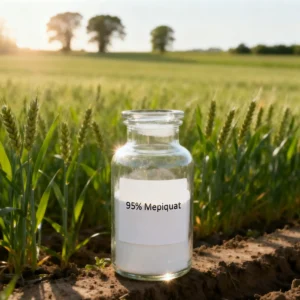
Mepiquat
Mepiquat is a highly effective plant growth regulator. It mainly inhibits excessive vegetative growth and dwarfs plant type, making crop stems thicker, internodes shorter, and root systems more developed. Meanwhile, it enhances lodging resistance, promotes the translocation of photosynthetic products to economic parts such as fruits and tubers, and improves fruit setting rate and yield. It is widely used in cotton, corn, wheat, peanut, potato and other crops, with high safety and mild, stable growth-controlling effect, making it a commonly used regulator for controlling excessive growth and increasing yield in agricultural production.
1. Basic Information
Common Name: Mepiquat chloride
Chemical Name: 1,1-Dimethylpiperidinium chloride
Molecular Formula:
CAS No.: 24307-26-1
Physical State: White crystalline solid
Class: Piperidine plant growth regulator (growth inhibitor)
2. Mode of Action
Inhibits gibberellin biosynthesis in plants, reducing cell elongation.
Controls plant height, shortens internodes, dwarfs plants, and prevents lodging.
Promotes root development and enhances stress resistance.
Optimizes photosynthate distribution to improve fruiting, yield and quality.
3. Key Features
Controls excessive growth & prevents lodging: Makes stalks strong and plant type compact.
Promotes rooting & strengthens seedlings: Improves nutrient and water uptake.
Enhances stress resistance & increases yield: Improves drought resistance, lodging resistance, effective bolls/panicles and quality.
High safety: Low toxicity, low residue, safe for crops and environment.
Showing all 3 results