
Is it necessary to worry about glyphosate residues in rice after using glyphosate to weed control in rice paddies? This is a very practical issue related to food safety, and it is particularly meaningful.

First,trace amounts of residue may remain in the rice after using glyphosate
Why might there be residue in rice? (Core logic)
Glyphosate is a systemic herbicide, after application, it is absorbed by the plant leaves and transported to the roots, stems, and other parts of the plant, killing weeds by inhibiting amino acid synthesis. Its residue risk mainly comes from two scenarios:
-
Direct application (incorrect usage scenario)
Rice is a monocotyledonous crop, and glyphosate has a killing effect on it (non-selective). Direct spraying during the rice’s growth period is strictly prohibited in proper cultivation (as it will cause the rice to wither and the entire crop to fail). If used illegally during critical stages such as the tillering and jointing stages, glyphosate may be absorbed by the rice and eventually accumulate as residue in the rice
-
Indirect contact (compliant use cases)
Under compliant conditions, glyphosate is only used for “soil sealing treatment” before rice planting (such as spraying 1-2 weeks before sowing to kill weeds before transplanting) or “field sanitation” after rice harvesting (killing residual weeds without contacting rice plants). At this time, glyphosate mainly acts on weeds and is rapidly degraded by soil microorganisms (soil half-life is about 3-174 days, depending on pH, temperature and soil type). There is almost no absorption pathway during rice growth, and the risk of residue is extremely low. However, in extreme cases (such as when the pesticide is washed away by heavy rain in the short term after application, and a small amount of the pesticide is absorbed by the rice roots), trace amounts of residue may exist.
However, there is no need to be overly concerned about glyphosate residues in rice
Whether considering the characteristics of glyphosate itself, residue standards, or actual testing results, rice is safe for normal consumption. The reasons are as follows:
1.Glyphosate itself is low in toxicity and easily degraded
Toxicological data show that the oral LD50 of pure glyphosate in rats is 4320 mg/kg, with acute toxicity even lower than that of table salt. Furthermore, its target is an enzyme specific to plants that synthesizes essential amino acids; this enzyme is absent in animals, which determines its minimal direct impact on humans. In addition, glyphosate’s half-life in soil is typically only 7-14 days, and in water bodies such as rivers, it is less than 10 hours. It continuously degrades naturally during the rice’s growth cycle, resulting in significantly reduced residues by harvest time.
2.Rice paddies absorb very little glyphosate.
Rice paddies absorb very little glyphosate herbicide, mainly due to the following two reasons:
-Glyphosate is mainly used for soil sealing treatment before rice transplanting, or for targeted spraying in the later stages, and rarely comes into direct contact with rice grains.
-Glyphosate is easily degraded by microorganisms in the soil, and rice has limited absorption capacity for it, with very little amount translocated to the grains.
3.Safe boundaries for residual levels (key to international trade compliance)
Major countries and regions around the world have set strict limits (MRLs) for glyphosate residues in rice.
|
Country /Region |
Residue limit of glyphosate in rice(mg/kg) |
Remarks |
|---|---|---|
|
China |
1.0 |
GB 2763-2021《National Food Safety Standards ;Maximum residue limit of pesticides in food》 |
|
European Union |
0.1 |
European Union Regulation (EC) No 396/2005, The standards are relatively strict |
|
USA |
0.7 |
USA EPA Standards |
|
Japan |
0.2 |
Positive list system, including processed rice |
|
ASEAN (Thailand、Vietnam etc.) |
0.5-1.0 |
Slight differences exist between countries; refer to CAC standards. |

Therefore, as long as glyphosate is used in accordance with regulations
and the safety standards for glyphosate residue are met , we have absolutely no need to worry about glyphosate residues in rice. However the residue level meets safety standards depends crucially on the application method, timing of application, dosage, and compliance. This is also a core safety concern for customers in the international pesticide trade. Below, we will focus on how to legally apply glyphosate in rice paddies:
1. Preventing Pesticide Drift and Contamination
Do not spray when wind speed is≥3, as the pesticide solution may drift onto rice plants or nearby sensitive crops
Do not use high-pressure sprayers or fine mist nozzles; choose coarse mist nozzles and keep the nozzle height within 30 cm of the target weeds. Avoid applying pesticides in the morning when there is dew or in the evening when there is fog, as high humidity will exacerbate drift and pesticide residue.
2.Avoid Incorrect Contact with Rice Plants
-Direct spraying on the leaves and stems of rice seedlings and mature plants is strictly prohibited. Glyphosate is a non-selective herbicide and will cause rice to turn yellow and wilt.
-When using it in rice fields, “inter-row directional spraying” should be used, targeting only weeds in the field and avoiding the base of the rice plants.
-Do not apply the herbicide during critical growth stages such as jointing and booting; even a small amount of drift may affect the grain filling rate.
3. Avoid Incorrect Dosage and Timing of Application
-Do not arbitrarily increase the dosage. Illegal use of high doses or beyond the permitted scope may lead to excessive glyphosate residues, thus affecting subsequent crops.
-Avoid applying pesticides when the soil is dry. Insufficient water absorption by weeds will reduce the efficacy of the pesticide and prolong its residual period.
-Do not repeatedly spray the same plot of land. Repeated spraying can lead to pesticide accumulation and damage the soil microbial environment.
4.Avoid Mixing and Violations of Safe Intervals
-Do not blindly mix with other herbicides, especially alkaline pesticides, as this will reduce the efficacy of glyphosate and may even worsen phytotoxicity.
-Strictly adhere to the safe interval; stop applying pesticides at least 21 days before rice harvest to avoid excessive residues in grains.
-Avoid applying pesticides immediately after draining paddy fields, or draining large amounts of water shortly after application, to prevent pesticides from spreading and polluting water bodies.
5.Avoid Neglecting Operational Details
-Failure to clean the sprayer before application may result in residual pesticides reacting with glyphosate and causing phytotoxicity, especially if other pesticides were previously used.
-Do not handle pesticide solutions with bare hands. Wear gloves, a mask, and protective clothing during application to prevent skin and respiratory poisoning.
-Failure to clean equipment promptly after application may result in residual pesticides contaminating subsequent crops or soil.
In addition, Sellers of glyphosate need to fulfill their due responsibilities and obligations.
In the agricultural trade or export businees , the sellers must fulfill their responsibilities and obligations,to effectively safeguard the backend market, the following points can be considered:
1. Clarify Compliant Usage Methods Of Glyphosate
When exporting glyphosate, the product instructions or promotional materials must clearly state that “for paddy fields, it is only permitted for soil sealing treatment before planting; spraying during the growing season is prohibited.” This is to prevent customers from causing excessive residues due to improper use, which could lead to trade disputes.
2.Provide a residue testing report:
A residue testing report should be provided. For key export markets (such as the EU and Japan), a third-party testing agency (such as SGS or Intertek) can be commissioned to issue a “Glyphosate Residue Detection Report in Rice” to prove the safety under compliant use and enhance customer trust.
3. Monitor regulatory updates in target markets:
Some countries (such as the EU) may adjust pesticide residue limits. It is necessary to track changes in MRL standards in target markets in a timely manner to ensure that products meet local compliance requirements (e.g., when exporting to the EU, a strict limit of 0.1 mg/kg is required; low-dose, easily degradable glyphosate formulations are recommended).
4. Recommended Alternatives (for Weed Control During the Growing Season):
If customers require weed control during the rice growing season, we can recommend rice-specific selective herbicides (such as penoxsulam, cyhalofop-butyl, etc.). These herbicides are safe for rice, have lower residue risks, and are more likely to meet compliance requirements in different global markets.
In summary
when glyphosate is used compliantly in paddy fields (pre-planting soil treatment), the residue level in rice is extremely low, meeting international safety standards and posing no harm to human health or international trade. However, unauthorized direct spraying during the growing season may result in excessive residues, posing safety risks and violating pesticide residue regulations of the target export country. As agricultural input traders, our core responsibility is to communicate compliant usage methods to our clients and provide corresponding testing and regulatory support to ensure smooth trade.
Tips !
In addition, we’d like to provide some extra information on how to determine if rice contains excessive glyphosate and how to carefully inspect rice before purchasing. We hope this information will be helpful.
-
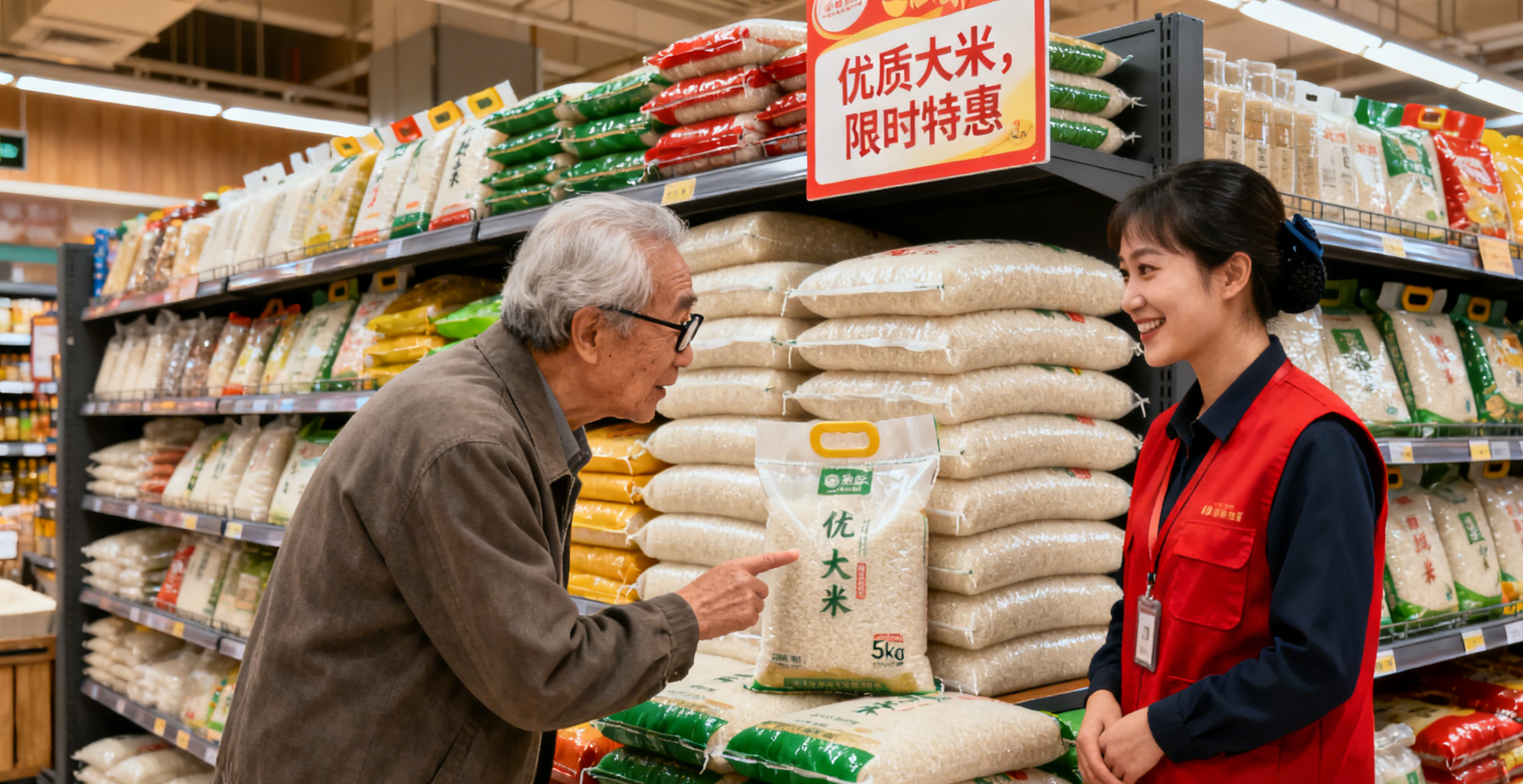
Since individuals cannot directly determine whether glyphosate levels in rice exceed the standard, it is recommended to purchase rice from reputable channels such as supermarkets and brand-owned stores,Prioritize rice with brand names and published testing reports and check for “green food” or “organic food” certification marks on the rice packaging. Avoid purchasing bulk rice from unknown sources or at abnormally low prices.
-
Secondly, simply rinse the rice grains before eating, or consume it with other grains such as oats or quinoa to further reduce related concerns.

0 Comments