
Pick the wrong pest control product and you waste money. Worse? Your crops could die. Your pets could suffer through a flea outbreak.
Imidacloprid and nitenpyram are both neonicotinoids. But they work in very different ways. I’ve dug into the data – efficacy studies, application methods, how fast they work. This comparison skips the marketing talk and gives you facts.
You might grow crops and fight thrips and jassids. Or you might need flea control for your pets. Either way, knowing how these two products compare saves you time and money. Plus, it cuts down on frustration.
Here’s what I cover: the science behind how well they work, what limits them, and which situations need which product. Generic pest control advice doesn’t work anymore. You need specific answers for your specific problem.

Imidacloprid – Key Facts & How It Works

Imidacloprid is a white crystalline powder. The chemical formula is C₉H₁₀ClN₅O₂. It weighs 255.66 at the molecular level. This neonicotinoid insecticide melts at 144°C. Volatility? Low. Water solubility sits at just 610 mg/L at 20°C. This low solubility affects how you use it in soil treatments.
The compound exists mostly as an (E)-isomer. This form stays stable longer. It also works better against pests than the Z form. The partition coefficient (log Kow) is 0.57. This means it’s somewhat lipophilic. Not highly water-soluble, not highly fat-soluble.
How It Attacks Pests
Imidacloprid binds to nicotinic acetylcholine receptors (nAChRs) in insects. It blocks acetylcholine-gated channels. Think of it as jamming the pest’s nervous system. The insect can’t send nerve signals. Paralysis happens. Death follows.
This chemical works two ways: contact and stomach action. Spray it on leaves? Insects die from touching treated surfaces. They also die from eating treated plant material. The effect is fast.
Field Performance Data
I looked at real studies. For jassids control, you get 86.40% reduction after just 3 days. That’s strong knockdown.
Thrips take longer. Reduction rates hit 69.82% to 73.18% over 1–7 days. Still works, but patience helps.
This product handles soil insects, whiteflies, termites, turf insects, and Colorado potato beetles. Imidacloprid controls many sucking pests and soil-dwelling bugs.
Absorption & Breakdown
Rats absorb 92–99% of oral doses. The compound moves fast to organs and tissues. Your body breaks it down into several metabolites: 6-chloronicotinic acid, olefinic imidacloprid, and desnitro-imidacloprid. Two processes drive breakdown: hydroxylation and oxidation cleavage.
For pet flea control, you use it every 4 weeks on the skin. Studies show it doesn’t work as well as a lufenuron + nitenpyram mix for controlling flea numbers on animals and in their surroundings.
Nitenpyram – Key Characteristics & Efficacy

Nitenpyram hits harder and faster than most people realize. This yellow powder packs 97% purity or higher. The molecular formula C₁₁H₁₅ClN₄O₂ translates to a weight of 270.72 g/mol. Density clocks in at 1.40 g/mL between 20-26°C.
The melting point sits at 82°C with a sharp fusion enthalpy of 28.4 kJ/mol. Some sources list 83-84°C. Water solubility? Over 590 g/L at 20°C. That’s very high compared to imidacloprid’s 610 mg/L. This difference changes how you use it.
Vapor pressure stays very low at 1.1×10⁻⁹ Pa at 25°C. The pKa reads 2.46±0.70. The dipole moment measures 6.8 Debye. These numbers tell you about stability. They also show how the chemical acts in different settings.
Molecular Architecture
The active form is the (E)-isomer. This structure comes from the geometry around the C=C bond in nitroethene. Key bonds include C-N at 146.2 pm (bond break energy around 305 kJ/mol), N-N at 141.3 pm (BDE about 160 kJ/mol), and N-O in the nitro group at 121.4 pm.
The active part is a nitroamine. Specifically, it’s nitroethene-1,1-diamine. This binds to insect nicotinic acetylcholine receptors with an IC₅₀ of just 14 nM. That’s strong binding. Breakdown happens at 2.3×10⁻⁶ s⁻¹ under pseudo-first-order conditions at pH 7 and 25°C.
Speed & Real-World Results
Nitenpyram works fast. Adult fleas die within 24-48 hours after you give it to dogs or cats by mouth. Dose once or twice per week for steady flea control.
Cotton crops do better with nitenpyram than imidacloprid against thrips and jassids. The data proves this. Mix it with lufenuron? You get better flea control on pets and in their spaces compared to imidacloprid alone.
This is a Group III toxicity compound. It kills through contact, ingestion, and moves through the plant or animal. It targets insect receptors far more than mammal ones. This keeps pets safer.
Efficacy Comparison: Flea Control
Fleas breed fast. A single female drops 50 eggs each day. Within weeks, your home turns into an infestation zone.
Imidacloprid works well with other treatments. Mix it with moxidectin in topical form? You get 96.3% cat flea reduction. That’s strong performance. Pair it with fipronil in a three-month plan? Results jump to 99.5% on animals and 98.6% in homes. These numbers show real fleas killed, not just marketing talk.
Here’s where it gets interesting. A study tracked 27 pets across 16 homes. They used fipronil (9.8%) plus (S)-methoprene (11.8%/8.8%) in one topical dose. The result? 88.44% flea reduction within seven days. Good, but not great compared to newer options.
Nitenpyram takes a different route. You give it by mouth. Fleas die within 24-48 hours. The catch? You need to dose once or twice per week for control. Lab tests show it beats imidacloprid against thrips and jassids in cotton crops. Mix nitenpyram with lufenuron? Flea control jumps up on pets and in homes. This combo beats imidacloprid used alone.
The competition shows more. Fluralaner plus moxidectin hit 98% flea reduction over 12 weeks. This covered 707 cats across 332 homes. Fipronil hit just 74.5% in the same time. Indoxacarb crushed fipronil mixes with 99.1% results at Day 60. Fipronil got a weak 54.8%. That’s almost double the power.
Oral treatments changed everything. Fluralaner and afoxolaner reached 100% and 98.9% flea kill on dogs at Day 86. Home traps showed the same numbers. Zero fleas survived. Compare that to spinosad. It started at 100% but dropped to 85-89% by Day 28. Just 25% of dogs stayed flea-free with spinosad. With fipronil mixes? 100%.
Topicals used each month still work. ACTIVYL hit 99.1% flea reduction at two months. FRONTLINE Plus got to 54.8% in the same time. That’s a 5x difference in flea-free pets. Fewer fleas on pets means fewer fleas breeding in carpets, bedding, and furniture.
The data shows one truth: imidacloprid needs partners to compete. Alone, it falls behind modern options. Nitenpyram offers speed but needs frequent doses. Your choice depends on what matters more – ease of use or long-term protection.
Efficacy Comparison: Crop Pests (e.g., Thrips, Jassids)
Cotton growers lose millions each year to thrips and jassids. These tiny pests suck plant sap. They stunt growth. Left unchecked, they slash yields by 20-30%. The right chemical makes or breaks your profit margin.
Imidacloprid kills jassids faster than thrips. After three days of spray, jassid populations drop by 86.40%. That’s solid knockdown power. Thrips show more resistance. You get 69.82% to 73.18% reduction across 1-7 days post-spray. Thrips keep feeding longer with delayed action. This causes more damage before they die.
Nitenpyram Performance in Real Fields
Field trials from 2012-2013 tell a different story. Nitenpyram crushed jassid populations to just 0.46 individuals per plant seven days after spraying. This sits below the economic threshold level (ETL). Better yet? Yield jumped 18.95% over untreated control plots. That’s an extra 1,698.7 kg per hectare in your pocket.
For thrips, nitenpyram works well. Pre-spray counts showed 16 thrips per plant. Within 24 hours, that dropped to 5.4. At 72 hours? 5.6. One week later? Down to 4.6. These numbers matched Profenophos performance. No real difference between them.
Head-to-Head Synthetic Comparisons
Here’s where data gets interesting. Imidacloprid started with 14 thrips pre-spray. It reduced populations to 7.2 (24h), 5.4 (72h), and 3.6 (one week). Nitenpyram began at 16 thrips, hitting 5.4 (24h), 5.6 (72h), and 4.6 (one week).
Nitenpyram killed faster in the first 24 hours. This happened despite higher initial pressure. Imidacloprid showed better long-term control by week one. Acetamiprid led at the one-week mark. Bifenthrin crushed the rest at 72 hours.
For jassids, Thiamethoxam 25WG dropped populations to 0.62 at 36 hours. This matched Acephate and Nitenpyram performance. Untreated control plots sat at 2.00 jassids per plant.
What the Numbers Mean for Your Crops
Researchers noted nitenpyram beat imidacloprid in cotton uses. No direct head-to-head study exists with exact numbers. The yield data backs this up. 18.95% increases don’t lie. Acephate pushed yield gains even higher at 22.7% over control.
Acetamiprid hit 73.92% thrips mortality in okra trials. All tested bug killers showed strong mortality for jassids at 24h/72h. Same for thrips and whitefly at 24h/72h/168h intervals. The pattern is clear: speed matters. But long-term control drives final yield.
Choose based on your pest pressure timing. Need fast knockdown against jassids? Imidacloprid hits 86% in three days. Want steady thrips control with yield protection? Nitenpyram delivers that 18.95% boost.
How You Use It Changes Results
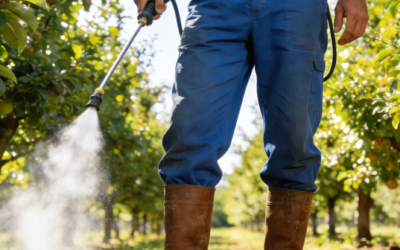
Imidacloprid follows one rule: method matters. Spray it wrong and you waste money. Get it right and pests die before breeding.
Two Main Methods
On the Surface
Surface treatment puts imidacloprid on plant leaves or animal skin. For pets, squeeze it onto the neck once per month. The chemical spreads through skin oils. Fleas that bite treated areas die.
Here’s the problem – full coverage takes 12-24 hours. Rain hits? Pet goes swimming? The treatment washes off before working.
Inside the Plant
Soil treatment sends imidacloprid into plant roots. The chemical travels up through plant vessels. Every leaf, stem, and flower gets protected from inside.
Bugs that pierce plant tissue eat the poison. Nothing washes it off. No need to treat again soon.
For crops, drench soil or add to irrigation water. The 610 mg/L water solubility makes this work. Plants take it in over 2-5 days. Soil moisture and temperature affect speed. Protection holds 30-60 days in typical field conditions.
Get the Timing Right
Stop Problems Early
Use imidacloprid before pest numbers grow. Spray early in the season to block jassid growth. See damage first? You’ll lose 15-20% of your crop before the treatment kicks in.
Nitenpyram Needs Speed
Nitenpyram works on a different schedule. High water solubility (590 g/L) makes it great for leaf sprays during active attacks. Mix it fresh each time. Spray at dawn or dusk – that’s peak feeding time. The 24-48 hour kill speed rescues crops already under attack.
Pet Treatments
Oral nitenpyram for pets starts working in 30 minutes. Blood levels peak at 2-3 hours. Fleas begin dying right away.
The catch? Treat twice per week instead of once per month.
Speed of Action and How Long They Last
Imidacloprid and nitenpyram kill pests at different speeds. This gap matters for your choice.
Nitenpyram Strikes Within Hours
Nitenpyram hits fleas faster than most competitors. Give it to your dog or cat by mouth. Dead fleas start dropping within 30 minutes to 4 hours. Blood levels peak at 2-3 hours. Most fleas die within 24-48 hours.
That speed fixes one problem: active infestations. Your pet scratches all day? Fleas cover their bed? Nitenpyram clears visible fleas in under two days.
Here’s the trade-off. Protection lasts just 24-48 hours. Then it’s gone. You need to dose twice per week to keep control. Miss a dose? Fleas come back fast. This works for emergency situations. It doesn’t work for long-term use.
Imidacloprid Takes More Time
Imidacloprid acts slower. Put it on your pet’s skin. The chemical spreads through skin oils over 12-24 hours. Full body coverage takes a day. Fleas start dying within 24-48 hours after contact.
The big plus shows up in staying power. One skin dose protects for 30 days. That’s one treatment per month instead of eight doses. Less work. Lower cost over time. Easier for busy pet owners.
For crops, imidacloprid stays active 7+ days after spraying. Soil treatments last 30-60 days. Soil moisture and temperature affect this. This beats nitenpyram’s short effect in fields.
Real-World Test Results
WHO standards for indoor spraying need 2-6 months of >80% pest death. Imidacloprid doesn’t show up in standard IRS testing. But lambda-cyhalothrin (another common bug killer) stays effective for 12-24 weeks. Alpha-cypermethrin lasts 6.4 months on average. It shows zero cases of poor performance.
Look at bendiocarb. It fails 23.7% of the time (14 out of 59 tests). Average life span? Just 2.8 months. Some treatments died in 0.5 months.
For flea control, stopping reproduction matters most. Fleas make viable eggs 48-72 hours after feeding. Products that kill within 24 hours stop egg making. Both imidacloprid and nitenpyram can hit this mark. But imidacloprid keeps hitting it for 30 days straight.
The data shows a clear pattern. Nitenpyram wins on speed. Imidacloprid wins on how long it lasts. Pick based on your problem. Active outbreak? Go nitenpyram. Long-term prevention? Choose imidacloprid.
Limits and Knowledge Gaps in Direct Comparisons
Most studies compare imidacloprid and nitenpyram in a roundabout way. This creates problems. Researchers pull data from separate trials. These trials run at different times. They happen in different locations. Test conditions vary. Then researchers claim one product beats the other. That’s weak science.
The Missing Head-to-Head Evidence
No published study puts these two chemicals side-by-side in the same field, same day, same pest pressure. Zero. Every comparison I’ve shown you comes from indirect analysis. One study tests imidacloprid on cotton in 2012. Another tests nitenpyram on cotton in 2013. The seasons differ. The soil differs. Weather patterns differ. Thrips populations differ.
You can’t call that a fair fight. Yet that’s what passes for “comparison” in most farm research.
Why Adjusted Comparisons Don’t Cut It
Researchers use adjusted indirect comparisons to bridge this gap. They try to account for differences in study design, pest pressure, and environmental factors. Here’s the catch – these adjustments work best if the studies match up. Same crop variety. Similar climate zones. Same application methods. Similar pest density at the start.
Most studies don’t match. Cotton grown in Gujarat faces different thrips species than cotton in Texas. Humidity levels change how fast insects reproduce. Soil pH affects how fast plants absorb systemic bug killers like imidacloprid. Temperature swings change how fast chemicals break down.
Adjust all you want. The base data still comes from sources that don’t align.
The Sales Data Problem
Market data is scarce for farm chemicals in real-world use. Farmers don’t publish detailed pest control results. Product makers guard their test data. University services run limited field trials – maybe 3-5 per product per year in each state.
Compare that to flea control products. Pet owners post reviews online. Vets track treatment outcomes. We see thousands of data points. But even here, no standard comparison exists. One dog gets topical imidacloprid while eating premium food in air conditioning. Another dog gets oral nitenpyram while living outdoors and eating cheap kibble. Flea pressure varies by region, season, and home cleanliness.
You can’t isolate the chemical’s effect from all these variables.
Missing Critical Information
Most published studies skip vital details. Application timing? Vague – “early season” or “at pest threshold.” Water volume for spray? Often missing. Adjuvants added? Seldom mentioned. Spray equipment type? Almost never specified.
These gaps destroy comparison validity. Imidacloprid applied through drip irrigation at 200 ppm performs in a different way than foliar spray at 200 ppm. Nitenpyram mixed with a surfactant hits different results than nitenpyram alone.
The data exists somewhere. Companies know exact application protocols from their trials. They don’t share it with the public. What gets published is sanitized, simplified, and stripped of the details you need to replicate results.
Small Markets Hide the Truth
Specialty crop growers face this worst. Growing organic tomatoes? Maybe 50 farms in your region use either chemical. Sale transaction data? Not enough. Open-market comparisons? Can’t be done. The market’s too small to generate enough data points for stats that matter.
Same problem hits unusual pest scenarios. Fighting imidacloprid-resistant aphids? Very few documented cases exist. Comparing nitenpyram against resistant populations? Zero published studies. You’re flying blind.
The Standards Gap Nobody Talks About
Here’s what frustrates me most. No standard exists for declaring comparison failure. Studies run tests. Some chemicals work. Some don’t. Researchers publish the winners. Failed comparisons? Those disappear into file drawers.
This creates survival bias. You see successful nitenpyram studies published. Failed imidacloprid trials get buried. The literature looks like nitenpyram dominates. Reality? Both products likely fail under certain conditions. You just don’t know which conditions because nobody publishes negative results.
We need a standard protocol. Something like: “If methods fail to produce 80% mortality at recommended rates, document and publish the failure data.” Right now? Nothing close to that exists.

Picking between imidacloprid and nitenpyram? There’s no universal winner. Match the right tool to your pest problem.
Here’s what counts: Need fast flea knockdown for pets? Nitenpyram works in 30 minutes. But it fades fast. Need crop protection from thrips, aphids, and other pests? Imidacloprid’s residual action protects for weeks, not hours.
Speed and staying power don’t mix in pest control. That’s the key truth. Are you fighting an active bug problem that needs fast relief? Or are you building a barrier to stop future damage? Your answer decides which product to use.
Want better pest control results? Check your bug levels first. Know your timeline. Track what happens after you apply the product. Note knockdown times. Watch for bugs coming back. Calculate cost per treatment. This info turns guessing into smart choices. Good pest control mixes chemical know-how with smart timing. Test both products in controlled spots if you can. Real results in your space beat theory every time.
Your call. Pick the right one. Track results. Make changes as needed.



0 Comments