
You stand in the garden center aisle, staring at pest control options. Imidacloprid or bifenthrin? Both kill insects well, but they work in very different ways. Pick the wrong one and you waste money. Or the treatment fails. Worse, your plants might get damaged.
Maybe aphids are eating your roses. Or termites are attacking your home’s foundation. Or ants keep invading your kitchen. The right pesticide makes all the difference.
This guide explains the science behind both products. You’ll learn their practical uses and how they perform in real situations. By the end, you’ll know exactly which one solves your pest problem.

Imidacloprid is a neonicotinoid insecticide. This class of bug killers changed pest control forever after hitting the market in the 1990s. Bifenthrin is a pyrethroid. Pyrethroids are man-made versions of natural chemicals from chrysanthemum flowers. These chemical differences matter. They control how each pesticide gets into the bug’s body. They affect how long it works. They decide which pests die and where you can use it.
Imidacloprid works from the inside out. Plants soak it up through roots and leaves. The chemical moves through the plant’s tubes and vessels. Aphids, whiteflies, or beetles eat the treated plants. They swallow the poison. Death takes 24 to 48 hours. This inside action protects new growth. One treatment guards plants for weeks or months.
Bifenthrin kills on contact. Spray it where insects walk or rest. Their bodies touch the treated spots. The chemical breaks through their shell. Their nervous system fails fast. Insects show problems within minutes. But bifenthrin stays put. It doesn’t travel through plant tissue. Rain washes it off. Sunlight destroys it within days on open surfaces.
These core differences matter. They guide your choice of which product to buy.
Chemical Class and Mode of Action
These two pesticides kill insects through different molecular pathways. Imidacloprid belongs to the neonicotinoid class. It targets nicotinic acetylcholine receptors (nAChRs) in the insect’s nervous system. These receptors control nerve signals. Imidacloprid binds to them. The receptors fire non-stop. The insect’s nerves get stuck in the “on” position. Messages flood the nervous system. Muscles contract without stopping. The bug can’t eat, move, or function. Paralysis sets in. Death follows within 24-48 hours.
Bifenthrin takes a different path as a pyrethroid. It attacks sodium channels in nerve cells. These channels act like gates. They open and close to send electrical signals. Bifenthrin jams the gates open. The channels stay activated far longer than usual. Nerve cells fire without control. This overexcitation scrambles the insect’s entire nervous system. You see the effects fast—twitching, loss of coordination, paralysis within minutes.
The Insecticide Resistance Action Committee (IRAC) groups these chemicals into separate categories. Imidacloprid falls in Group 4A (nAChR agonists). Bifenthrin belongs to Group 3A (sodium channel modulators). This classification helps with resistance management. Rotating between different MOA groups stops pests from building immunity.
QSAR models measure pesticide behavior with high precision. Acetylcholinesterase inhibitors (a separate class) score 93.5% accuracy across 275 chemicals tested. Narcosis-based pesticides hit 80.0% precision. These numbers show that targeted MOA pesticides like imidacloprid work more reliably than broad-spectrum toxins.
Target Pests

Imidacloprid works best against sap-sucking insects. These pests feed on plant fluids. Aphids top the list. These tiny bugs cluster on stems and leaf undersides. They steal nutrients and spread viral diseases. Imidacloprid enters the plant system. It poisons aphids as they feed. Whiteflies die the same way. These small flying insects suck plant juices. They leave behind sticky honeydew. One soil application protects plants for 8-12 weeks.
White grubs destroy lawns from below ground. These beetle larvae eat grass roots in spring and fall. Your lawn develops brown patches. They peel back like carpet. Imidacloprid drenches reach grubs in the soil. The chemical bonds with soil particles. It stays active for months. It also kills beetles that bore into tree trunks and branches. Bronze birch borer, emerald ash borer, and Asian longhorned beetle all die from systemic imidacloprid. You inject it into trees.
Termites are another key target. Imidacloprid soil treatments create barriers around home foundations. Termites tunnel through treated soil. They carry the poison back to their colonies. The chemical spreads through grooming. Entire colonies collapse within weeks. Some ant species also die from imidacloprid baits. Results vary by species.
Here’s what imidacloprid doesn’t handle well: Caterpillars resist it. Butterflies and moths show little sensitivity. These chewing insects don’t tap into the plant’s vascular system. They bite and chew leaf surfaces. The systemic action misses them.
Bifenthrin casts a wider net. This contact killer drops most crawling and flying pests. Ants die within minutes of crossing treated surfaces. Spiders, fleas, and beetles all fall to bifenthrin sprays. It handles caterpillars that imidacloprid misses. Armyworms, cutworms, and bagworms all die on contact. The chemical works on soft-bodied pests like aphids and whiteflies. It also kills hard-shelled insects like scale and mites.
Bean leaf beetles damage soybean crops. Bifenthrin foliar sprays protect the plants. One application kills adult beetles before they lay eggs. Scale insects and mites respond well too. These pests resist many systemic insecticides. But bifenthrin’s contact action breaks through their protective coverings.
California growers use integrated pest management. Written pest records cover 64-85% of vegetable crop acreage. Beneficial organism releases reach 22-30% in vegetables. They reach 10-17% in fruit and nut crops. These IPM practices reduce pesticide use. Chemical control sometimes becomes necessary. Choosing between imidacloprid and bifenthrin depends on the specific pest. You need to identify what’s causing the damage.
Application Methods
The label on the bottle tells you what to do. The real world demands you understand why. Imidacloprid and bifenthrin give you several ways to apply them. Your choice depends on where the pest lives, what type of plant you’re treating, and how fast you need results.
Imidacloprid works great as a soil drench. Mix the concentrate with water. Pour it around the plant’s base. The roots soak it up within hours. The chemical travels upward through the plant’s vessels. It reaches leaves, stems, and flowers within 3-7 days. Container plants respond best to this method. Ornamental shrubs see the most benefit. One application protects for 8-12 weeks. Soil type plays a role. Sandy soils drain faster. Clay keeps the chemical around longer.
Foliar sprays push imidacloprid through leaf surfaces. Tiny pores on leaves—called stomata—take in the solution. Spray in the morning or late evening. Midday heat shuts the stomata. Absorption drops by 60%. Wet both sides of each leaf. The underside matters more for sap-sucking pests. That’s where they hide. Results show up within 48 hours. But protection fades after 2-3 weeks. Rain washes the surface clean.
Trunk injections work for large trees. Drill small holes into the trunk. Put capsules filled with imidacloprid inside. The tree’s system spreads it throughout. This method stops borers that attack from inside. One injection protects for a full growing season. Tree experts use this for emerald ash borer and Asian longhorned beetle. The tree needs to be healthy. Weak trees can’t move chemicals well.
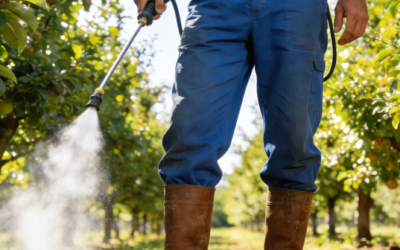
Bifenthrin needs surface contact. Spray it where insects walk, land, or rest. Home foundations keep ants out. Spray a 3-foot band up the wall. Extend 10 feet outward on the ground. The chemical sticks to surfaces. It stays active for 30-90 days outdoors. Indoor treatments last longer—up to 6 months on baseboards and cracks.
Broadcast spraying handles large areas. Farms use this for field crops. Put down bifenthrin at dawn or dusk. Keep temperatures below 85°F. Heat breaks down pyrethroids fast. UV light destroys bifenthrin within 3-5 days on exposed surfaces. Shaded spots stay effective longer. Treat again every 7-14 days during heavy pest pressure.
Granular forms handle lawn pests. Spread bifenthrin granules with a broadcast spreader. Water them in right away. This pushes the chemical into the soil. It builds a barrier against grubs and chinch bugs. One application covers 5,000-10,000 square feet. Protection lasts 2-3 months.
Systemic Activity and Residual Effect
Imidacloprid travels through plants like water through a straw. Pour it on the soil. Roots absorb it within 24 hours. The plant’s vessels carry it upward. Leaves fill with the toxin. New shoots grow protected. The chemical travels inside living tissue.
Protection lasts for weeks. Soil drenches work for 8-12 weeks in ornamentals. Tree injections last an entire growing season—sometimes up to 12 months. The chemical bonds with plant tissues. Rain won’t wash it off. Sprinklers won’t rinse it away. New growth gets automatic protection. No need to spray again.
Soil type changes everything. Sandy soils let imidacloprid drain deeper. Clay particles grab and hold the molecules. Field studies show sandy loam soils cut effectiveness by 30-40% compared to clay soils. Temperature plays a role too. Warm soil speeds up plant uptake. Cold ground slows the process down.
Bifenthrin stays where you spray it. This contact insecticide sticks to surfaces. It doesn’t go into plant tissue. It won’t move through stems or roots. Spray the leaf top—just the top stays protected. The underside stays exposed. You need full coverage.
Surface material affects how long bifenthrin lasts. Cement surfaces hold the chemical for 60-90 days outdoors. Wood absorbs some of the spray. Protection drops to 45-60 days. Painted surfaces work worst. The chemical can’t bond well. Protection fades within 30-45 days. Mud surfaces cut time even shorter—just 2-3 weeks in field conditions.
UV light breaks down bifenthrin fast. Direct sunlight destroys the molecular structure. Exposed surfaces lose 40-50% strength within 5 days. Shaded spots last three times longer. Indoor use avoids UV damage. Baseboard treatments stay active for 4-6 months inside homes.
Rain washes away bifenthrin fast. One heavy storm removes surface residue. Field crops need reapplication every 7-14 days during wet seasons. Imidacloprid handles rain better. The protection sits inside plant tissues. Weather doesn’t affect it.
Pick based on where your pest feeds. Got sucking insects feeding on plant juices? Imidacloprid works best. It reaches them wherever they hide. Dealing with surface pests like ants and spiders? Bifenthrin kills faster and creates reliable barriers. Just reapply more often.
Advantages
Each pesticide brings its own strengths. The numbers tell part of the story. Real results tell the rest.
Imidacloprid hits targets with precision. This systemic treatment delivers 90-95% control rates against sucking pests. Pour it around the roots once. Aphids and whiteflies die for the next 4-6 weeks. The chemical moves through plant vessels. It reaches every leaf, stem, and new shoot. No need for repeated sprays.
The spectrum covers over 80 insect species. Beetles fall to it. Thrips and leafminers die as they feed. Soft-bodied pests can’t defend against systemic uptake. Field trials on ornamental plants show less than 5% damage from the treatment itself. Your roses stay healthy while the poison kills what’s eating them.
Bifenthrin brings raw power and long-lasting protection. The residual effect stretches 4-12 weeks on plant surfaces. Soil applications last up to three months. One treatment covers an entire growing cycle. The pest range beats imidacloprid’s—over 250 different insects die on contact. Crawling ants, flying moths, caterpillars chewing leaves, bagworms hanging from branches. All of them drop within 1-24 hours. Mortality rates hit 80-100% on treated surfaces.
Safety numbers matter for home use. Bifenthrin shows an LD50 above 2000 mg/kg in rat studies. That’s low toxicity to mammals. Water persistence stays under 10% after seven days. The chemical breaks down. It doesn’t build up in the environment.
Pick based on your battle. Need precision against sap-suckers? Imidacloprid gives you sustained internal protection. Fighting a mixed invasion of different pest types? Bifenthrin’s broad knockout power and quick kill times handle variety better.
Disadvantages
Both pesticides have downsides. Imidacloprid kills pollinators at scary rates. Lab tests show acute oral LD50 values between 0.0037-0.0049 μg per bee. That’s micrograms—millionths of a gram. Even small amounts wipe out entire hives. Field studies show 40-81% bee deaths at doses of just 0.05-0.1 μg per bee. One soil treatment near flowering plants kills honeybees, bumblebees, and native pollinators.
Speed matters against active grubs. Clothianidin—another neonicotinoid—kills white grubs faster than imidacloprid. This difference matters. Beetles are already eating your lawn roots. Imidacloprid takes 24-48 hours. That extra day means more root damage.
Caterpillars ignore imidacloprid. Butterflies and moths barely react to it. These chewing insects bite leaf surfaces. They don’t tap into the plant’s vascular system where imidacloprid moves. Spray it on cabbage worms—they keep eating. Armyworms walk right through treated fields. This weakness forces you to pick a different chemical for these pests.
Bifenthrin has different problems. It doesn’t move through the plant. You hit what you spray—nothing else. Miss the underside of a leaf? Aphids survive there. The chemical won’t travel through plant tissue to reach hidden pests. You need complete coverage. That takes time and more product.
Bifenthrin stays in soil a long time. Soil half-life ranges from 7 days to 310 days depending on conditions. The chemical lingers. Rain washes it into streams and ponds. Water tests show 50-100% death in water bugs at just 0.1 μg/L. Mayfly nymphs die. Caddisfly larvae vanish. The food chain breaks down. Fish lose their food source.
Numbers get worse near water. Bifenthrin sticks to sediment. It builds up there for months. Bottom-dwelling creatures absorb it through their bodies. Shrimp farms near treated farm fields report complete crop losses. One study tracked bifenthrin runoff for three months after use. Levels stayed high enough to kill test creatures the entire time.
Sucking pests resist bifenthrin better than imidacloprid controls them. Contact action needs the pest to touch treated surfaces. Whiteflies land on leaf tops—you spray the tops. But they feed on undersides. Scale insects hide under protective shells. The spray can’t reach their bodies. You need multiple treatments. That costs more money and time than a single imidacloprid soil treatment.
Use Cases and Selection Guide
Your lawn shows brown patches in late summer. Japanese beetle grubs destroyed the roots. You check the calendar—it’s August. Imidacloprid works best from April through July. The chemical needs 4-6 weeks to reach full strength in soil. By August, bifenthrin gives you faster results. Use it as a granular treatment. Water it in right away. The chemical builds a contact barrier. Grubs die within 48 hours as they move through treated soil.
Pick your pesticide based on how pests feed. Roses covered in aphids need imidacloprid. These sap-suckers tap into plant vessels. Pour a soil drench around the base—4 ounces of product per gallon of water for container plants. The roots absorb it. Within three days, aphids die no matter where they feed on the plant. One treatment protects for 8-12 weeks. New growth becomes poisonous to pests.
Vegetable gardens need different rules. Never use imidacloprid on edible crops within 21 days of harvest. The chemical sits inside fruits and leaves. Bifenthrin offers a safer choice here. It breaks down faster. Most labels let you use it up to 7 days before harvest on vegetables. Spray in the morning while pollinators sleep. Hit the caterpillars eating tomato leaves. Get the beetles chewing bean plants.
Termite control needs specific steps. Treat the foundation before you spot damage. Dig trenches around your home’s edge. Pour imidacloprid into them. Mix a 0.06% solution—that’s 0.8 fluid ounces per gallon. Use 4 gallons per 10 linear feet of foundation. The chemical bonds with soil particles. Termites tunnel through it. They carry poison back to colonies. You get 5-10 years of protection according to maker data.
Indoor ant problems work better with bifenthrin. Spray baseboards, window frames, door thresholds. The contact barrier stops ants at entry points. One treatment handles the current invasion. Treat once a month to prevent new ones. Imidacloprid baits also work but take 7-14 days to collapse the colony. Bifenthrin kills the scouts within hours.
Tree borers attacking ash or birch trees need imidacloprid trunk injections. Pros charge $150-300 per tree. Do it yourself with injectable capsules—$40-60 per large tree. Inject in spring while trees push sap. The fluid carries the chemical through the whole canopy. One treatment protects all season. Emerald ash borer kills untreated trees within 2-3 years. The investment saves you $3,000-5,000 in tree removal costs.

Choosing between imidacloprid and bifenthrin doesn’t need to be complicated. Your specific pest problem determines which one works best. Got sap-sucking insects like aphids or whiteflies in your garden? Imidacloprid’s systemic action gives you that “set it and forget it” ease. Need fast knockdown of crawling pests around your home’s edges? Bifenthrin’s contact killing power does the job.
Here’s what matters: imidacloprid works best for long-term, inside-out protection on ornamentals and crops. Bifenthrin handles surface barrier treatments and broad-spectrum control better. Match the pesticide to your problem—don’t just grab what’s available.
Before you decide, verify which pest species you’re facing. Proper identification solves half the problem right there. Check your local rules on neonicotinoids and pyrethroids. Read the product label completely. Your plants benefit. Your wallet benefits. The environment benefits. Take that extra moment to choose well.
Identify your main pest today. That’s step one to effective, responsible pest management.


0 Comments