
Scale insects are sneaky little destroyers. By the time you spot the sticky honeydew residue or yellowing leaves, they’ve been feeding on your plants for weeks.
Imidacloprid keeps coming up as a reliable, proven solution — and for good reason. Unlike surface sprays, this systemic insecticide moves through a plant’s vascular system. It reaches pests at the exact point where they feed.
Knowing it works is just the start. The real results depend on how, where, and at what point you apply it. This guide covers everything you need — application methods, dosage rates, timing strategies, and the precautions that protect your plants and the surrounding environment.

Introduction to Imidacloprid
Imidacloprid has a precise, almost elegant mechanism built into its chemistry. That chemistry explains why it works so well against scale insects, time after time.
At its core, imidacloprid (CAS: 138261-41-3) is a chloronicotinyl compound with the molecular formula C₉H₁₀ClN₅O₂. It targets the nicotinic acetylcholine receptors (nAChR) in an insect’s nervous system. It binds to those receptors and blocks normal nerve signal transmission. The result is overstimulation, paralysis, and death.
What makes it effective on insects — but not mammals — comes down to structure. The nitroimine group (=NNO₂) in imidacloprid’s molecule binds far more strongly to insect nAChR subtypes than to mammalian ones. Swap that group for =NH, and mammalian receptor affinity jumps. That one structural difference is a big reason imidacloprid became a widely adopted active ingredient, not just another promising compound.
The Chemistry Behind Its Stability
manufacturers produce commercial imidacloprid as the (E)-isomer. This is the more stable, active form of the two geometric isomers that form due to restricted rotation around the C=N double bond. Final purity exceeds 95%, and that tight production standard leads to reliable, predictable results in the field.
Types of Scale Insects Affected by Imidacloprid
Scale insects don’t all respond to imidacloprid the same way. Getting this wrong means a dead plant and a wasted treatment.
It comes down to family. Soft scales (Coccidae) respond well to imidacloprid. Armored scales (Diaspididae) do not. This isn’t a small detail. It’s the most important thing to know before you buy a product or plan a treatment.
Soft Scales: Where Imidacloprid Delivers
Soft scales feed on a plant’s phloem. That’s the same vascular tissue that carries imidacloprid through the plant after a soil drench or trunk injection. Because they feed there, they take in the active ingredient. Species that respond well include:
-
European elm scale (Xylococcus ulmi)
-
Magnolia scale (Neolecanium cornuparvum)
-
Cottony maple scale (Pulvinaria innumerabilis)
-
Cottony camellia scale (Pulvinaria floccifera)
-
Calico scale (Eulecanium cerasorum)
-
European fruit lecanium (Parthenolecanium corni)
-
Tuliptree scale (Toumeyella liriodendri)
-
Pine tortoise scale (Toumeyella parvicornis)
For greenhouse use targeting soft scales, products like Marathon II work as a foliar treatment at 0.027 oz ai per 100 gallons.
Armored Scales: A Known Limitation
Armored scales live under a hard, waxy shield that sits separate from their body. Their feeding habits are different from soft scales. They don’t absorb imidacloprid as it moves through the plant’s system. These species show little to no response:
-
San Jose scale (Quadraspidiotus perniciosus)
-
Oystershell scale (Lepidosaphes ulmi)
-
Pine needle scale (Chionaspis pinifoliae)
-
Elongate hemlock scale (Fiorinia externa)
-
Circular hemlock scale (Nuculaspis tsugae)
-
Oleander scale (Aspidiotus nerii)
Got an armored scale infestation? Imidacloprid won’t fix it. Identify the exact species first. That step isn’t optional — it’s what makes any treatment plan actually work.
Application Methods for Imidacloprid
Placement and concentration decide whether your treatment works or fails. Get either one wrong, and the results suffer.
Several delivery methods exist, each working through a different mechanism. Pick the wrong one for your situation, and you don’t just waste product. Scale insects go untouched while pollinators and soil organisms absorb chemical load they never needed.
Soil Drench and Injection
This is the most common approach for trees and ornamental shrubs dealing with soft scale insects.
Pour a diluted imidacloprid solution at the base of the plant, or inject it into the root zone. The compound dissolves into soil moisture and moves up through the root system. From there, it enters the vascular tissue — the same pathway soft scales use to feed.
Plant absorption averages around 7.9% of total applied imidacloprid over the treatment period. Uptake rate also drops over time. That number matters for dosage planning. More product doesn’t produce better results. It leaves more residue sitting in the soil long after the pest problem is gone.
Foliar Spray
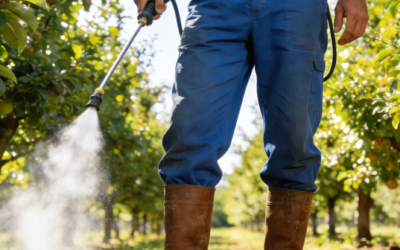
Foliar application works through both contact and systemic action. Spray the solution onto foliage, trunks, and limbs. The plant absorbs it through leaf surfaces, and it moves through the plant’s internal system from there.
The maximum rate for foliar treatment is 0.4 lbs of active ingredient per acre. That same ceiling covers turf, soil application, and chemigation — consistent across most ground-based methods.
For greenhouse environments targeting soft scales, products like Marathon II use foliar application at 0.027 oz AI per 100 gallons. That’s a tight, controlled rate built for enclosed growing conditions.
Broadcast Application
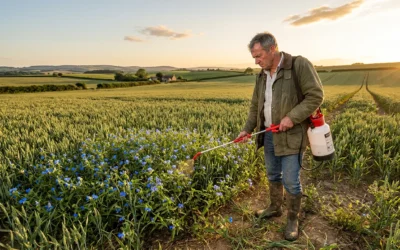
For large-scale situations — turf management, wide ornamental plantings — broadcast application is a practical choice. Mix imidacloprid with water and spread it across the target area. The 0.4 lbs AI/acre ceiling still applies.
One variation worth knowing: banded application can cut total imidacloprid use by up to 84.5% compared to continuous broadcast methods. Managing a large property? That reduction saves money and reduces chemical load on the surrounding environment.
Other Delivery Options
Beyond the core methods, imidacloprid can also be delivered through:
-
In-furrow application — incorporated at planting
-
Seed treatment — with a higher maximum rate of 0.5 lbs AI/acre
-
Tree injection — direct vascular delivery, useful for large established trees
-
Spot treatment — targeted application for localized infestations
-
Aerial application — for large-scale agricultural use
Seed treatment data from maize shows how far imidacloprid travels once a plant absorbs it. Pollen concentrations from seed-dressed crops fell between 1–10 µg/kg, averaging 2.1 µg/kg, with a recorded peak at 18 µg/kg. Flower concentrations ran a bit higher — averaging 6.6 µg/kg, peaking at 33.6 µg/kg. Those numbers matter for anyone treating flowering ornamentals during active bloom. Pollinator exposure isn’t a theory — it’s something you can measure.
Timing and Application Volume
Imidacloprid use for scale insect management isn’t steady through the year. Professional use data from California between 2017 and 2021 recorded between 330,708 and 442,205 lbs of active ingredient applied each year. The high-use period runs from March through October, with each of those months making up more than 5% of total annual application volume.
That pattern points to something practical. Systemic uptake moves faster and more efficiently during active plant growth. Treating a dormant tree in January produces slower movement, lower tissue concentrations, and weaker results against scale insects that are still feeding.
Match your application window to the plant’s growth cycle. That’s where imidacloprid performs best.
Dosage Rates for Imidacloprid Application
Getting the dose right isn’t about being overly careful — it’s about making the treatment work. Too little, and scale insects survive. Too much, and you’re packing the soil with residue that does nothing. The numbers below are specific, and that specificity matters.
Trees and Shrubs
For trees getting a soil drench or injection, the standard rate is 0.1–0.4 fl oz per inch of trunk diameter (DBH). Once a tree goes past 15 inches DBH, use the higher end — 0.3–0.4 fl oz per inch. You need at least 10 gallons of water per 1,000 sq ft. That volume pushes the active ingredient down into the root zone, where uptake takes place.
Foliar Application
For ornamentals, trees, and shrubs treated with foliar spray — including direct scale and mealybug treatments — use 1.5 fl oz (45 mL) per 100 gallons of water. Spray until the surface is drip wet. That full contact with leaf surfaces and stems is what drives both the contact and systemic action.
Agricultural and Row Crop Use
Row crop rates run much higher — 17.0–20.1 fl oz per acre based on row spacing, applied in-furrow or as a narrow band. Foliar applications top out at 20.0 fl oz/acre (0.31 lb AI/acre). California sets its own lower cap at 17.6 fl oz/acre.
For ornamentals, the annual ceiling drops further — 1.6 pints per acre (0.4 lb AI), across no more than 5 applications, with at least 10 days between each.
Perimeter and Termite Treatments
Scale management can overlap with broader perimeter programs. Standard dilution for soil perimeter work is 0.05% — about 4 gallons of finished solution per 10 linear feet. For heavy pressure, step up to 0.1%, or use double concentration in 2 gallons per 10 linear feet. Injector systems take 0.3 fl oz per gallon of finished emulsion.
These numbers aren’t suggestions. They’re the framework that keeps imidacloprid effective — and keeps unnecessary chemical load out of the soil around your plants.
Timing and Best Practices for Imidacloprid Application

Timing an imidacloprid treatment isn’t guesswork. It’s the one variable that separates a treatment that works from one that fails.
Even the right product at the right rate will underperform if the window is wrong. The pest life cycle, the plant’s growth stage, and soil conditions all need to line up. Here’s how to read that alignment and act on it.
Match Application to the Pest Stage
For scale insects, the target window is late spring — or the moment you spot small, fresh-hatched scales. At that stage, crawlers are mobile and vulnerable. They haven’t yet built the waxy coating that makes older instars much harder to reach.
Use three sprays spaced two weeks apart, and add a wetting agent to every mix. That spacing has a reason. Some crawlers haven’t hatched yet on your first application. The second and third treatments catch those stragglers as they emerge.
For soil drench applications targeting pests like hemlock woolly adelgid, the timeline works differently. Large trees — 15 inches in diameter — need two to three months for imidacloprid to move through the vascular system. Treat well before the infestation peaks. Don’t wait until you’re already watching damage spread across the tree.
Get the Soil Conditions Right Before You Pour
Soil drench timing goes beyond the calendar. What’s happening underground matters just as much.
-
Pour 6 to 10 weeks before expected pest activity — late winter or early spring, when roots are active and taking up water
-
Soil must be moist but not waterlogged at the time of treatment
-
Water the application in right after pouring — don’t let it sit dry
-
Keep soil moist for 7 to 10 days post-treatment to support movement through the root zone
-
Pour beyond the drip line, not at the trunk base — that’s where the active root zone sits
For turf applications, move irrigation or rainfall through within 24 hours. This pushes the active ingredient past the thatch layer. Hold off on mowing until that 24-hour window closes.
Spray Timing for Foliar Treatments
Foliar spray conditions matter as much as coverage does.
Treat on cool days below 85°F, with wind speeds under 10 mph. Those conditions cut down on drift and give the solution time to absorb before it dries out. Under those conditions, you should see results within 24 to 48 hours.
Coverage needs to be thorough — stems, leaf undersides, and every surface where pests feed. A wetting agent helps the solution make contact on waxy or dense foliage. Mid-spring and early fall tend to be the strongest windows for foliar and soil applications combined.
Get the timing right, and imidacloprid delivers what the chemistry is built to do.
Coverage Areas of Imidacloprid
Imidacloprid doesn’t stick to one corner of agriculture. It works across a wide range of plants, settings, and growing environments.
For home use, a single 32 oz bottle covers real ground. It reaches up to 640 sq ft of vegetable plantings, or treats around 9 fruit trees with a 10-foot canopy spread. Turf applications run at 0.46–0.6 fl oz per 1,000 sq ft. Trees and shrubs get dosed by size — DBH for large trees, plant height for ornamentals. This lets you treat every plant in a mixed landscape without over-applying to smaller ones.
Professional and agricultural use operates at a completely different scale.
In California’s Groundwater Protection Areas (GWPAs) from 2018 to 2020, just four focal crops — citrus, cole crops, grape, and lettuce — covered 50–53% of statewide acres treated. They also made up 59–63% of pounds of active ingredient applied. Citrus carried the largest share on its own, at 34.9–37.3% of statewide AI pounds. Grape took 20.9–21.4% of statewide acres treated within those same protected zones.
The global numbers tell the same story. Agriculture drives 75% of the $976 million global market as of 2024. Asia-Pacific leads at more than 65% of global use. China alone produces over 40,000 metric tons per year. U.S. usage crossed 600,000 lbs back in 2005 — and that number has kept climbing.
This reach didn’t happen by accident. Imidacloprid scaled because it delivered solid results across very different growing conditions, plant types, and pest pressures — not just in one crop or one region, but across the board.
Limitations and Precautions of Imidacloprid Use
Imidacloprid works well — but it has real limits. Knowing where it falls short matters just as much as knowing where it shines.
What It Won’t Fix
Armored scales don’t respond to imidacloprid. That’s already been covered. There’s another issue worth flagging, though: imidacloprid can increase spider mite populations. Mites already present? Treat with horticultural oils first. Then reach for imidacloprid.
Late-stage larvae are another dead end. Older, more developed insects resist imidacloprid. Target early instars instead — the infestation gets harder to control as it matures.
Resistance and Application Limits
Repeated use builds resistance. Rotate your chemistries. Using imidacloprid as your sole tool across multiple treatment cycles is a fast track to treatment failure.
Hard limits apply no matter how bad the pest pressure gets:
– Maximum 6.0 fl oz per acre per application
– One application per year on bananas
– Follow label restrictions — they exist for a reason
Human and Environmental Exposure
Acute oral LD50 in rats sits at 380–500 mg/kg — moderate toxicity. Dermal exposure is far less of a concern at >5,000 mg/kg. Chronic dietary exposure for children aged 1–2 reaches 32% of the cPAD, though. That’s a number worth taking seriously around food crops.
Imidacloprid shows up in 44% of U.S. river samples collected between 2013 and 2022, with a mean concentration of 24.9 ng/L. More than 90 private wells have exceeded enforcement standards since 2006. These aren’t just statistics — they show real chemical buildup in water systems over time.
Protecting Non-Target Species
Beneficial insects face real risk here. Pollinators, predatory insects, and other non-target species can absorb imidacloprid through treated foliage and soil. Use it only when pest pressure justifies it. Follow label rates. Skip applications during active bloom periods.
Phytotoxicity is also possible. Stick to labeled rates. Going beyond them won’t give you better pest control — it may damage the plant you’re working to protect.

Scale insects don’t give up — and a solid imidacloprid treatment plan won’t either.
Apply it right, and imidacloprid does more than hold back an infestation. It breaks it down from the inside out. Your plants get protection at the root level, long before any damage shows up on the surface. The details matter here: the right application method, the right timing, and a clear picture of where this chemical works well — and where it doesn’t.
That’s what separates reactive pest control from smart, planned plant care.
So here’s what to do next:
-
Assess your current scale problem
-
Match it to the application method that fits your situation
-
Build a treatment schedule around the biological windows where imidacloprid works best
Don’t just treat the symptoms. Build a system that stops the next outbreak before it starts. Healthy plants aren’t luck. They come from deliberate choices made on a regular basis, season after season.


0 Comments