
White grubs destroying your lawn from beneath the surface? These beetle larvae turn a lush green yard into a patchy, brown disaster within weeks.
Imidacloprid works better than most bug killers you can buy. This treatment targets grubs’ nervous systems as they feed on grass roots. You get season-long protection.
Japanese beetles, June bugs, or European chafers eating your lawn? Timing matters. So does the right amount of product. Follow safety rules too. These three things decide if your lawn recovers or your effort goes to waste.
pest control pros have proven methods. They make imidacloprid work at its best. Plus, they protect helpful bugs. Your family stays safe too. You’ll learn these same techniques.

How To Use Imidacloprid For Grub Control?
Imidacloprid application needs precision at every step. The product label is your legal blueprint. Ignore it and you risk poor results, environmental harm, and potential violations. Industry pros call it “the law” for good reason.
Understanding Application Rates and Limits
Granular imidacloprid products need specific dosing to work. For most home lawns, use 1.4 to 1.8 pounds per 1,000 square feet. That’s 60-80 pounds per acre for bigger properties.
Don’t exceed 80 pounds per acre each year. This cap equals 0.4 pounds of active ingredient. Using more doesn’t improve results. It raises toxicity risks to helpful insects. It can contaminate groundwater. And it breaks regulations.
Calculate your lawn’s square footage before buying product. Measure length times width for rectangular areas. Break odd shapes into sections. Calculate each. Then add them together. This math stops wasteful mistakes.
Choosing Between Granular and Liquid Formulations
Granular imidacloprid gives homeowners simplicity. Spread it with a broadcast or drop spreader. The particles sit on grass until you water them in. This format stores well and covers large areas fast.
Liquid imidacloprid gives you more control over distribution. Professional products like Dominion 2L contain 21.4% active ingredient. Consumer products like BioAdvanced contain just 0.72% active ingredient. These concentration gaps change how much you mix.
A 2F formulation means 2 pounds of active ingredient per gallon. Mix 0.46 to 0.6 fluid ounces per 1,000 square feet. Combine this with 1-2 gallons of water in a backpack or pump sprayer.
Dominion 2L needs at least 0.46 ounces per 1,000 square feet. Despite its higher concentration, you use less product. BioAdvanced at 0.72% active ingredient maxes out at 6 ounces per 1,000 square feet. You’re using 2.3 times less active ingredient at label rates compared to Dominion.
Skip hose-end sprayers with concentrated imidacloprid. These tools lack precision. Uneven mixing creates hot spots. These damage turf and fail to protect other areas.
Calibrating Your Spreader for Accurate Coverage
Your spreader’s settings determine success or failure. Each maker provides calibration charts in their product labels. Match your spreader brand to these charts.
Test your spreader before treating the whole lawn. Mark a 100 square foot section. Fill the hopper with product. Spread across your test area at the recommended setting. Weigh what’s left or measure what you used. Adjust settings until distribution matches label rates.
Walk at a steady pace during application. Overlap passes by 6 inches to prevent missed strips. Put down half your product walking north-south. Do the other half east-west. This crosshatch pattern ensures uniform coverage.
Mixing Liquid Imidacloprid Right
Pour 0.6 ounces of liquid imidacloprid into one gallon of water for every 1,000 square feet you’re treating. Add product to water—never water to product. This order prevents concentrate from splashing.
Shake or stir the mixture well. Some formulas separate during storage. Keep stirring during application. This maintains steady concentration.
A 27.5 ounce bottle covers 45,000 square feet when mixed right. One gallon (128 ounces) treats about 5 acres. Professional applicators buy in bulk for cost savings.
Pro Grub Control products specify 1.25 to 1.6 pints per acre. Convert this to 0.46 to 0.6 fluid ounces per 1,000 square feet for smaller lawns. Double-check your math. Conversion errors waste money or leave your turf underdosed.
Critical Timing for Best Results
Imidacloprid works as prevention, not rescue. Use it before or during egg hatch periods. This timing varies by pest and location.
Mid-May application works for most northern climates with Japanese beetle grubs. Eggs hatch late June through July. The imidacloprid binds to soil particles near grass roots. Fresh grubs eat it while feeding.
Southern lawns face different schedules. European crane fly eggs hatch in spring. Annual bluegrass weevil larvae emerge in late April through May. Billbugs deposit eggs from late spring through summer.
Track local pest patterns through university extension offices. They publish degree-day models predicting egg hatch. These forecasts beat calendar guessing.
Treatment lasts up to 4 months under ideal conditions. Soil temperature, moisture, and organic matter affect how long it persists. Sandy soils drain faster. This cuts residual activity. Clay soils hold product longer but may resist water penetration.
The Essential Irrigation Step
Water activates granular imidacloprid. Without it, particles sit on leaf blades. They break down in sunlight. They never reach grubs.
Put down 0.5 inches of irrigation right after spreading. Measure this with rain gauges or tuna cans placed across your lawn. Run sprinklers until containers collect half an inch of water.
Natural rainfall works if you time it right. Check weather forecasts before application. Treat 24-48 hours before predicted rain. Light drizzle won’t work—you need real precipitation.
Liquid applications need the same irrigation. The half-inch requirement moves active ingredient from thatch into the root zone. Grubs feed 1-3 inches below the surface. Shallow watering leaves product above their feeding zone.
Skip heavy irrigation. More than one inch pushes imidacloprid below the root zone. You’re washing it past grubs into subsoil. There it provides no benefit.

Target Application Depths and Soil Penetration
Grub larvae concentrate in the top 2-3 inches of soil during active feeding periods. They move deeper—up to 6 inches—during winter rest.
Imidacloprid binds to organic matter and clay particles in this zone. It creates a toxic barrier. Grubs touch it while feeding on roots. Uptake through grass roots adds extra protection.
Thatch layers thicker than half an inch block penetration. Dethatch before using imidacloprid if your lawn feels spongy underfoot. Core aeration 2-3 weeks before treatment helps product move through dense soils.
Soil pH affects imidacloprid activity a bit. It stays stable across normal lawn pH ranges of 6.0-7.5. Very acidic or alkaline soils may cut its power.
Equipment Selection and Maintenance
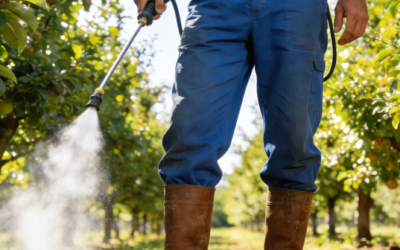
Backpack sprayers deliver steady pressure for liquid imidacloprid. Choose models with pressure relief valves and adjustable nozzles. Flat-fan tips create even spray patterns.
Pump sprayers work for smaller lawns under 5,000 square feet. Keep pressure up through frequent pumping. Unsteady pressure creates uneven application.
Broadcast spreaders suit granular products on large, open areas. Drop spreaders excel near flower beds, water features, and property lines. Their precise distribution keeps product where it should be.
Clean equipment right after use. Imidacloprid residue corrodes metal parts and clogs screens. Flush tanks and lines with clean water. Remove nozzle filters and spray them clean.
Store unused product in original containers. Reseal bags tight to prevent moisture. Liquid concentrates stay stable for years in cool, dark spots.
Treating Different Grub Species
Japanese beetle grubs respond to 1.4 pounds per 1,000 square feet of granular imidacloprid. Treat in mid to late May before eggs hatch. These white C-shaped larvae cause the most home lawn damage nationwide.
Billbugs need a bit more—1.2 to 1.8 pounds per 1,000 square feet. Their larvae bore into grass stems before moving to roots. Target application when adults appear in spring. This prevention stops egg-laying females.
European crane fly larvae handle cooler temperatures. Treat in April before they resume feeding after winter. Use standard rates of 1.4 to 1.8 pounds per 1,000 square feet.
Annual bluegrass weevil larvae damage golf courses and premium lawns. Time applications with adult emergence in April. Follow with irrigation to move product into the crown zone where larvae feed.
Secondary Pest Suppression
Imidacloprid suppresses chinch bugs at maximum label rates. Use 80 pounds per acre or 1.8 pounds per 1,000 square feet before nymphs hatch. This timing happens in late May through June depending on region.
Suppression differs from control. Expect reduced populations, not elimination. Chinch bugs feed on grass blades and stems, not roots. They contact imidacloprid through treated foliage, not soil.
Mole crickets need precise timing during peak egg hatch. Treat when soil temperatures reach 60-65°F at 2-inch depth. This occurs March through May in southeastern states. Northern areas seldom battle mole crickets.
Use 1.8 pounds per 1,000 square feet for mole cricket suppression. Water in right away with half an inch of irrigation. These pests burrow 4-6 inches deep. Deep watering improves contact.
Maximizing Coverage Per Container
Calculate coverage before buying. A 27.5 ounce bottle of liquid imidacloprid at 2F concentration treats 45,000 square feet. This equals about one acre of home lawn.
One gallon (128 ounces) extends coverage to 5 acres at label rates. Professional applicators treating multiple properties buy gallon containers for cost savings.
Granular products come in 10-20 pound bags. A 10-pound bag covers about 5,500-7,000 square feet at 1.4-1.8 pounds per 1,000 square foot rates. Buy enough product to finish your lawn in one session.
Partial applications create untreated gaps. Grub populations survive in these areas. They reinfest treated zones. Calculate total square footage right. Add 10% extra product for overlap and settling.
Annual Application Limits and Restrictions
Federal rules cap imidacloprid applications at 0.4 pounds of active ingredient per acre each year. This protects pollinators, water life, and helpful insects.
Track all applications through the year. Some homeowners treat for spring grubs, then add summer insect treatments. Combined totals might break limits.
One application at maximum label rates meets annual needs for grub control. Extra treatments provide no added benefit. Grubs develop resistance to repeated overuse.
Multiple formulas contain imidacloprid. Read labels on all lawn products before using. Combination fertilizers sometimes include it. Stacking these products without knowing it breaks application limits.
Special Considerations for Different Lawn Types
Cool-season grasses like Kentucky bluegrass, perennial ryegrass, and tall fescue handle imidacloprid well. Treat during active growth periods for best results.
Warm-season grasses including Bermuda, zoysia, and St. Augustine handle imidacloprid safe. Time applications during green-up in spring. Dormant grass won’t take up systemic product well.
Fresh lawns need protection too. Wait until grass reaches 3-4 inches height. Mow twice before using granular products. Liquid applications wait until after the third mowing.
Sodded lawns accept treatment right after installation. Make sure sod roots touch native soil first. Water well before and after application.
Weather Conditions That Affect Success
Treat when temperatures range between 50-85°F. Extreme heat stresses grass. It cuts imidacloprid uptake. Cold soil below 50°F slows product movement and grub activity.
Skip windy days above 10 mph for liquid applications. Drift carries product off-target. Granular products handle moderate wind better but still benefit from calm conditions.
Rain within 24 hours helps granular products if it totals less than one inch. Heavy downpours wash product away before soil binding occurs.
Drought-stressed lawns absorb imidacloprid less. Water deep 2-3 days before application. Hydrated grass and moist soil improve distribution and root uptake.
Monitoring Results and Adjusting Strategy
Pull back turf sections 3-4 weeks after treatment. Dig 3 inches deep in 1 square foot areas. Count living grubs. Dead or dying larvae confirm the treatment worked.
Healthy lawns handle 5-8 grubs per square foot without visible damage. Counts above 10 per square foot cause noticeable browning. Populations over 15 per square foot need fast action.
Failed treatments come from timing errors, not enough watering, or underdosing. Review each application step. Adjust next year’s strategy based on what you find.
Success stops visible damage. Your lawn keeps density and color through summer stress periods. Root systems develop full without grub damage.
Imidacloprid application success depends on following label instructions exact, timing treatments to pest biology, and ensuring proper irrigation. These basics separate real control from wasted effort and money.

Protecting your lawn from grubs doesn’t have to be hard. Imidacloprid offers a proven solution that stops these pests before they damage your turf. Apply it in late spring or summer. Follow the dilution and watering instructions. This creates a defense that lasts for months.
Successful grub control is about prevention. Imidacloprid binds to the soil and creates a protective barrier. Grubs eat it as they feed. This stops the damage before it starts. You can choose granular or liquid forms. Stay consistent with your applications. Be patient while waiting for results. You’ll get a healthier, stronger lawn.
Ready to reclaim your yard? Grab your imidacloprid product. Mark your calendar for the best treatment time. Take action before the next grub wave arrives. Your green lawn is worth the effort—and it’s easier than you think to achieve.


0 Comments