
Those tiny winding trails across your leaves aren’t just cosmetic damage. They signal a leafminer infestation that can weaken plants, stunt growth, and spread fast.
You’re here because you want to know if Imidacloprid is worth using — and whether it will actually work against these tunnel-dwelling pests. The honest answer isn’t simple.
Results depend on the species you’re dealing with. Citrus leafminer responds very differently than boxwood leafminer. Your application method and timing also matter — a lot. Get those wrong, and even a strong systemic insecticide like imidacloprid won’t deliver.
Below, you’ll find what the science shows, what experienced growers have learned, and where imidacloprid falls short — so you can make a clear, confident call for your plants.

Is Imidacloprid Effective Against Leafminers?
The short answer: yes — but a few key factors decide whether you win the battle.
Imidacloprid shows strong, documented results against leafminers. It works best on citrus leafminer (Phyllocnistis citrella) — one of the most widespread and damaging species growers deal with. Field research from Gujarat recorded leaf damage of just 5.35–7.73% using imidacloprid 17.8 SL as a foliar spray. That placed it second overall, behind spinosad and ahead of thiamethoxam, which logged 6.23–8.28% damage. Across two full seasons (2019–20 and 2020–21), imidacloprid held near the top of the treatment rankings.
The concentration that delivered the strongest results? 0.00725% imidacloprid. Not a heavy dose — a precise, targeted amount.
What Soil Application Adds to the Picture
Foliar sprays work. Soil drench applications, though, tell an even stronger story.
In grapefruit trials using Admire Pro (a popular imidacloprid formulation), leafminer infestation dropped as soon as week two after treatment. Suppression held for 11 straight weeks — enough time to protect multiple rounds of new growth.
Here’s what made that possible:
-
Leaf tissue levels climbed past 200 ppb starting at week two
-
Researchers found a direct link between those tissue levels and the percentage of pest control achieved
-
Higher uptake produced stronger protection — a clear, repeatable pattern
Boxwood leafminer is also a listed target pest for imidacloprid. That’s a useful detail for ornamental growers managing hedges and foundation plantings.
The reason all of this works comes down to translocation. Imidacloprid travels through the plant and into new tissue — the same tissue where leafminer larvae feed. That’s not an accident. That’s the product doing exactly what it’s built to do.
Citrus Leafminer (Phyllocnistis citrella)

Florida, 1993. Dade County. A pest from somewhere between India and the Philippines took hold in American soil. Within years, it spread across Georgia and the Gulf states. It left behind a trail of serpentine damage growers had never seen before.
That pest was Phyllocnistis citrella. It remains one of the most damaging leafminer species citrus growers face today.
What This Pest Does to Your Trees
The larvae don’t chew through leaves from the outside. They tunnel inside them. They carve winding paths through leaf tissue, twist new shoots out of shape, and reduce the plant’s ability to photosynthesize.
The longest mines appear on elephant lemon (Citrus medica). The shortest show up on lime (Citrus aurantifolia). Grapefruit, lime, and oranges are the most vulnerable varieties. Hybrids hold up better.
But the risk goes beyond leaf damage.
Leafminer larvae create wounds in the leaf surface. Those wounds become entry points for citrus canker — a bacterial disease that has caused severe damage across Florida. A 1912 outbreak tied to this pattern led to over 1.56 million commercial trees removed and 600,000 dooryard trees cut. That’s not just history. It’s a clear warning about what unchecked leafminer pressure can do.
Why Imidacloprid Works Well Against This Species
Soil-applied imidacloprid — products like Admire Pro — stands as the most effective chemical control option in Florida for this pest. The systemic action targets larvae inside leaf tissue. That’s the exact spot foliar contact sprays can’t reliably reach.
Soil-applied imidacloprid has another advantage worth knowing: it shows minimal impact on natural predators. That matters. Biological control through introduced parasitoids has been a low-cost, effective suppression tool for citrus leafminer over time. Used at the right moment, imidacloprid doesn’t disrupt that system.
For home growers, foliar sprays with Bayer Advanced products are a solid option — applied before or after bloom. They won’t match the lasting protection of a soil drench, but they give you a practical tool when systemic application isn’t an option.
One non-chemical tool worth using: fertilizer timing. Nitrogen pushes new flush growth — and new flush growth is the tissue leafminer larvae target. Skip nitrogen applications during active new leaf growth. It’s a simple, zero-cost way to cut your exposure.
Boxwood Leafminer
Boxwood leafminer (Monarthropalpus flavus) carries an unwelcome title: the single most destructive insect pest of boxwoods in American landscapes and nurseries. It came from Europe, spread coast to coast, and now threatens the hedges, topiaries, and foundation plantings that define so many garden spaces.
Your boxwoods look sparse, yellowed, or just subtly off — this pest may already be inside the leaves. Not on them. Inside them.
What the Damage Looks Like
The larvae don’t announce themselves. They work from within.
By late spring, infested new leaves develop spotted-yellow discoloration. By mid-summer, the undersides of those same leaves show raised blisters — yellow or brown, unmistakable once you know what to look for. Hold an infested leaf up to light and you can watch the larvae moving inside.
Heavier infestations go past cosmetic damage:
-
Leaves shrink below normal size and drop early
-
Foliage thins and loses color across the plant
-
Swollen leaves develop multiple blisters, sometimes dead twigs
-
In severe cases: complete defoliation
There’s a secondary problem that makes this worse. Heavy infestations weaken plant tissue enough to invite Volutella Blight — a fungal pathogen (Pseudonectria buxi) that targets stressed boxwoods. Plants also become more vulnerable to winter-kill, especially in colder climates.
How Imidacloprid Fits Into Control
Not all boxwood varieties face the same level of risk. American cultivars — including Buxus sempervirens and Buxus rotundifolia — take the hardest hits. English varieties like Argenteovarigata and Suffruitiosa hold up much better. Knowing what you’re growing tells you how hard you need to push back.
For chemical control, imidacloprid (Merit, Xytect) is a strong choice. Soil-applied imidacloprid works well. The systemic uptake carries the active ingredient into leaf tissue — right where larvae feed and hide. Xytect adds useful flexibility. It works as both a soil application and a foliar spray with translaminar movement, meaning it penetrates through the leaf surface rather than just coating it.
Miss that spring window with a foliar spray and you’re mostly working against eggs and larvae already shielded inside leaf tissue.
Beyond Chemicals
Predatory birds — titmice in particular — are the most significant natural check on boxwood leafminer populations. Green lacewings and spiders help too. Bird foraging damage to plants can sometimes outpace the insects themselves, so that’s worth keeping in mind.
Cultural management adds another layer. Prune affected foliage before adult emergence or after egg-laying ends. This cuts the overall population going into the next cycle. Fertilize properly afterward to help the plant recover and push healthy new growth.
Boxwood leafminer is persistent, but it’s manageable. Timing imidacloprid soil treatments to work with the pest’s biology — not just against the calendar — makes all the difference.
Application Methods

Three delivery systems. Each one built for a different situation. Getting this right matters more than most growers realize.
Soil Drench: The Prevention Standard
Soil drench is where imidacloprid performs best. It’s the method you want for getting ahead of an infestation — not chasing one after it starts.
Here’s how to apply it:
-
Inject at the tree base, working around the root zone perimeter
-
Keep the application away from the root zone center — too close reduces uptake and raises runoff risk
-
Rotate with cyantraniliprole to reduce resistance pressure across multiple seasons
That last point doesn’t get enough attention. Rotating chemistry isn’t just good practice — it protects your long-term results. Use imidacloprid season after season without rotation and you build selection pressure. The pests that survive pass on their tolerance. Your results get worse over time.
Soil drench works because the plant moves the product for you. The active ingredient travels up through the vascular system and fills new leaf tissue — the same tissue leafminer larvae feed on. No leaf surface needed. No spray coverage gaps. The protection lives inside the plant itself.
Foliar Spray: The Right Tool for the Right Moment
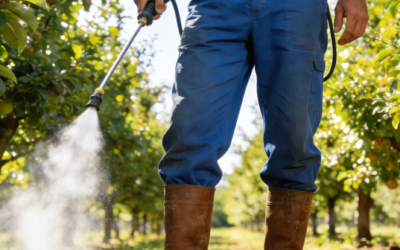
Foliar application isn’t a lesser option — it’s a situational one. For mature trees that can handle some damage without serious yield loss, a well-timed foliar spray is practical and effective. It’s also the right follow-up choice when soil conditions or timing rule out a drench application.
A few specifics that improve your results:
-
Mix with horticultural oils — this combination improves coverage and pushes the product deeper into leaf tissue
-
Do not use foliar spray after a soil drench — doubling up doesn’t double protection, and it adds unnecessary chemical load to the plant and surrounding soil
-
Time it before larvae dig in — foliar application works best before larvae are shielded inside leaf tissue, not after they’ve burrowed in
Think of the foliar method as one piece of a larger strategy, not the whole plan.
Attract-and-Kill: The Precision Option
This method runs on a different logic than the others. Attract-and-kill uses imidacloprid combined with pheromones — the formulation known as MalEx™ — to draw in and eliminate male leafminers before mating occurs. No blanket treatment needed.
No males. Fewer fertilized eggs. Smaller populations in the next generation.
It’s not a standalone solution. As part of an integrated pest management plan, it cuts overall chemical pressure while hitting the pest at a weak point in its reproductive cycle. For growers managing large plantings — or working under restrictions on broad-spectrum applications — this method opens up options that standard drench or spray programs can’t offer.
Each of these three methods has a specific role. The strongest programs don’t pick just one. They build a sequence that fits the pest’s biology, the plant’s growth stage, and the season.
Timing and Life Cycle Considerations

Imidacloprid doesn’t fail because it’s a weak product. It fails because it arrives late to a fight that’s already over.
Leafminers are lifecycle-driven pests. Every species moves through predictable stages — egg, larva, pupa, adult — and the interception window for imidacloprid is narrower than most people expect. Miss it, and you’re applying an expensive systemic insecticide to a plant already packed with larvae buried out of reach.
The Window That Counts
For citrus leafminer, the critical moment falls post-bloom, before the second flush — around May. That timing isn’t random. New flush growth is what the pest targets. Imidacloprid needs to be inside the plant tissue before that flush expands and draws in egg-laying adults.
For boxwood leafminer, the key timing is adult emergence — mid-May, about three to four weeks after flies first appear. Foliar applications need to hit that window. Spray right after new leaves expand, but before eggs are deposited and larvae start tunneling in.
Once larvae are inside the leaf, the situation changes. The tissue becomes a physical barrier. Foliar sprays drop most of their punch at that point. Soil-applied imidacloprid still reaches larvae through systemic uptake. That’s why soil treatments give you more scheduling flexibility than foliar options.
Why Getting Ahead of the Pest Matters
The pest’s life cycle doesn’t pause while you decide. Each leafminer generation churns out new adults, new eggs, and new flush damage on a rolling schedule throughout the growing season.
Soil drench applications work best as preventive treatments — get them down before population pressure builds. Foliar sprays are corrective by nature. That makes timing tighter, not looser. A week’s delay can be the difference between catching mobile adults and losing larvae already sealed inside leaf tissue.
One practical habit worth building: track flush cycles on your plants alongside the calendar. New growth is the signal. Flush pushes, pest pressure follows. Your application schedule should move with the plant, not the month.
Limitations and Alternatives
Imidacloprid is a useful tool. But useful isn’t the same as universal — and pretending otherwise will cost you plants, money, and time.
Where Imidacloprid Falls Short
The resistance problem is real and growing. Neonicotinoids as a class face rising resistance from multiple pest species around the world. Leafminers are not immune to this trend. Rotate your chemistry. This isn’t optional advice — it’s basic pest management math.
Pollinator toxicity is the other hard truth. Imidacloprid is toxic to bees. Soil applications reduce that exposure risk — but don’t eliminate it. Plants in bloom, or surrounded by flowering species, need careful timing and method selection. A drench applied too close to blooming plants puts pollinators at serious risk.
Regulations are tightening in certain regions too. Check your local label requirements before purchasing. What’s legal in one state may not be permitted in another.

Imidacloprid works — but only if you work with it, not against it.
Target vulnerable larval stages with your applications. Pick the right delivery method for your specific plant. Set realistic expectations from the start. For citrus leafminers, it’s a proven solution. For boxwood leafminers, a well-timed soil drench can do the heavy lifting before damage ever shows up.
No single pesticide is a permanent fix. Rotate with alternatives. Scout your plants on a set schedule. Learn your pest’s life cycle. These steps will outperform a spray-and-pray approach every time.
Then decide: does a preventive or curative imidacloprid treatment fit what you’re seeing right now,The best pest management decision isn’t the most aggressive one — it’s the most informed one.



0 Comments