
Planthoppers destroy rice fields, vegetable gardens, and ornamental plants fast. Spotted those tiny insects jumping from leaf to leaf? You need a solution that works.
Imidacloprid is the top choice for farmers and gardeners fighting planthopper problems. But apply it wrong and you waste money. Your plants stay at risk.
This guide shows you field-tested methods for using imidacloprid right. You’ll learn about soil drenches versus foliar sprays. We cover exact doses for your specific crop.
Spot infestations early. Time your applications for best results. Handle this neonicotinoid safely. You can protect beneficial insects and follow local rules.

Introduction to Imidacloprid for Planthopper Control
Imidacloprid is a systemic neonicotinoid insecticide. It moves through plant tissues. This kills sucking pests from the inside out. Rice farmers depend on it for controlling brown planthopper (Nilaparvata lugens). This pest destroys paddies worldwide.
Field trials prove it works. Researchers tested Acephate 50% + Imidacloprid 1.8% SP against brown planthoppers in rice fields. The first spray brought treated plots down to 7.12 insects per 5 hills. Untreated areas had 14.99—that’s a 52% reduction. The second application 15 days later dropped numbers to 6.08 insects per 5 hills. This beat chlorpyriphos combinations and other standard treatments.
Imidacloprid 200 SL formulation delivered the highest success rates across multiple studies. It beat Acephate 75 SP every time. Chlorpyriphos 10 G performed worse—sometimes it showed higher pest populations than control plots.
You have three application methods: foliar spray for quick knockdown, soil drench for long-term protection, and seed treatment for early-season defense. Seed treatment with Imidacloprid at 5.0 g active ingredient per kilogram of seed cut leafhoppers to just 4.9 hoppers per 5 sweeps at 30 days after emergence. This was the lowest count among all tested treatments.
Combination products pack extra punch. Ethiprole 40% + Imidacloprid 40% WG applied at rates between 93.75 to 156.25 grams per hectare controlled brown planthopper populations across different infestation pressures.
Identify Planthopper Infestation
Catch planthoppers before they explode into full infestations. This saves your crop. Period.
Field scouts classify brown planthopper (BPH) severity into three levels. They base this on averaged pest counts from two investigations, spaced 8 days apart. This two-check approach cuts the randomness of single-count methods. You get a clearer picture of what’s happening in your field.
Visual Inspection Methods
Stem counting is the most straightforward technique. Walk your rows and spot planthoppers clinging to rice stems. Count them. Record the numbers per hill or per square meter. Pick the method that fits your tracking system.
The tapping method works faster for larger areas. Flap rice stems over a glued enamel plate. The insects fall and stick. Count what you catch. This beats trying to spot jumpy pests on moving plants.
Sweep net collection covers more ground. Sweep through your crop with a standard insect net. Move catches into a cage or sealed container. Count specimens in controlled conditions where they can’t escape.
Modern Detection Technologies
The sticky pad trap method (PENYEK pipeline) brings precision to traditional monitoring. Place plastic sheets coated with sticky glue on steel plates at the paddy stem base. Do this around 70 days after planting. Tap stems 2-3 times to make planthoppers stick to the trap. Repeat across multiple plants for good samples.
Capture trap images with a smartphone. A 12MP dual camera with 27mm focal length and F2.2 aperture works fine. Process images through binary operations. This includes outline, fill holes, skeletonize, and create distance maps. Then use watershed algorithms and Voronoi analysis. Feed results into a VGG16 CNN classification system. This system tells BPH apart from harmless insects. It beats traditional GLCM, Gabor, and LBP histograms combined with random forest algorithms. Check Table 7 for average accuracy and AUC metrics via 5-fold cross-validation.
UAV hyperspectral imaging spots infestations before visible symptoms show up. Two spectral indices track stress:
DSRI (Dual-temporal Stressed Canopy Spectral Relative Difference Index) tracks NIR reflectance changes between time points. Healthy rice shows NIR values rising from 0.25 at T1 to 0.30 at T2. Infested plants climb to 0.28 or decrease.
DSDI (Dual-temporal Stressed Canopy Spectral Direct Difference Index) calculates direct spectral differences between T1 and T2. The DSDI-SL variant uses selected bands via LDA, SHAP, and ANOVA analysis. Normalized scores are averaged for best feature selection.
XGBoost modeling with Lasso plus RFE feature selection achieves detection rates exceeding 80%. This applies to both producer’s accuracy (PA) and user’s accuracy (UA) in test scenarios with mild infestation. The two-check approach at 8-day intervals maps changing BPH distribution patterns across your field.
When to Act
Monitor fields at the first sign of damage. Also check populations reach treatment thresholds. Use imidacloprid early—before pest numbers reach extreme levels. Control becomes hard and expensive at that point. Check fields every 3-5 days during peak seasons. This keeps you ahead of population surges.
Pick Your Application Method
Imidacloprid kills planthoppers three ways: foliar spray, soil drench, and seed treatment. Each method works differently. Pick based on your crop, pest timing, and field setup.
Foliar Spray Applications
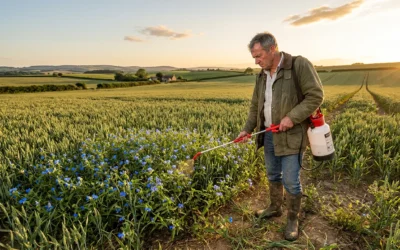
Foliar spraying puts imidacloprid on plant surfaces. The chemical soaks into leaf tissue. Then it moves through the whole plant. You’ll see results fast—pests die within 24-48 hours.
Mix imidacloprid 200 SL at label rates. For rice, use 0.3-0.5 ml per liter of water. Spray on cool days below 85°F. Wait for calm conditions under 10 mph wind. Heat makes the chemical evaporate too fast. Wind pushes spray off target and wastes product.
Spray the underside of leaves well. That’s where planthoppers live and feed. Grab a backpack sprayer with adjustable nozzles. Set pressure at 40-60 PSI. This gives fine droplets without runoff.
Timing counts. Spray when plants are young and pests show up. Field tests prove it works. Treated plots had 7.12 insects per 5 hills. Untreated plots had 14.99 after the first spray.
Soil Drench Method
Soil drenching feeds imidacloprid to plant roots. Roots soak up the chemical. Plants spread it through their whole system. Protection lasts longer—up to 8 weeks for some crops.
Move mulch or plant debris aside first. Pour the mix on damp soil near the root crown. Soil moisture is key. Dry soil slows absorption. Wet soil causes runoff and wastes product.
Figure out dosage by plant size. Measure the base diameter. Take that number in inches and use the label rate. Convert teaspoons to fluid ounces by dividing by 6.
Here’s an example: A 10-inch diameter plant needs 1.2 tsp per inch. That’s 12 tsp total. Divide 12 by 6. You get 2 fluid ounces.
Mix with water based on coverage area. A 100 square foot bed needs 1 gallon of water. Add your measured pesticide to that gallon. Spread it across the zone.
Put mulch back after the liquid soaks in. This stops UV light from breaking down the chemical.
Seed Treatment Protocol
Seed treatment with imidacloprid guards seedlings from the start. Use 5.0 grams active ingredient per kilogram of seed before planting. This rate cut leafhoppers down to 4.9 hoppers per 5 sweeps at 30 days. That beat every other method tested.
Coat seeds using a drum mixer or by hand. Let seeds dry before you store or plant them. Plant during the same growing season. Waiting too long makes the treatment weak.
Rice growers get the best results with this method. You control the seed stock. No need to spray young plants. Seedlings stay safe while they grow roots and shoots.
Putting Imidacloprid to Work

Your mixing bucket and sprayer are ready. Time to get imidacloprid onto your plants and into your soil. The method you pick affects how this chemical works. It also controls how long your crops stay protected.
Ground Application Techniques
Ground application gives you control. Walk your rows with a backpack sprayer. Or run a tractor-mounted boom. You see what you’re treating. You can adjust as you go.
Drench application puts the solution right at plant bases. Pour around the root zone—not on leaves. The chemical soaks down to where roots can grab it. This method uses less product than broadcast spraying. Hit individual plants or problem spots. No need to coat everything.
In-furrow application happens at planting time. Mix imidacloprid into planting furrows before you drop seeds. Cover with soil. Seeds sprout in treated ground. Seedlings get protection from day one. Commercial growers report using up to 84.5% less imidacloprid with banded furrow methods compared to broadcast methods. That’s money saved. Plus less chemical in your field.
Spot treatment handles isolated problems. Mark problem areas. Mix a small batch. Treat what needs it. Why soak your whole field? Planthoppers might cluster in just three corners.
Soil Application Protocols
Broadcast soil methods spread imidacloprid across entire treatment areas. Mix granular or liquid forms. Use a spreader or spray rig. Water in right away—this moves the chemical into the root zone.
Soil moisture matters more than most people think. Dry soil locks up the chemical. Soaked soil flushes it away before roots absorb it. Aim for damp conditions. Got bone dry ground? Water it first. Wait an hour. Then treat.
Tree injection works for woody plants and fruit trees. Drill small holes into the trunk base. Insert capsules or inject liquid imidacloprid forms. The tree’s system pulls the chemical up through branches and leaves. Protection lasts months. California growers rely on this method. 27.8% of state imidacloprid use goes to grapes. 5.32% to oranges. 3.8% to tangerines. These numbers come from professional use data between 2017-2021.
Aerial Application Considerations
Big operations sometimes need aerial coverage. Helicopters or planes spray imidacloprid over hundreds of acres in hours. Ground crews would need weeks.
But aerial work needs precision. Wind speed matters. So does droplet size. Flight height affects where your chemical lands. Drift can hit neighboring properties. Follow strict buffer zones. Check weather forecasts. Morning sprays work best. The air is still.
California pros used 330,708 to 442,205 pounds of active ingredient each year between 2017-2021. Peak months run March through October. Each month accounts for more than 5% of total use. Time your treatments in these windows. suppliers stock up then. Contractors have availability.
Application Safety Protocol
Mix chemicals outdoors or in areas with good airflow. Wear gloves, long sleeves, and eye protection. Studies show handler exposure ranges from 0.051 to 3.38 µg/kg/day. This depends on what type you use. Soluble powder forms for ornamental ground use create the highest risk. Flowable concentrates used with handguns generate the lowest.
Human skin absorbs about 5% of skin exposure. Small number, but it adds up over repeat uses. Wash hands and face before eating or drinking. Change clothes after spraying. Don’t track residues into your house.
Follow Safety and Restrictions
Imidacloprid carries real risks if you skip basic safety rules. OSHA logged 34,696 workplace inspections in 2024 and issued $131.4 million in fines. Serious violations cost companies $16,550 each. Willful or repeat offenses hit $165,514. You don’t want your farm or business on that list.
Workplace Safety Requirements
Fatal workplace injuries reached 5,283 in 2023—that’s 3.5 deaths per 100,000 full-time workers. Fall protection topped OSHA’s violation list for the 14th straight year. Chemical handling accidents happen too. Store imidacloprid in locked areas away from food, feed, and water sources. Post clear warning signs. Keep children and pets out.
EU-OSHA’s 2024 ESENER study covered 41,000+ establishments across 30 countries. The data shows workplace risks stack up fast. Sixty-four percent of workers report long sitting periods. Sixty-three percent face repetitive hand and arm movements. Fifty-two percent lift or move heavy loads often. Add pesticide handling to these existing strains. Injury rates climb.
Compliance and Documentation Standards
Noncompliance breaches cost companies an average of $174,000 more in 2025 compared to previous years. Total breach costs hit $4.61 million overall. Track every imidacloprid application in written records. Note dates, rates, weather conditions, and which fields you treated. Fifty-eight percent of organizations now run four or more compliance audits each year. Thirty-five percent of enterprises conduct over six audits.
Past three years saw 56% of organizations face at least one compliance issue. Privacy and cyber breaches affected 28% of companies. Third-party failures hit 18%. Regulatory actions came down on 17%. Regular third-party audits happen at just 22% of businesses. Eleven percent run them each year. Another 40% audit when problems trigger reviews.
Regulatory Updates and Standards
OSHA’s HazCom deadline hits January 19, 2026. Re-classify pure substances. Update all labels and safety data sheets to match GHS Revision 7 standards. Eighty-five percent of compliance professionals report increased regulations over the past three years. Ninety percent saw their job responsibilities expand. Eighty-two percent of businesses note negative impacts on digital transformation efforts due to compliance burdens.
Workplace misconduct remains a problem. Thirty percent of employees witnessed violations in 2023. Sixty-three percent of those who reported issues faced retaliation after. Build a culture where workers can report imidacloprid misuse without fear.
ISO 27001 certifications jumped to 81% current or planned adoption in 2025—up 14% from 67% in 2024. Companies treating compliance as a checkbox exercise fail. Build systematic processes. Train your crew the right way. Review procedures each quarter. Your insurance rates, legal exposure, and worker safety all depend on getting this right.

You can manage planthopper infestations without guesswork. Spot the warning signs. Pick the right application method. Stick to exact dosage rates. Imidacloprid works best this way.
Chemical treatment alone won’t solve everything. Pair it with regular crop checks. Scout your fields after you spray. Switch between different insecticides to stop resistance. Put safety first—for you and the environment. This turns a single treatment into lasting pest control.
Ready to start? Check your planthopper pressure levels this week. Write down what you see. Match your results to the imidacloprid methods we covered. Your next harvest depends on what you do now.
Good pest management isn’t perfect. It’s about learning. Each application teaches you something. Adjust based on what happens. You’ll soon know what works in your fields.



0 Comments